
Call now, answered 24/7 (855) 691-1691
Car accident lawyers who don't back down.
In California, the driver who caused a crash pays for the harm, usually through their insurer: medical bills, lost income, and pain and suffering. If you were partly at fault, your share reduces your recovery but does not bar it. You generally have 2 years to sue (Code of Civil Procedure 335.1), and 6 months for a claim against a city, county or transit agency (Government Code 911.2).
From your first call, the insurers talk to us, not to you.
How long you have
| Claim | Deadline | Law |
|---|---|---|
| Injury lawsuit | 2 years from the crash | Code of Civil Procedure 335.1 |
| Damage to your car | 3 years | Code of Civil Procedure 338 |
| Claim against a city, county, state agency or transit district | 6 months, in writing | Government Code 911.2 |
| Late government claim, with the agency's leave | apply within 1 year of the crash | Government Code 911.4 |
| Lawsuit after a public entity rejects the claim in writing | 6 months from the rejection notice | Government Code 945.6 |
| Injured child | the 2 years usually start at 18, but not for government claims | Code of Civil Procedure 352 |
| Uninsured-motorist claim with your insurer | within 2 years: settle, sue or start arbitration | Insurance Code 11580.2 |
Method: Each deadline read in the statute on leginfo.legislature.ca.gov on 2026-11-19; exceptions exist, so check your own dates with a lawyer. 2026.
Source: California codes (leginfo).
Cite this: Deadlines after a car accident in California, Hillstone Law analysis of California codes (leginfo) data, 2026. https://hillstonelaw.com/personal-injury/auto-accidents/#data-car-accident-deadlines-california-2026
The shortest deadline is the one that matters. If a city bus, a county truck or a badly kept public road had any part in your crash, the 6-month government claim decides your case long before the 2-year rule does.
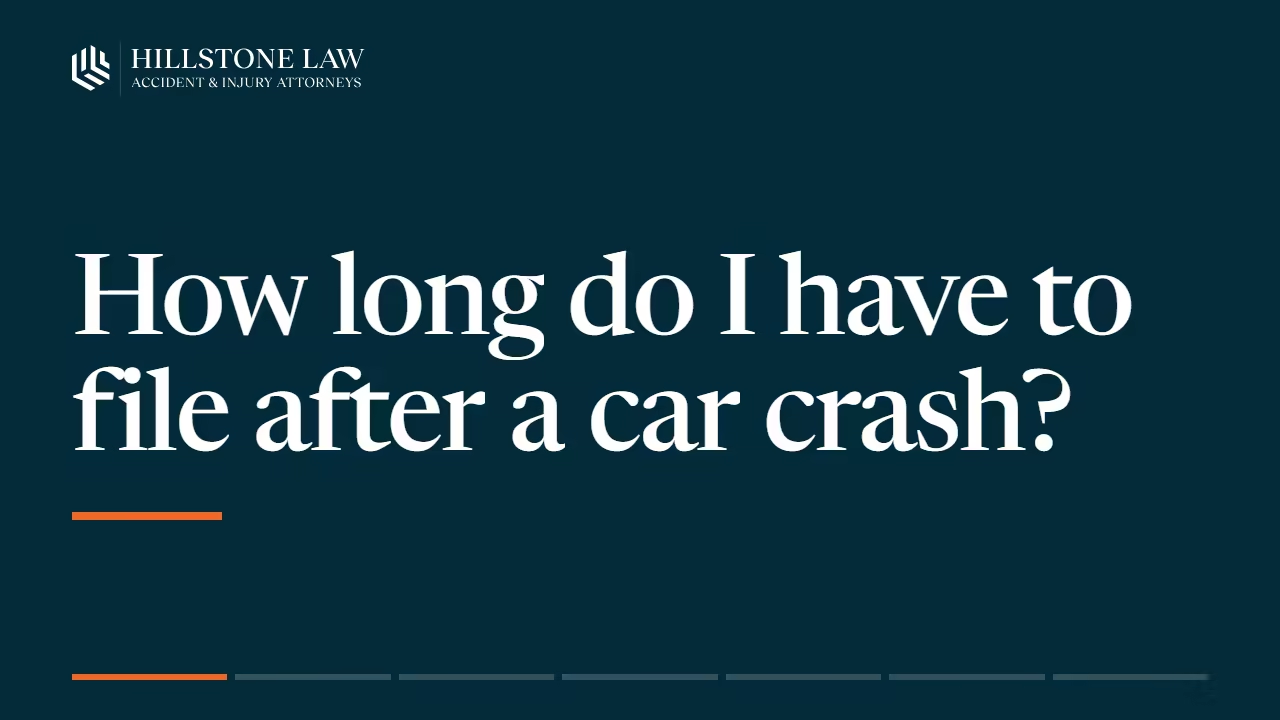
How long do I have to sue after a car crash in California?
Read the transcript
How long do I have to sue after a car crash in California?
How long do I have to file after a car crash?
2 years from the injury to file a lawsuit. That is the general deadline in California. Code of Civil Procedure 335.1
6 months if a public entity was involved. A city bus, a county truck, a dangerous public road: a written claim comes first. Government Code 911.2
The clocks that start at the crash: 10 days, dMV report, form SR-1; 6 months, claim against a public entity; 2 years, injury lawsuit; 3 years, vehicle damage only.
Negotiation does not stop the clock. If the claim is still open as the date approaches, the lawsuit must be filed to protect it.
Exceptions can shorten or extend these limits. A child was hurt; The at-fault driver died; A federal vehicle; Your own uninsured motorist claim.
Free consultation. Call and tell us what happened. (855) 691-1691 Hablamos español.
General information about California law, not legal advice for your situation.
Results in car accident cases
Selected results. Every amount as recorded.
- $4.5 million Car accident
- $5 million Injury case, Los Angeles County, 2025. Settlement · Obtained with co-counsel.
- $3 million Two-car crash
- $2.5 million Crash between two cars
- $1.97 million Car crash, catastrophic injury
- $1 million Injured in a car accident
Hundreds of millions recovered for our clients.
What to do in the first days after a car accident
- Stop, help and call 911 if anyone is hurt.A driver in a crash that injures someone must stop at the scene and exchange information (Vehicle Code 20001).
- Get the report number.Ask the officer, or find out later which agency took the report: city police on city streets, the CHP on freeways and in unincorporated areas.
- Photograph everything.Both cars, the plates, the road, skid marks, traffic signals and your injuries. Get witnesses' names and numbers.
- See a doctor within a day or two.Go even if you feel fine. Neck, back and head injuries often show up later, and a gap in treatment is the first thing an insurer points to.
- File the DMV SR-1 within 10 days.It is required if anyone was hurt or killed or damage to anyone's property is over $1,000 (Vehicle Code 16000). This is separate from the police report.
- Hit-and-run? Report it within 24 hours.Your own uninsured-motorist coverage can pay for a hit-and-run only if the other car made physical contact and the crash was reported within 24 hours (Insurance Code 11580.2).
- Be careful with the other driver's insurer.You do not have to give them a recorded statement. Tell your own insurer about the crash, and talk to a lawyer before you discuss your injuries with theirs.
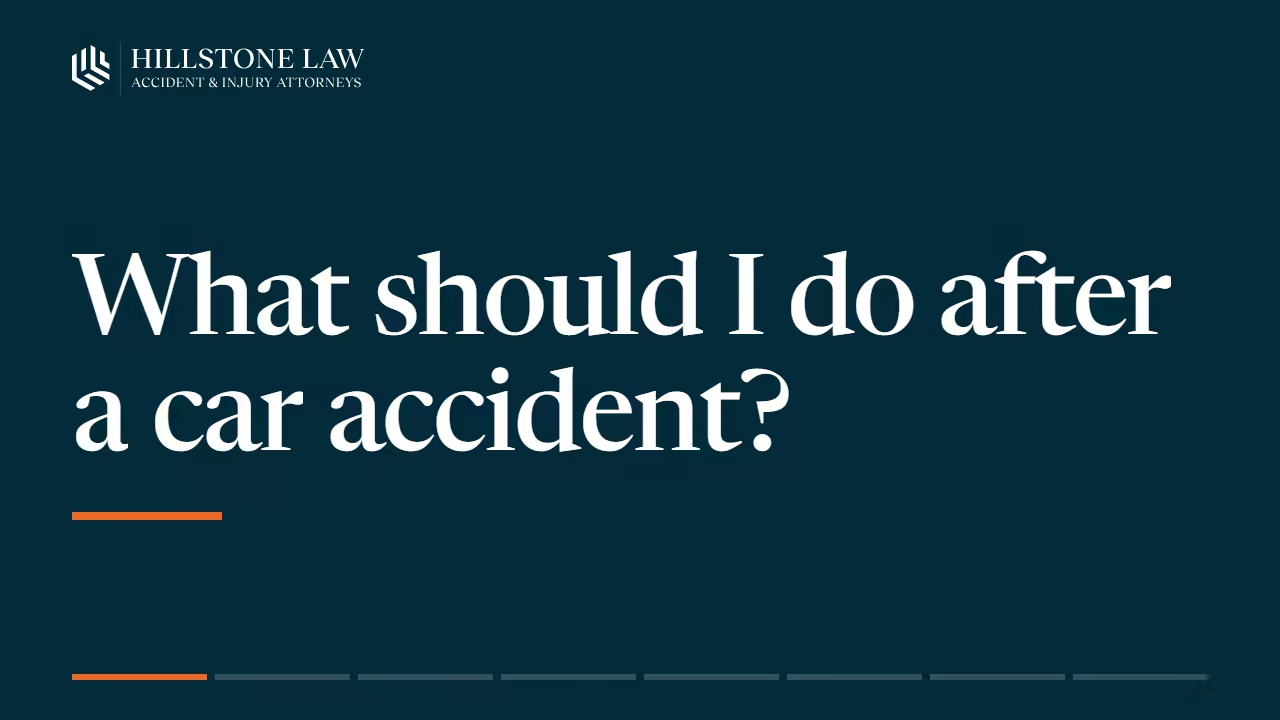
What should I do after a car accident in California?
Read the transcript
What should I do after a car accident in California?
What should I do after a car accident?
Stop. Check on everyone. Call 911 if anyone is hurt, even slightly.
Exchange information. Names, licence numbers, plates, insurers and policy numbers.
Photograph it. Find witnesses. The cars, the road, the signals, your injuries. Get names and phone numbers.
Say little about fault. Be polite, stick to facts, and do not guess about speed or distance.
See a doctor within days. Even if you feel mostly fine. Neck, back and head injuries often show up later.
10 days to report the crash to the DMV. When anyone was hurt, or damage was over $1,000. Form SR-1 · Vehicle Code 16000
Free consultation. Call and tell us what happened. (855) 691-1691 Hablamos español.
General information about California law, not legal advice for your situation.
What should I not say after an accident in California?
Read the transcript
What should I not say after an accident in California?
What should I not say after an accident?
Three things to avoid saying: “I’m sorry, it was my fault”; Guesses about your speed; “I’m fine,” before a doctor checks you.
Stick to facts. With the other driver, the police and insurers.
No recorded statement is required. You do not have to give the other driver's insurer one.
Tell your own insurer promptly. Most policies require it. That is not a recorded statement to theirs.
A check with a release? Read it first. A release ends the claim.
Free consultation. Call and tell us what happened. (855) 691-1691 Hablamos español.
General information about California law, not legal advice for your situation.
Who is responsible for a car accident in California
California is a fault state. Everyone must use ordinary care, and a driver who does not is responsible for the harm (Civil Code 1714). Fault is proved with the police report, photos, witnesses, vehicle damage and, more and more, dashcam, phone and vehicle data.
- The other driver.Common grounds: following too closely (Vehicle Code 21703), failing to yield on a left turn (Vehicle Code 21801), running a red light (Vehicle Code 21453), driving too fast for conditions (Vehicle Code 22350), and using a handheld phone (Vehicle Code 23123.5). Breaking a traffic law is strong evidence of negligence.
- The driver's employer.If the driver was working, on a delivery, a sales call or a company errand, the employer can be responsible, and a commercial policy often carries higher limits than a personal one.
- The car's owner.An owner who lets someone drive is responsible for that driver's negligence, but only up to $15,000 for one person's injury, $30,000 for all injuries in the crash, and $5,000 for property, unless the driver was the owner's employee or agent (Vehicle Code 17150, 17151).
- A government agency.A public entity can be liable for a dangerous condition of its road, such as a broken signal, missing signs or a hazard it knew about (Government Code 835). These claims start with a written claim within 6 months.
- More than one at-fault party.Each defendant pays its share of pain-and-suffering damages in proportion to its fault (Civil Code 1431.2), so naming everyone responsible matters.
Your own share of fault. California uses pure comparative fault: your recovery is reduced by your percentage of fault, even if it is large, but you can still recover (Li v. Yellow Cab Co. (1975) 13 Cal.3d 804). At 20 percent at fault, you recover 80 percent.
Can I get paid if I was partly at fault in California?
Read the transcript
Can I get paid if I was partly at fault in California?
Can I get paid if I was partly at fault?
Yes. California follows pure comparative fault.
A quarter to blame? You recover three quarters. A quarter: your share of fault; Three quarters: what you recover. The full value of your losses, less your own share.
Mostly at fault? You can still recover. Three quarters: your share of fault; A quarter: what you still recover. Li v. Yellow Cab Co. (1975) 13 Cal.3d 804
Who sets the percentages: Insurers argue your share in negotiation; At trial, the jury sets each person's share; The evidence: video, witnesses, the scene.
Do not argue fault with their insurer. What you say to adjusters is quoted back. Get advice first.
Free consultation. Call and tell us what happened. (855) 691-1691 Hablamos español.
General information about California law, not legal advice for your situation.
How fault is usually decided in common crashes
Most car crashes fall into a few patterns, and each pattern has a usual starting point. It is a starting point, not the answer: the evidence decides.
- Rear-end crashes.The driver behind must not follow more closely than is reasonable for the speed, the traffic and the road (Vehicle Code 21703), so the rear driver is usually found at fault. The picture changes when the front car cut in suddenly, reversed, or had no working brake lights.
- Left-turn crashes.A driver turning left must yield to oncoming traffic that is close enough to be a hazard (Vehicle Code 21801), so the turning driver usually bears most of the fault. Speed of the oncoming car, a yellow light and what the witnesses saw can shift part of it.
- Intersection crashes.A red light means stop at the line and wait for the green (Vehicle Code 21453). When both drivers say they had the green, signal timing records, nearby business cameras and independent witnesses usually settle it, so we ask for them early.
- Crashes in fog, rain or traffic.Driving faster than is safe for the conditions breaks the basic speed law (Vehicle Code 22350), even below the posted limit.
- Distracted driving.Holding a phone while driving is against the law (Vehicle Code 23123.5).
Learn more in Do I need a lawyer after a car accident?
Who pays: insurance after a car accident
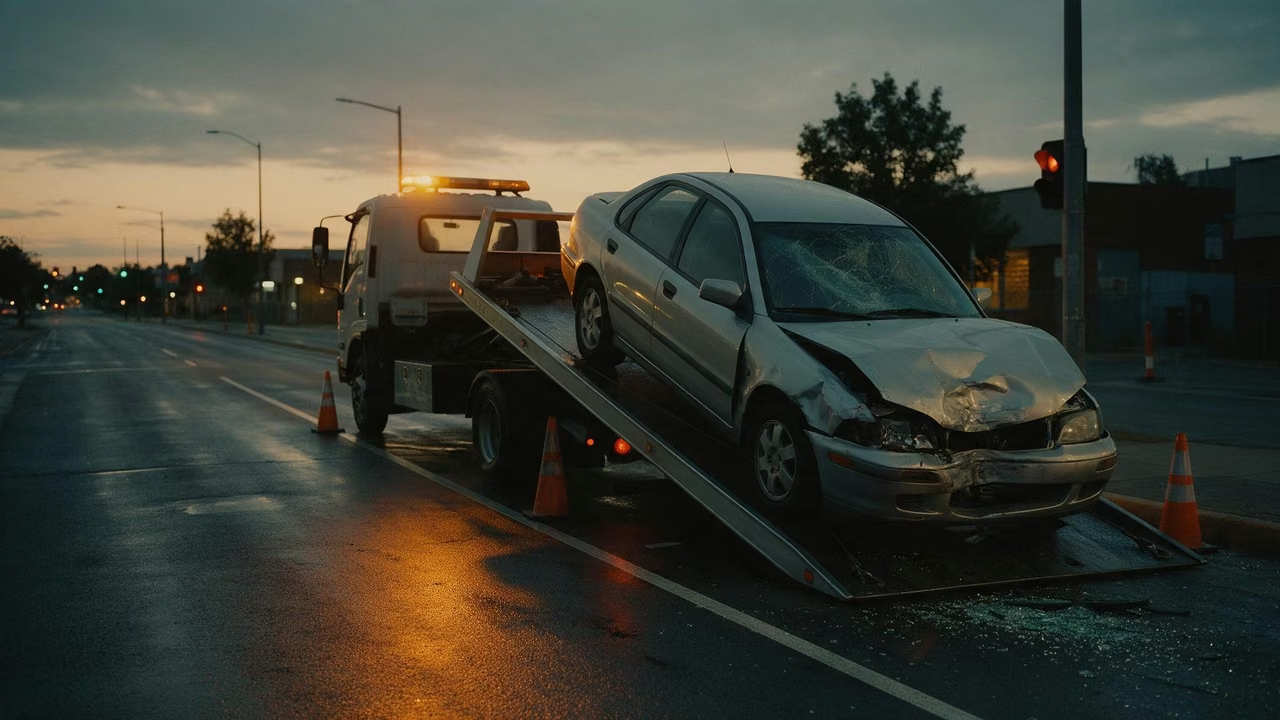
- The at-fault driver's liability policy.For policies issued or renewed on or after January 1, 2025, California's minimum is $30,000 for one person's injuries, $60,000 for all injuries in one crash, and $15,000 for property damage (Vehicle Code 16056). Every driver must be able to show this kind of financial responsibility (Vehicle Code 16020). Many drivers carry only the minimum, which is why the next layers matter.
- Your own uninsured and underinsured motorist coverage (UM/UIM).California auto policies must include it unless you deleted it in writing (Insurance Code 11580.2). It can pay when the other driver had no insurance, too little, or fled. To keep a UM claim alive, within 2 years of the crash you must settle with your insurer, sue the uninsured driver or start arbitration.
- Other policies.An employer's commercial policy, a rideshare company's policy (see Uber and Lyft accidents), or a second at-fault driver's insurer.
- If you had no insurance.You can still claim medical bills and lost wages, but an uninsured owner or driver cannot recover pain and suffering, unless the other driver was convicted of driving under the influence (Civil Code 3333.4).
What if the other driver has no insurance in California?
Read the transcript
What if the other driver has no insurance in California?
What if the other driver has no insurance?
Your own policy usually pays. Uninsured motorist coverage, up to your limits.
It is in your policy unless you deleted it in writing. California requires insurers to include it. Insurance Code 11580.2
2 years to sue, agree the amount or demand arbitration. Counted from the crash. If none happens, the claim is lost. Insurance Code 11580.2
If the driver drove off: Police report within 24 hours; Sworn statement to your insurer within 30 days.
Get your insurer's consent before settling. Settling with anyone else without it can cost you the claim.
Free consultation. Call and tell us what happened. (855) 691-1691 Hablamos español.
General information about California law, not legal advice for your situation.
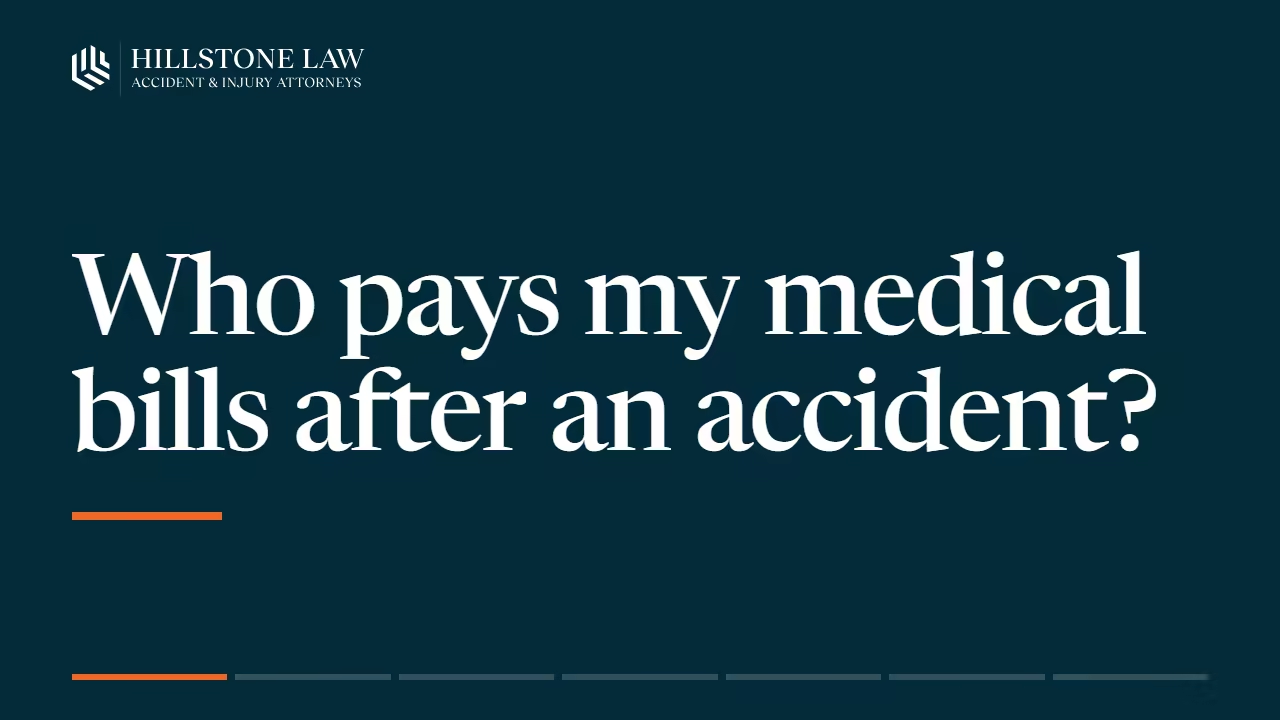
Who pays my medical bills after an accident in California?
Read the transcript
Who pays my medical bills after an accident in California?
Who pays my medical bills after an accident?
Your own coverage usually pays first. The at-fault driver's insurer does not pay bills as they arrive.
What pays as you are treated: Your health insurance; Medical payments coverage on your auto policy; Medi-Cal or Medicare.
When the at-fault insurer pays: As bills arrive, it does not pay them; At settlement, it pays, as part of your damages.
Those who paid first are often repaid. Those repayment claims can often be reduced by negotiation.
Keep treating. Insurers read a gap in treatment as a sign you recovered.
Free consultation. Call and tell us what happened. (855) 691-1691 Hablamos español.
General information about California law, not legal advice for your situation.
What a car accident claim can include
California law compensates "all the detriment" a wrongful act caused (Civil Code 3333). In practice that means:
- Money you lost:medical bills now and in the future, lost wages and lost earning capacity, the car and other property, and household help you had to pay for.
- What it took from you:pain, suffering, emotional distress, scarring and the loss of things you can no longer do.
The value of a claim depends on the injury and its treatment, how it affects your work and life, the evidence of fault, and how much insurance exists. We do not quote averages: two crashes that look alike can be worth very different amounts.
Your injuries and the treatment record
Insurers value a car accident claim from the medical record, so the record has to tell the whole story. A few things make the difference:
- The first visit.Tell the doctor about every place that hurts, even the ones that seem minor. A symptom that is not written down at the first visit is easy for an insurer to call unrelated later.
- Follow-up care.Physical therapy, visits to a specialist doctor and imaging that your doctor orders are part of the claim. Missed appointments and long gaps are read as a sign that the injury healed.
- Work.Keep the notes that took you off work or limited what you could do, and your pay stubs from before the crash.
- Daily life.A short weekly note on what you could not do, from sleep to lifting your child, is often the clearest proof of pain and suffering.
We collect the records and bills for you and keep track of what is still outstanding, so the claim is presented only once the full picture is known.
Talking to the insurance companies
The other driver's insurer will usually call within days. Its adjuster's job is to close the claim for as little as the facts allow.
- You may decline a recorded statement.You do not have to give one to the other driver's insurer. What you say early, before you know your injuries, is often used to argue the injury was minor.
- Do not sign a release while you are still treating.A release ends the claim for good, including injuries that appear later.
- Report the crash to your own insurer.Do it as your policy requires, and stick to the facts of what happened.
- Do not guess about fault or injuries."I'm fine" at the scene and "maybe I could have stopped" are the lines an adjuster quotes back.
Once you hire us, the insurers deal with us, not with you.
California car crashes, 2022-2024
| Year | Crashes that injured or killed someone | People injured | People killed | Hit-and-run crashes with injuries |
|---|---|---|---|---|
| 2022 | at least 163,897 | 226,301 | 4,661 | 14,500 |
| 2023 | at least 167,358 | 230,850 | 4,272 | 14,512 |
| 2024 | at least 171,977 | 237,014 | 4,059 | 15,073 |
Method: Sum of every county's records in California's state crash database (CCRS, California Highway Patrol) for each year, compiled by Hillstone Law from the CCRS records; local police under-report to CCRS, so every count is at least this many. 2022–2024.
Source: California Highway Patrol (CCRS), read November 19, 2026.
Cite this: Crashes that injured or killed someone in California, 2022-2024, Hillstone Law analysis of California Highway Patrol (CCRS) data, 2022–2024. https://hillstonelaw.com/personal-injury/auto-accidents/#data-crashes-ccrs-california-2022-2024
Reported injury crashes went up about 5 percent over the three years, and hit-and-run crashes that hurt someone kept rising too. Those hit-and-run cases are where your own uninsured-motorist coverage, and the 24-hour police report it requires, matter most.

Why people call Hillstone Law about car accidents
Our founders used to defend insurance companies; now they take them on, and they know how the other side values a claim. At your request, we can meet you at home or in the hospital. We also meet by video or at any of our 16 offices across California. Our intake team speaks Spanish. We order the police report, notify the insurers so they stop calling you, and look for every policy that might pay.
One call. Then we handle everything.
- You call, chat or send the formOn a call, a person takes down the details. From the chat or the form, our intake team calls you back.
- A free case reviewA lawyer's team tells you whether we can help, and what happens next. No fee to find out.
- We deal with the insurersWe gather the police report, the medical records and the bills, and every call with the insurance companies goes through us.
- Settlement or trialWe negotiate, and we are ready to go to court if that is what it takes.
The terms, before you call
- The fee
- No fees unless you get paid.
- How it is set
- Our fee is a share of what we recover for you, set out in a written agreement you sign before we start.
- The case review
- Free.
- If we lose
- You pay no fee.
- Languages
- Our intake team speaks Spanish.
- Your deadline
- For most injury claims in California, two years from the injury. For a claim against a city, county or state agency, a written claim is usually due within six months.Code of Civil Procedure section 335.1; Government Code section 911.2.
Car accident cases by type
If yours is not here, call and we will say whether we can help.
- Uber and Lyft accidentsThe platform's insurance can apply.
- Truck accidentsBig rigs, delivery and company vehicles.
- Motorcycle accidentsRiders hit by drivers who did not look.
- Pedestrian accidentsHit in a crosswalk, a parking lot or the street.
- Bicycle accidentsCar doors, turning drivers and hit-and-run.
- Bus accidentsClaims against a public agency are usually due in 6 months.
- Slip and fallStores, apartments and public property.
- Dog bitesIn California the owner is usually responsible. We take your call and refer these cases to another firm.
- Brain and spinal cord injuriesInjuries that change a life.
- Wrongful deathFor families who lost someone.
- Sexual abuseConfidential. You decide what to share, and when.
Not sure what kind of case it is?
Find out today if you have a case, free: describe it in your own words and our team tells you what kind of case it is.
More cases and guides

What clients say
4.9 out of 5 from 784 Google reviews of our Los Angeles office, all time. In the last 12 months (November 2025 to October 2026): 427 reviews. We show every rating, not only the five-star ones.
Rating read from the Google Business Profile on November 18, 2026.
After experiencing my first car accident, I was stressed and confused. Hillstone Law took all of that away! They were always on top of my case, updated me frequently, and made the entire process as smooth as possible. I would highly recommend their office to anyone seeking legal services.
Nicole V., Review from Google, November 2026 I had a great experience with Hillstone Law. They were always available to answer any questions I had and consistently kept me updated throughout the entire process of my case. Their communication, professionalism, and dedication made me feel informed and supported every step of the way. I truly appreciate how attentive and helpful they were. I highly recommend Hillstone Law to anyone looking for a professional, reliable, and caring legal team!
Aremy V., Review from Google, October 2026 Completely professional and attentive %100 of the way. They made sure I was taken care of properly from start to finish.
Husayn A., Review from Google, November 2026
Reviews are from real clients, quoted as written. Every case is different; past results and client reviews do not guarantee a similar outcome.
Lawyers who handle car accident cases
Our team handles these cases from every office, and meets you wherever is easiest for you. Profiles with State Bar numbers are on our legal team page.
-

Edwin Essakhar
Partner Licensed in California since 2012 -

Yvette Essakhar
Partner Licensed in California since 2015 -

William Percy
Partner Licensed in California since 2014 -

Bretil Beitmirza
Senior Trial Attorney Licensed in California since 2014 -

Andrew Bunn
Senior Trial Attorney Licensed in California since 2024 -
Marianna Oustinovskaya
Senior Trial Attorney Licensed in California since 2011 -
Andrew Rietta
Demands Department Supervising Attorney Licensed in California since 2025 -

Lindsay Graves
Attorney Licensed in California since 2024 -
Ruben Contreras
Associate Attorney Licensed in California since 2021 -
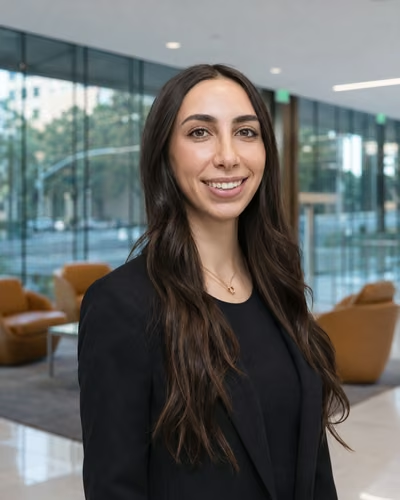
Shannon Kerendian
Associate Attorney Licensed in California since 2024
Our lawyers work from all 16 offices; their primary office is our main office in Los Angeles.
Where we handle car accident cases
| Office city | Injury crashes reported to the state crash database (year) | People killed (same year) | Street with the most injury crashes, 2022-2024 | Main civil courthouse for the county |
|---|---|---|---|---|
| Los Angeles | at least 11,653 (2024) | 315 | Figueroa St | Stanley Mosk Courthouse |
| West Covina | 405 (2024) | 9 | Azusa Ave | Stanley Mosk Courthouse |
| Irvine | at least 834 (2024) | 14 | Culver Dr | Central Justice Center |
| San Bernardino | 1,299 (2024) | 35 | Highland Ave | San Bernardino Justice Center (Civil Division of the San Bernardino District) |
| Temecula | 524 (2024) | 8 | Temecula Pky | Riverside Historic Courthouse |
| Palm Springs | 278 (2024) | 10 | Indian Canyon Dr N | Riverside Historic Courthouse |
| San Diego | 5,871 (2024) | 117 | Harbor Dr | Hall of Justice |
| Carlsbad | 461 (2024) | 4 | Carlsbad Blvd | Hall of Justice |
| Santa Barbara | 528 (2024) | 4 | State St | Anacapa Division |
| Bakersfield | at least 1,486 (2024) | 54 | Union Ave | Metro Justice Building |
| Fresno | at least 1,704 (2024) | 60 | Blackstone Ave | B.F. Sisk Courthouse |
| Modesto | 1,501 (2024) | 22 | Briggsmore Ave | City Towers Courthouse (Civil) |
| Sacramento | 3,604 (2024) | 48 | Franklin Blvd | Tani G. Cantil-Sakauye Sacramento County Courthouse |
| San Francisco | 3,478 (2024) | 51 | Van Ness Ave | Civic Center Courthouse |
| San Jose | 3,442 (2024) | 50 | Capitol Expwy | Downtown Superior Court (DTS) |
| Santa Rosa | 553 (2024) | 6 | Santa Rosa Ave | Civil and Family Law Courthouse |
Method: Each city's crashes as reported by its own police agencies to California's state crash database (CCRS) for 2024, compiled by Hillstone Law from the CCRS records; streets pooled 2022-2024; courthouses read on each court's site on 2026-11-19. 2024.
Source: California Highway Patrol (CCRS), read November 19, 2026.
Cite this: California: Injury crashes and deaths in our 16 office cities, 2024, Hillstone Law analysis of California Highway Patrol (CCRS) data, 2024. https://hillstonelaw.com/personal-injury/auto-accidents/#data-office-city-crashes-california-2024
Every office handles car accident cases, and every office has Spanish-speaking intake. Counts are crashes reported to California's state crash database (CCRS) by the police agencies in each city; agencies do not report every crash, so the true numbers are higher.

¿Hablas español? Nosotros también.
Our intake team speaks Spanish, so you can tell us what happened in the language you prefer.
Ver esta página en españolQuestions about car accident cases
Is California a no-fault state?
No. California is a fault state: the driver who caused the crash is responsible for the injuries, and your own share of fault reduces what you recover.
If someone borrows my car and crashes, am I liable?
As the owner, you can be responsible for a permitted driver's negligence, but California caps that owner liability at $15,000 for one person's injury, $30,000 for all injuries and $5,000 for property damage, unless the driver was your employee or agent (Vehicle Code 17150, 17151). Your insurance usually covers permitted drivers.
Do insurance companies get the police report?
The police agency must release the report to people with a proper interest: the drivers, injured people, vehicle owners, anyone who may be liable, and their lawyers (Vehicle Code 20012). Insurers usually get it through the people they insure.
What if I was partly at fault?
You can still recover. Your compensation is reduced by your percentage of fault. If you were 20 percent at fault, you recover 80 percent of your damages.
Someone backed into me. Who is at fault?
Usually the driver who was backing, because a driver must not back up until it is safe. Parking-lot cases often turn on video and witnesses, so ask the business for its camera footage quickly.
Can you drive without insurance in California?
No. Every driver and owner must be able to show financial responsibility at all times (Vehicle Code 16020). An uninsured driver who is hurt by someone else can still claim medical bills and lost wages, but not pain and suffering (Civil Code 3333.4), with an exception for drunk-driving crashes.
What is the minimum car insurance in California?
For policies issued or renewed on or after January 1, 2025: $30,000 for one person's injuries, $60,000 for all injuries in one crash, and $15,000 for property damage (Vehicle Code 16056). With a serious injury, the minimum rarely covers the loss, which is why your own uninsured and underinsured motorist coverage matters.
What if a city bus, a county truck or a public road caused my crash?
You can claim against the public entity. It can be liable for a dangerous condition of its property, such as a road it knew was unsafe (Government Code 835), and a claim over a crash with a city bus or county truck goes to the agency first, under the same strict claim rules. The written claim is due within 6 months (Government Code 911.2); if you miss it, you can ask the agency for leave to file late, within 1 year of the crash (Government Code 911.4). After a written rejection, you have 6 months to sue (Government Code 945.6).
A driver hit me and fled. Can I still recover?
Often, yes, through your own uninsured-motorist coverage. If the other driver is never found, that coverage pays only if their vehicle made physical contact with you or the vehicle you were in, the crash was reported to the police within 24 hours, and you give your insurer a sworn statement within 30 days (Insurance Code 11580.2(b)). Call 911 at the scene so there is a report.
Who is at fault in a sideswipe?
Usually the driver who changed lanes or failed to yield. It is decided from the police report, the damage to both cars, witnesses and any video, so photograph both cars before they are moved or repaired.
How much is a car accident case worth?
There is no typical amount. It depends on the injuries, the treatment, the work missed and the insurance available, and any figure given before anyone knows your case would be invented. What we can tell you early is what your claim can include and which policies may pay it. Before any figure is discussed, we read every policy that may apply, the other driver's and your own, and every medical bill.
How long does a car accident settlement take?
Most claims settle after treatment ends, once the injuries and their cost are known. A simple claim can settle in months; a lawsuit usually takes a year or more. Settling before you know the full extent of your injuries usually means settling for less.
How do I file a car accident claim?
Call the other driver's insurer with the claim details, or your own insurer if you have collision or uninsured-motorist coverage, and get a claim number. Send photos, the police report number and repair estimates. For the injury part, wait until you know the extent of your injuries before discussing any figure, and do not sign a release while you are still treating.
A family member died in a car crash. Who can bring the claim?
The law names who can: the surviving spouse or domestic partner, the children and the children of a child who has died, or, if there are none, the relatives who would inherit. Stepchildren, parents and a putative spouse can also claim if they depended on the person who died (Code of Civil Procedure 377.60). The suit is usually due within 2 years of the death (Code of Civil Procedure 335.1), and when a public agency is involved the 6-month written claim comes first (Government Code 911.2).
Can a drunk driver be made to pay more than my losses?
Sometimes. Driving under the influence is a crime (Vehicle Code 23152), and on top of your compensation you may recover punitive damages when clear and convincing evidence proves the driver acted with malice, oppression or fraud (Civil Code 3294). Malice includes despicable conduct carried on with a willful and conscious disregard of the rights or safety of others. Punitive damages punish the driver; they are separate from the medical bills, lost income and pain and suffering your claim covers.
What does it cost to hire you?
The case review is free. Our fee is a share of what we recover for you, set out in a written agreement you sign before we start. See our fees page for how it works.
Do you have a case? Find out today, free.
Two short steps. About a minute. Our team reads every message and calls you back.
- The case review is free.
- Private: only our team reads what you send.
- In English or Spanish, whichever you prefer.

Sending this form does not create an attorney-client relationship. We handle your information under our Privacy Policy.
Thank you
Thank you. Our intake team will call you back as soon as it can, any day of the week.
What happens next: a person on our intake team reads your request and calls you to hear what happened. The call is free and there is no obligation.
If anyone is hurt, call 911 first.
Sources and date
- Code of Civil Procedure 335.1, 338, 352, 377.60; Government Code 835, 911.2, 911.4, 945.6; Civil Code 1714, 1431.2, 3333, 3333.4, 3294, read on leginfo.legislature.ca.gov on 2026-11-19.
- Vehicle Code 16000, 16020, 16056, 17150, 17151, 20001, 20012, 21453, 21703, 21801, 22350, 23123.5, 23152, read on leginfo.legislature.ca.gov on 2026-11-19.
- Insurance Code 11580.2 (uninsured motorist coverage, the 2-year rule and the hit-and-run conditions), read on leginfo.legislature.ca.gov on 2026-11-19.
- Li v. Yellow Cab Co. (1975) 13 Cal.3d 804, read on scocal.stanford.edu on 2026-11-19.
- Crash counts: California Crash Reporting System (CCRS, California Highway Patrol, via data.ca.gov), 2022-2024, compiled by Hillstone Law from the CCRS records (statewide and for each office city). Courthouses: each Superior Court's location page, read 2026-11-19.
- Results: Hillstone Law case records, 2026-11-25.
This is general information about California law, not legal advice for your situation.