

When you can probably handle it yourself
- Property damage only. No one was hurt, and the question is the repair bill or the car's value. You have 3 years to sue for damage to a vehicle (Code of Civil Procedure 338), and most of these claims settle with the insurer directly.
- A small claim against a person. In California small claims court, an individual can sue for up to $12,500 (Code of Civil Procedure 116.221), and lawyers may not represent either side at the hearing (Code of Civil Procedure 116.530).
- A minor injury that is fully healed, with a short treatment record, no lost work to speak of and an insurer that accepts fault in writing.
Even then, keep every bill and record, and do not sign a release until all treatment is finished: once you sign, the claim is over.
How long do I have to sue after a car crash in California?
Read the transcript
How long do I have to sue after a car crash in California?
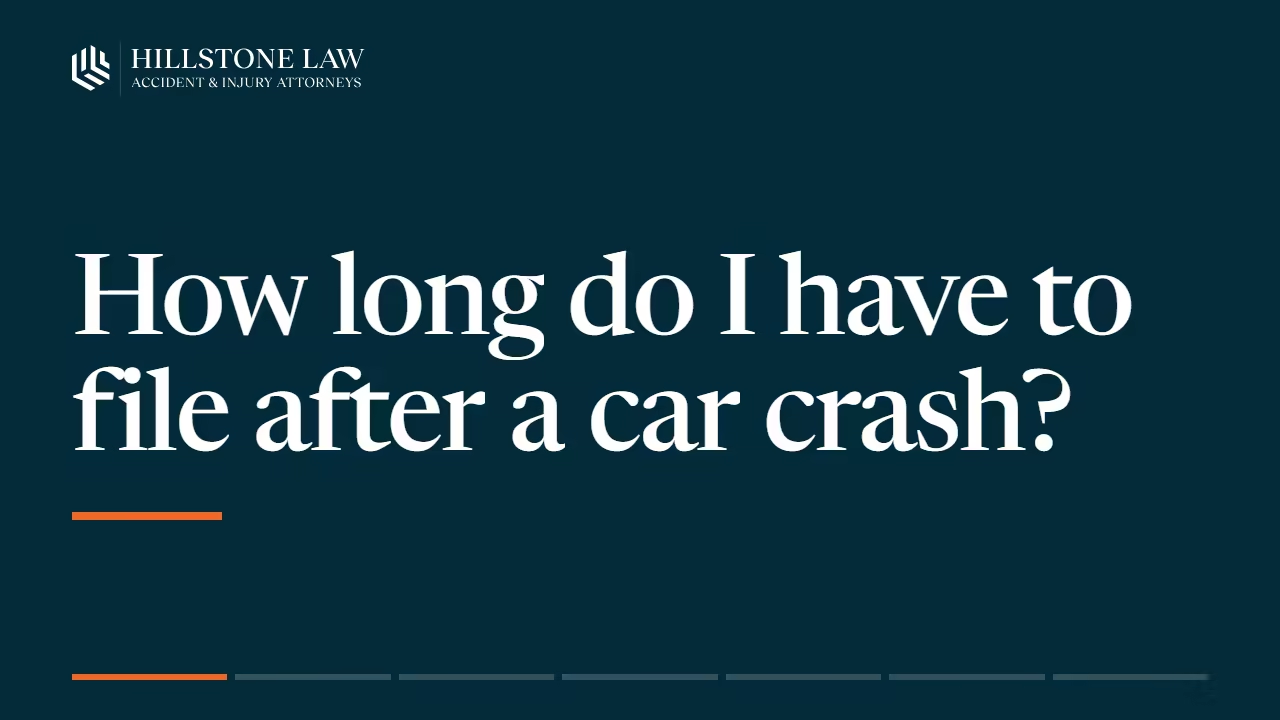
How long do I have to file after a car crash?
2 years from the injury to file a lawsuit. That is the general deadline in California. Code of Civil Procedure 335.1
6 months if a public entity was involved. A city bus, a county truck, a dangerous public road: a written claim comes first. Government Code 911.2
The clocks that start at the crash: 10 days, dMV report, form SR-1; 6 months, claim against a public entity; 2 years, injury lawsuit; 3 years, vehicle damage only.
Negotiation does not stop the clock. If the claim is still open as the date approaches, the lawsuit must be filed to protect it.
Exceptions can shorten or extend these limits. A child was hurt; The at-fault driver died; A federal vehicle; Your own uninsured motorist claim.
Free consultation. Call and tell us what happened. (855) 691-1691 Hablamos español.
General information about California law, not legal advice for your situation.
When a lawyer usually makes a difference
- The injury is serious or still being treated. Surgery, a head or spinal injury, fractures, scarring, or time off work you cannot yet measure. Settling before treatment ends usually means settling for less than the case is worth.
- Fault is disputed. The other side blames you, or several drivers are involved. In California your compensation is reduced by your share of fault, so the fight over percentages is a fight over money.
- A company is involved. Commercial trucks, delivery vans and rideshare cars carry their own insurance rules and evidence that can disappear: truck and Uber and Lyft cases are examples.
- A government agency is involved. A city bus, a county vehicle or a dangerous public road starts a 6-month clock for a written claim (Government Code 911.2). Many people learn about it too late. See bus accidents.
- The other driver had no insurance, or too little. Your own uninsured-motorist coverage may pay, but to keep that claim alive you must settle with your insurer, sue the uninsured driver or start arbitration within 2 years of the accident (Insurance Code 11580.2).
- Someone died. Wrongful-death cases decide who may sue and how money is shared among family members. See wrongful death.
- The insurer is moving fast. A recorded-statement request in the first days, or a check with a release attached. A general release signed during your first stay in hospital, within 15 days of admission or before discharge, is presumed fraudulent under California law (Business and Professions Code 6152), but it is far better not to sign one at all.
The deadlines that apply either way
| Situation | Deadline | Law |
|---|---|---|
| Injury lawsuit against a person or company | 2 years from the injury | Code of Civil Procedure 335.1 |
| Vehicle or property damage | 3 years | Code of Civil Procedure 338 |
| Claim against a city, county, state agency or transit district | 6 months for a written claim | Government Code 911.2 |
| Injured child | the 2 years usually start at age 18, but not for government claims | Code of Civil Procedure 352 |
| DMV report (SR-1) when anyone was hurt or damage exceeded $1,000 | 10 days | Vehicle Code 16000 |
What it costs to find out
A conversation with an injury lawyer costs nothing, and you can still decide to handle the claim yourself afterwards. Ours works the same way: No fees unless you get paid. The fees page explains what a fee would be if you hire us, and our guide to choosing a lawyer lists what to ask any firm.
How much does a personal injury lawyer cost in California?
Read the transcript
How much does a personal injury lawyer cost in California?
How much does a personal injury lawyer cost?
No fees unless you get paid. Our fee comes only from what we recover for you.
What you pay along the way: Nothing to hire us; Nothing while the case is open; Nothing by the hour.
A percentage of the recovery, in writing. You sign the agreement before we start. California law does not set the percentage. It is negotiable. Business and Professions Code 6147
Before you sign a settlement, we go through it line by line. The gross amount; Our fee; Each lien; What you receive.
Free consultation. Call and tell us what happened. (855) 691-1691 Hablamos español.
General information about California law, not legal advice for your situation.
What to do now, with or without a lawyer
- Get medical care and follow it through. Gaps in treatment are what insurers point to first.
- Report the crash to the police if anyone was hurt, and file the DMV SR-1 within 10 days when the law requires it.
- Photograph the vehicles, the scene and your injuries, and keep every bill and pay stub.
- Tell your own insurer promptly. Be careful with the other driver's insurer: you do not have to give them a recorded statement.
- Write down the deadline that applies to you.
What we do if you call
We answer 24 hours a day, 7 days a week. We tell you honestly whether you need a lawyer, and if you do not, we say so. Our intake team speaks Spanish. At your request, we can meet you at home or in the hospital.
This is general information about California law, not legal advice for your situation.











