

How the reduction works
The jury, or the negotiation that anticipates it, decides two things: the full value of your losses, and each person's share of fault. Your recovery is the full value less your own share. If you were a quarter to blame, you recover three quarters; if you were three quarters to blame, you still recover the quarter that was the other side's.
The rule has roots in the Civil Code itself. Everyone is responsible for injuries caused by a lack of ordinary care, "except so far as" the injured person brought the injury on themselves (Civil Code 1714). Before 1975, that exception could wipe out a claim entirely. The California Supreme Court replaced the all-or-nothing rule with a proportional one, and that is the rule courts apply today.
That is why fault arguments are money arguments. Every point of fault an insurer attributes to you comes off your recovery.
Can I get paid if I was partly at fault in California?
Read the transcript
Can I get paid if I was partly at fault in California?
Can I get paid if I was partly at fault?
Yes. California follows pure comparative fault.
A quarter to blame? You recover three quarters. A quarter: your share of fault; Three quarters: what you recover. The full value of your losses, less your own share.
Mostly at fault? You can still recover. Three quarters: your share of fault; A quarter: what you still recover. Li v. Yellow Cab Co. (1975) 13 Cal.3d 804
Who sets the percentages: Insurers argue your share in negotiation; At trial, the jury sets each person's share; The evidence: video, witnesses, the scene.
Do not argue fault with their insurer. What you say to adjusters is quoted back. Get advice first.
Free consultation. Call and tell us what happened. (855) 691-1691 Hablamos español.
General information about California law, not legal advice for your situation.
Three exceptions that change the math
- Several defendants. For non-economic damages, such as pain and suffering, each defendant pays only its own share of fault. For economic damages, such as medical bills and lost wages, the Civil Code does not split the bill this way, so a defendant found at fault can be made to pay the full amount (Civil Code 1431.2). Naming every responsible party protects the non-economic part.
- Uninsured drivers and convicted drunk drivers. Separate from fault shares, an uninsured owner or driver of a car in the crash, or a driver convicted of DUI for that crash, generally cannot recover non-economic damages at all (Civil Code 3333.4). There is one carve-out: an uninsured owner hit by a driver convicted of DUI for that crash keeps the claim.
- Your own uninsured motorist claim. Your insurer can argue comparative fault too, because it stands in the uninsured driver's shoes.
Which part of your damages each rule reaches
| Rule | Economic damages (medical expenses, loss of earnings, repair costs) | Non-economic damages (pain, suffering, emotional distress, loss of consortium) | Law |
|---|---|---|---|
| Your own share of fault | Reduced by your share | Reduced by your share | Li v. Yellow Cab Co. |
| Split between defendants | Not split by this rule | Each defendant pays only its own share | Civil Code 1431.2 |
| Uninsured owner or driver in a vehicle crash | Still recoverable | Barred, unless hit by a driver convicted of DUI for that crash | Civil Code 3333.4 |
| Driver convicted of DUI for the crash | Still recoverable | Barred | Civil Code 3333.4 |
Method: Each rule read in the code section itself on leginfo.legislature.ca.gov on 2026-11-19 (Civil Code 1431.2 and 3333.4) and in Li v. Yellow Cab Co. (1975) 13 Cal.3d 804 on scocal.stanford.edu; the definitions of the two kinds of damages are those of Civil Code 1431.2(b). 2026.
Source: California codes (leginfo).
Cite this: Which California fault rules reach economic and non-economic damages, Hillstone Law analysis of California codes (leginfo) data, 2026. https://hillstonelaw.com/guides/comparative-fault/#data-fault-rules-by-damages-type-california-2026
Read across a row and the pattern is clear: medical bills and lost pay are the sturdiest part of any claim, and the non-economic part is the one that shrinks when there are several defendants or a coverage problem. That is one reason careful proof of the bills and the lost income matters even in a case that seems to be all about pain.
How this applies by case type
| Case | Fault arguments insurers commonly raise |
|---|---|
| Car accidents | Speed, following distance, a late brake, distraction |
| Truck accidents | Cutting in front of the truck, lingering in a blind spot, a sudden lane change |
| Motorcycle accidents | Lane position, visibility, speed |
| Pedestrian accidents | Crossing outside a crosswalk, dark clothing, phone use |
| Slip and fall injuries | Not looking, unsuitable shoes, an obvious hazard |
| Bicycle accidents | Riding against traffic, lights at night |
A truck company and its insurer argue fault the same way any driver's insurer does, but they usually arrive with more evidence of their own: dash cameras, the truck's electronic data and a team that reaches the scene early. Matching that evidence early is what keeps the percentage honest.
How fault shares are argued
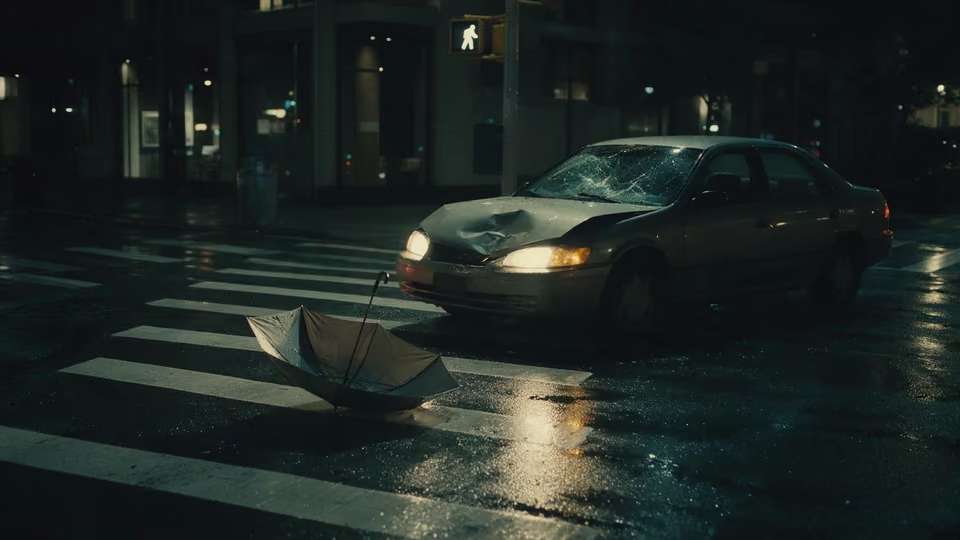
Shares are argued from evidence. Video, event data, witness accounts, the scene and the injuries themselves point to what each person did. A strong file on the other side's conduct usually shrinks the argument about yours.
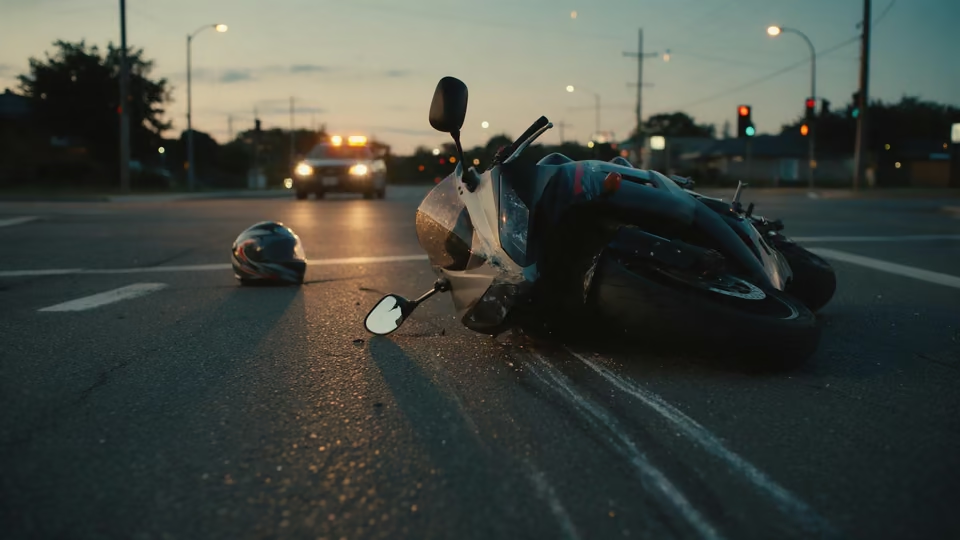
Some arguments go to damages rather than fault. Insurers sometimes argue that a missing seat belt or helmet made the injury worse. Whether and how that reduces a recovery depends on the evidence linking it to the injury, and it is argued case by case.
What you said matters. Statements at the scene and to adjusters are quoted back. "I didn't see him" is often used to argue inattention.
Insurance is not proof of fault. A jury does not hear that the other driver carried liability insurance as evidence that they were careless (Evidence Code 1155). Fault is decided from what each person did, not from who has coverage.
Do not assume you have no claim. Many people who think the crash was partly their fault still have a substantial claim for the other side's share.
What to do now
- Write down what the other person did, and what you did, as accurately as you can.
- Collect evidence that shows the other side's conduct: video, witnesses, photographs.
- Avoid discussing fault with the other driver's insurer before getting advice.
- Get medical care; the size of the claim is set by the injury, the share by the evidence.
- Note the deadline: 2 years from the injury for most claims (Code of Civil Procedure 335.1).
What we do for you
We gather the evidence that answers the fault arguments and push back on percentages the evidence does not support. No fees unless you get paid. We answer 24 hours a day, 7 days a week, and our intake team speaks Spanish. At your request, we can meet you at home or in the hospital.
This is general information about California law, not legal advice for your situation.











