

If someone borrows your car and crashes, are you liable?
Yes, up to a limit, if they drove it with your permission. California makes the owner of a vehicle responsible for injuries caused by anyone who drives it with the owner's permission, spoken or implied (Vehicle Code 17150).
That owner liability is capped. When the driver was not the owner's employee or agent, the owner is liable for no more than $15,000 for one injured person and $30,000 for everyone hurt in the crash, and never for punitive damages imposed to punish the driver (Vehicle Code 17151). The cap protects the owner only. The driver who caused the crash is liable for the full harm, and the owner's insurance policy usually covers a permitted driver up to its own limits.
The cap does not apply when the driver was working for the owner. A business whose employee crashes a company vehicle on the job is generally responsible for the whole of the harm, not just the capped amount.
If the car was taken without permission, the owner is generally not liable under this rule. Report a stolen car to the police right away; that report is strong proof that no permission was given.
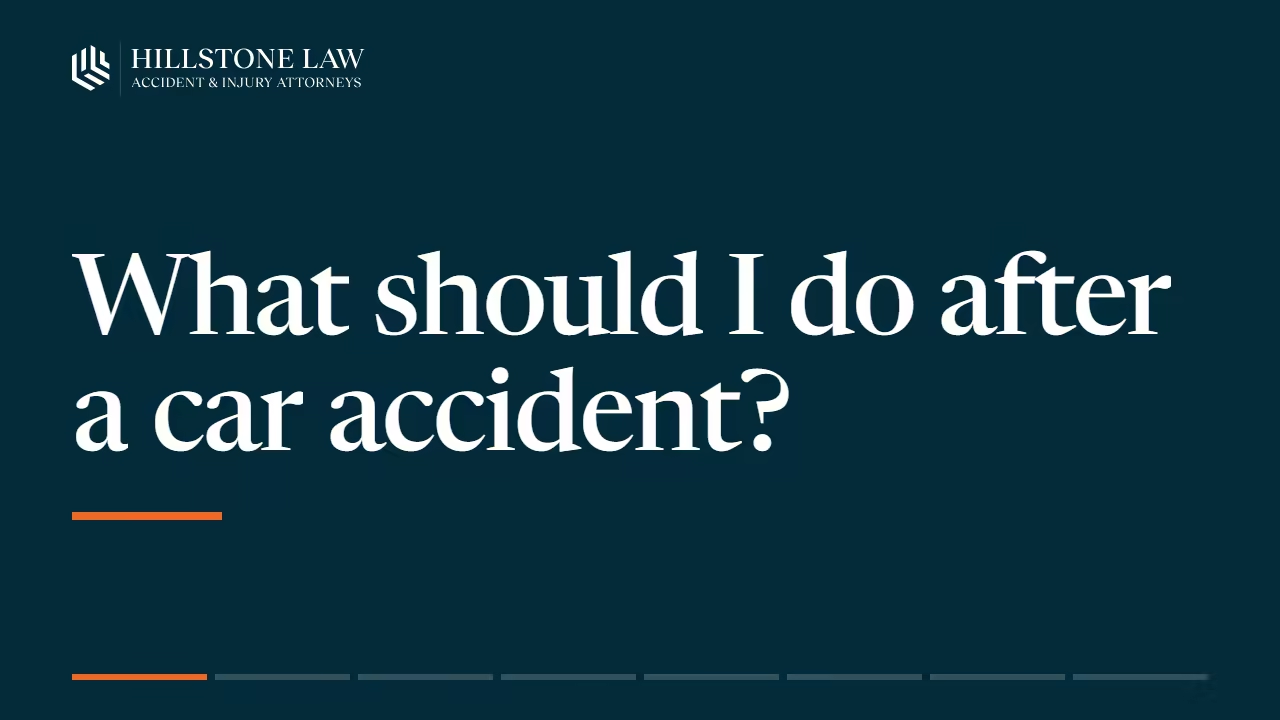
What should I do after a car accident in California?
Read the transcript
What should I do after a car accident in California?
What should I do after a car accident?
Stop. Check on everyone. Call 911 if anyone is hurt, even slightly.
Exchange information. Names, licence numbers, plates, insurers and policy numbers.
Photograph it. Find witnesses. The cars, the road, the signals, your injuries. Get names and phone numbers.
Say little about fault. Be polite, stick to facts, and do not guess about speed or distance.
See a doctor within days. Even if you feel mostly fine. Neck, back and head injuries often show up later.
10 days to report the crash to the DMV. When anyone was hurt, or damage was over $1,000. Form SR-1 · Vehicle Code 16000
Free consultation. Call and tell us what happened. (855) 691-1691 Hablamos español.
General information about California law, not legal advice for your situation.
How does California decide who caused a crash?
Two questions decide fault in almost every case.
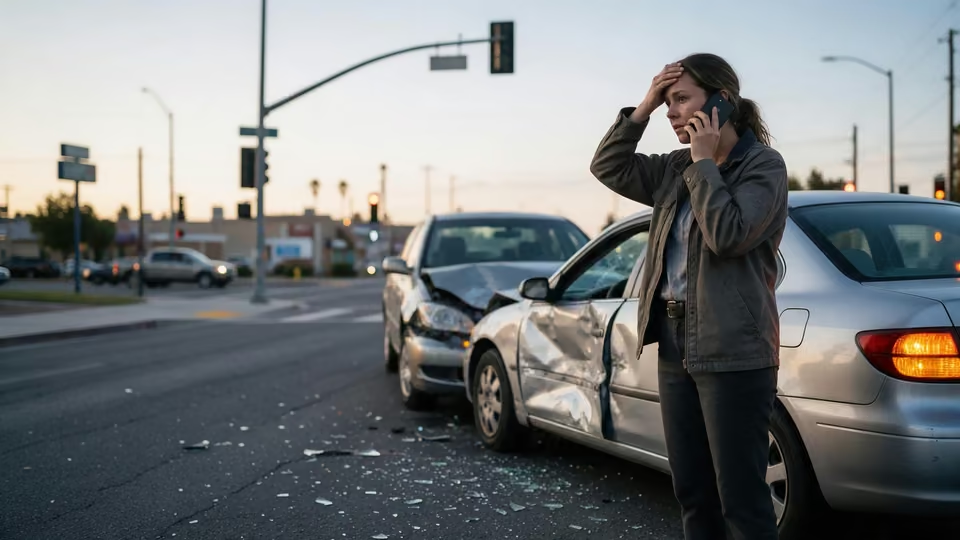
Did a driver fall short of ordinary care? Everyone must take reasonable care not to injure others. For a driver that means watching the road, keeping a safe speed and following distance, and obeying the traffic rules.
Did that failure cause the harm? A driver can be careless without causing anything. A driver going a few miles over the limit who is hit by someone running a stop sign may carry little or no fault, if the speed made no difference.
The Vehicle Code does most of the work. When a driver breaks a traffic rule, the rule was meant to prevent that kind of crash, and the crash hurt the kind of person the rule protects, the law presumes the driver was careless (Evidence Code 669). The driver can rebut that presumption only by showing they acted as a reasonably careful person trying to obey the law would have.
Which rule decides fault in common crashes?
Each kind of crash has a rule that usually decides it. The rule is the starting point; the evidence decides how far it carries.
| Crash | The duty that usually decides it | Law |
|---|---|---|
| Rear-end | Do not follow more closely than is reasonable for the speed, traffic and road | Vehicle Code 21703 |
| Lane change or sideswipe | Change lanes only when it is reasonably safe, and signal when others are affected | Vehicle Code 22107 |
| Backing out or pulling away from the curb | Do not back up or start from a stop until it can be done with reasonable safety | Vehicle Code 22106 |
| Left turn across traffic | The turning driver yields to oncoming vehicles close enough to be a hazard | Vehicle Code 21801 |
| Too fast for the conditions | Never faster than is reasonable for weather, visibility, traffic and the road, even under the posted limit | Vehicle Code 22350 |
| Phone in hand | Do not drive while holding and operating a phone unless it is used hands-free | Vehicle Code 23123.5 |
| Drunk or drugged driving | Do not drive under the influence of alcohol or drugs | Vehicle Code 23152 |
Method: Each duty is the cited Vehicle Code section as read on leginfo in November 2026, stated in plain words; the presumption of negligence is Evidence Code 669. 2026.
Source: California codes (leginfo).
Cite this: The Vehicle Code rule behind common car crashes, Hillstone Law analysis of California codes (leginfo) data, 2026. https://hillstonelaw.com/personal-injury/auto-accidents/who-is-at-fault/#data-fault-rule-table-2026
Signals and stop signs have their own rules; see intersection crashes and T-bone crashes. For rear-end crashes in detail, see rear-end crashes.
What do police most often record as the cause?
When officers write a crash report, they record the primary cause they believe led to it. Across California's big cities the same two causes lead year after year: a speed that was unsafe for the conditions, and an unsafe turn or lane change.
| City | Unsafe speed for conditions | Unsafe turn or lane change |
|---|---|---|
| Los Angeles | 12,249 | 3,994 |
| San Diego | 5,134 | 3,053 |
| San Jose | 3,499 | 1,359 |
| Sacramento | 3,257 | 1,470 |
| San Francisco | 2,282 | 1,126 |
Method: Primary collision factor recorded by police and CHP officers on injury crash reports in each city, as reported to the California Crash Reporting System (CCRS) for 2022-2024. 2022–2024.
Source: California Highway Patrol (CCRS), read November 19, 2026.
Cite this: The two causes officers recorded most often in five California cities, Hillstone Law analysis of California Highway Patrol (CCRS) data, 2022–2024. https://hillstonelaw.com/personal-injury/auto-accidents/who-is-at-fault/#data-primary-crash-causes-2022-2024
The officer's finding is evidence, and insurers lean on it, but it is an opinion formed after the fact, often without video or independent witnesses. It does not bind an insurer, a judge or a jury.
How is fault shared when both drivers made mistakes?
California uses pure comparative fault (Li v. Yellow Cab Co. (1975) 13 Cal.3d 804). Each person's responsibility is set as a percentage, and your damages are reduced by your own share.
A worked example, with shares and no amounts: a driver changes lanes without signaling and clips a car whose driver was going too fast for the rain. A jury might find the lane-changer two-thirds to blame and the speeding driver one-third. The speeding driver recovers two-thirds of their losses. The lane-changer, if hurt, recovers one-third of theirs. Neither claim disappears.
Because every point of fault comes off the payment, the other driver's insurer has a reason to put as much of it on you as it can. A claim that you were partly at fault is an argument about the amount, not about whether you have a claim. How shares are argued is covered in what a car accident settlement is worth.

How long do I have to sue after a car crash in California?
Read the transcript
How long do I have to sue after a car crash in California?
How long do I have to file after a car crash?
2 years from the injury to file a lawsuit. That is the general deadline in California. Code of Civil Procedure 335.1
6 months if a public entity was involved. A city bus, a county truck, a dangerous public road: a written claim comes first. Government Code 911.2
The clocks that start at the crash: 10 days, dMV report, form SR-1; 6 months, claim against a public entity; 2 years, injury lawsuit; 3 years, vehicle damage only.
Negotiation does not stop the clock. If the claim is still open as the date approaches, the lawsuit must be filed to protect it.
Exceptions can shorten or extend these limits. A child was hurt; The at-fault driver died; A federal vehicle; Your own uninsured motorist claim.
Free consultation. Call and tell us what happened. (855) 691-1691 Hablamos español.
General information about California law, not legal advice for your situation.
What can cut your own recovery, whoever was at fault?
Driving uninsured, or drunk and convicted. If you were driving without the insurance the law requires, owned an uninsured car involved in the crash, or were convicted of drunk driving for that trip, you cannot recover non-economic damages such as pain and suffering (Civil Code 3333.4). There is an exception for an uninsured injured person when the other driver was convicted of drunk driving. Medical bills and lost wages remain recoverable either way.
Insurance is not proof of fault. Whether the other driver had insurance, or you did, cannot be used to prove who was careless (Evidence Code 1155). Fault is decided on what happened on the road. If no insurance covers the at-fault driver, your own uninsured motorist coverage may.
What should you do if fault is disputed?
- Get the police report and read the narrative and the diagram. Mistakes in it can be challenged with other evidence.
- Write down what the other driver said at the scene, word for word, especially any apology or admission.
- Find the neutral evidence: witnesses' names, nearby cameras, and photos of where the cars came to rest.
- Do not accept a percentage on the phone. An adjuster's first split of fault is an opening position, not a finding.
- Watch the deadlines. Generally 2 years to sue for injuries (Code of Civil Procedure 335.1); 6 months to claim against a public agency. See how long you have to sue.
What does a lawyer do about fault?
- We match the evidence to the rule. Report, photos, video and witnesses, set against the duty each driver had.
- We name everyone who shares the blame. Driver, owner, employer and, where the road played a part, the public agency inside its 6-month window.
- We push back on the insurer's split. With the evidence in hand, not with arguments.
- We file suit if the insurer will not move. See when to file a car accident lawsuit.
We answer 24 hours a day, 7 days a week, and our intake team speaks Spanish. At your request, we can meet you at home or in the hospital. We work from 16 offices across California.
This is general information about California law, not legal advice for your situation.











