

What is the legal test for fault?
Carelessness, measured against an ordinary careful person. California's basic rule is that everyone is responsible for an injury caused by a lack of ordinary care in managing their property or their own conduct, except to the extent the injured person brought the injury on through their own lack of care (Civil Code 1714).
That gives every injury claim the same four questions. Did the other person owe you a duty of care? (Drivers, property owners and businesses almost always do.) Did they fall short of it? Did that failure cause your injury? And what harm resulted? Fault is the second and third questions together: a careless act that actually caused the harm.
Notice what the test is not. It is not who got the ticket, who apologized, or whose car looks worse. A traffic citation is a separate matter between the driver and the state. An officer's opinion in a police report is evidence, but it does not bind an insurer or a court. Fault is decided from all the evidence, and it can be argued again by each side until a jury or a settlement ends the question.
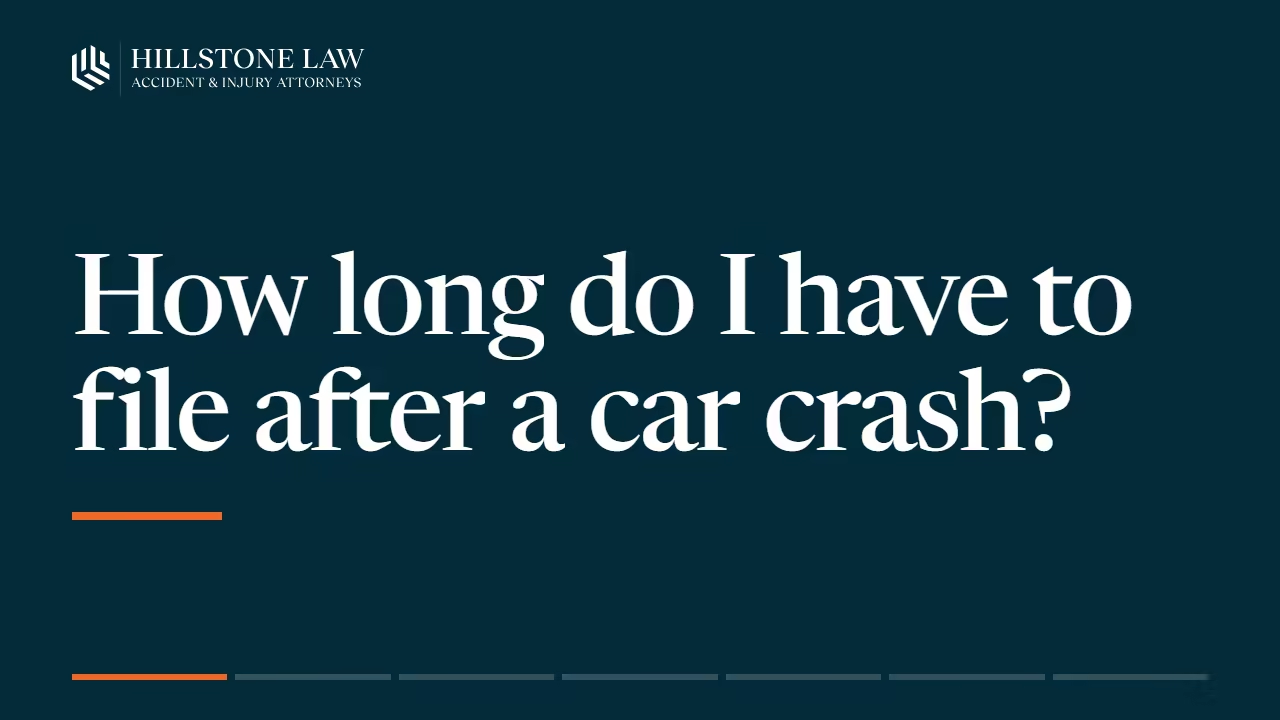
How long do I have to sue after a car crash in California?
Read the transcript
How long do I have to sue after a car crash in California?
How long do I have to file after a car crash?
2 years from the injury to file a lawsuit. That is the general deadline in California. Code of Civil Procedure 335.1
6 months if a public entity was involved. A city bus, a county truck, a dangerous public road: a written claim comes first. Government Code 911.2
The clocks that start at the crash: 10 days, dMV report, form SR-1; 6 months, claim against a public entity; 2 years, injury lawsuit; 3 years, vehicle damage only.
Negotiation does not stop the clock. If the claim is still open as the date approaches, the lawsuit must be filed to protect it.
Exceptions can shorten or extend these limits. A child was hurt; The at-fault driver died; A federal vehicle; Your own uninsured motorist claim.
Free consultation. Call and tell us what happened. (855) 691-1691 Hablamos español.
General information about California law, not legal advice for your situation.
How do traffic laws prove fault?
Strongly. California law presumes a person was careless when four things are true: they broke a statute or regulation, the violation caused the injury, the injury was the kind the law was meant to prevent, and the injured person was someone the law was meant to protect (Evidence Code 669). The presumption can be rebutted, for example by showing that the person did what a reasonable person would have done in the circumstances, but it shifts the argument.
| Situation | The rule | Usually points to | Common exception | Law |
|---|---|---|---|---|
| Rear-end crash | Do not follow more closely than is reasonable and prudent | The driver behind | A car that cuts in and brakes hard | Vehicle Code 21703 |
| Left turn | Yield to oncoming traffic close enough to be a hazard | The turning driver | An oncoming driver speeding or running the light | Vehicle Code 21801 |
| Red light | Stop and stay stopped until a signal allows you to go | The driver who entered on red | Disputed signal timing; a turn the law allowed | Vehicle Code 21453 |
| Speed | No speed faster than is safe for weather, visibility and traffic | The speeding driver, even under the limit | Another driver's sudden move | Vehicle Code 22350 |
| Lane change | Move only when it is safe, and signal first | The driver who changed lanes | The other driver sped up into the gap | Vehicle Code 22107 |
| Phone in hand | No holding and operating a phone while driving | The distracted driver | Hands-free use the law allows | Vehicle Code 23123.5 |
| Crosswalk | Yield to a pedestrian in a marked or unmarked crosswalk | The driver | A pedestrian who stepped suddenly into the car's path | Vehicle Code 21950 |
| Outside a crosswalk | The pedestrian yields to vehicles close enough to be an immediate hazard | Shared; the driver still owes due care | A driver who was not watching | Vehicle Code 21954 |
| Backing or pulling out | Do not back up or start from parked until it is reasonably safe | The driver backing or pulling out | A driver speeding through a parking lane | Vehicle Code 22106 |
Method: Each row restates the cited Vehicle Code section as read on leginfo in November 2026; the usual-fault column is a tendency, not a rule, and the exception column names the common counter-argument. 2026.
Source: California codes (leginfo).
Cite this: Rules of the road that most often decide fault in a California crash, Hillstone Law analysis of California codes (leginfo) data, 2026. https://hillstonelaw.com/guides/who-is-at-fault/#data-fault-rules-2026
These patterns are where arguments start, not where they end. A rear driver can show that the car ahead swerved in and stopped; a left-turner can show that the oncoming car ran a red light. Evidence decides which story holds.
What evidence decides fault?
Fault is pieced together from many sources, and the strongest cases have several that agree.
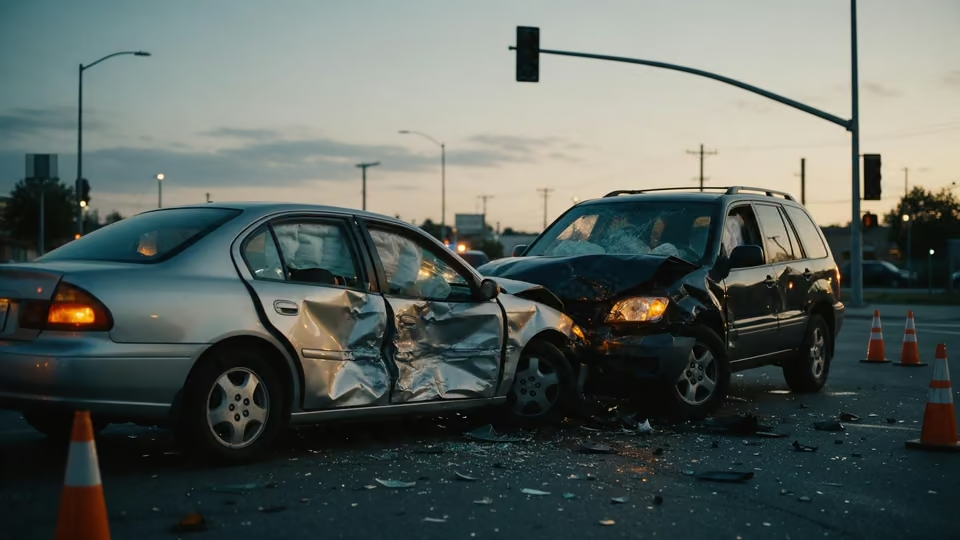
- Physical evidence. Where each vehicle was damaged, where they came to rest, skid marks, debris, and the event data many cars record in the seconds before a crash.
- Video. Dashcams, doorbell cameras, shops and traffic cameras often settle a dispute outright, but many systems record over within days, so ask early and in writing.
- Independent witnesses. People with no stake in the outcome carry the most weight. Get names and phone numbers at the scene.
- The police report. It records statements, a diagram and often the officer's opinion of the cause. The agency must release it to the people involved (Vehicle Code 20012).
- Phone records. When distraction is suspected, records can show whether a phone was in use at the moment of impact.
- What people said. Statements at the scene and to insurers are evidence too. "I'm sorry" or a guess about your own speed can be quoted back to you.
When the evidence is thin or disputed, an accident reconstruction engineer can work out speeds, angles and sight lines from the physical marks. That is common in serious cases and in crashes involving trucks or several vehicles.
Can a road, a product or an employer be at fault?
Yes, and finding them can change a case completely.
An employer. An employer is usually responsible for an employee who causes a crash while driving for work, and a company may also be at fault on its own for hiring, training or scheduling decisions. In taxi and rideshare crashes, the question of who answers for the driver is often the whole case.
A vehicle's owner. An owner who lends a car is responsible for injuries the driver causes with permission (Vehicle Code 17150), but when that liability rests only on ownership it is capped at $15,000 for one person and $30,000 per accident (Vehicle Code 17151).
A public agency. A dangerous public road, a missing sign or a broken signal can put part of the fault on the city, county or state that controls it. A written claim to the agency is due within 6 months of the injury (Government Code 911.2). Our guide to claims against a government entity explains the process.
A manufacturer. A defective tire, brake or airbag can make the maker responsible, which is one reason the vehicles should be preserved after a serious crash.
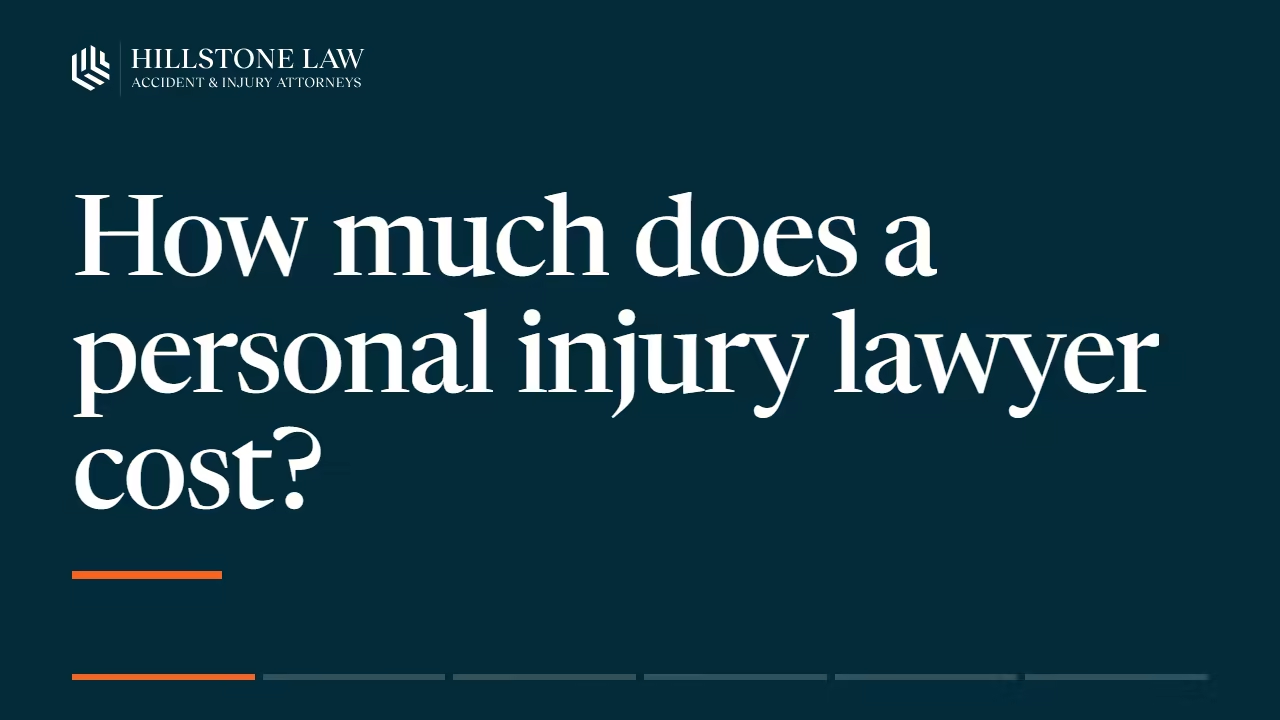
How much does a personal injury lawyer cost in California?
Read the transcript
How much does a personal injury lawyer cost in California?
How much does a personal injury lawyer cost?
No fees unless you get paid. Our fee comes only from what we recover for you.
What you pay along the way: Nothing to hire us; Nothing while the case is open; Nothing by the hour.
A percentage of the recovery, in writing. You sign the agreement before we start. California law does not set the percentage. It is negotiable. Business and Professions Code 6147
Before you sign a settlement, we go through it line by line. The gross amount; Our fee; Each lien; What you receive.
Free consultation. Call and tell us what happened. (855) 691-1691 Hablamos español.
General information about California law, not legal advice for your situation.
Who is at fault when someone is hurt on property?
The same duty of ordinary care applies to the way an owner manages property. Civil Code 1714 makes everyone responsible for injuries caused by a lack of ordinary care "in the management of his or her property", and it does not limit that duty to invited guests. Whether the owner was careless depends on what a reasonable owner would have done: whether the hazard was known or should have been found, how long it was there, and whether it could have been fixed or warned about. Who the visitor was, and whether the owner could have expected them, is part of that judgment, which is why a trespasser's case is usually harder than a customer's.
One clear exception: an owner who lets people use land for recreation, such as hiking, fishing or riding, generally owes no duty to keep it safe for them or warn them (Civil Code 846). That immunity does not apply to a willful or malicious failure to guard or warn against a danger, to people who paid to enter, or to people the owner expressly invited. Store, apartment and parking-lot falls are covered in our premises liability pages, and proving the owner's carelessness in proving negligence.
Who decides fault in the end?
In most cases, the insurers decide it first, by negotiation, and the settlement reflects the split both sides expect a jury would find. If the case is filed, a jury (or a judge, if both sides give up a jury) decides fault after hearing all the evidence, and assigns each party a percentage. The police report, the citation and the adjuster's view are all just evidence along the way.
Your own insurance status matters too. An owner or driver of an uninsured vehicle involved in the crash generally cannot recover pain and suffering from the other driver, however clear that driver's fault, unless the other driver is convicted of driving under the influence (Civil Code 3333.4). How a lawsuit reaches that point is in our lawsuit guide.
How is fault argued in each type of case?
| Case type | The usual fault question |
|---|---|
| Car accidents | Who had the right of way, who was following too closely |
| Truck accidents | The driver's conduct and the carrier's hours, hiring and maintenance |
| Motorcycle accidents | Visibility, lane position, and whether a car turned across the rider |
| Uber and Lyft crashes | Which driver caused it; the app status decides whose insurance pays |
| Pedestrian accidents | The crosswalk, the signals and the driver's lookout |
| Bicycle accidents | Lane position, door zones, and whether the driver checked before turning |
| Bus accidents | The operator's driving and the bus company's or agency's own care, plus the public claim rules |
| Wrongful death | The family proves the same fault the injured person would have had to prove |
What should you do now?
- Get the police report number and request the report.
- Photograph everything before it moves: the vehicles, their positions, the road, signals and signs.
- Collect witnesses' names and phone numbers.
- Ask nearby businesses and neighbors to keep their camera footage, in writing.
- Write down your own account the same day, including speed, lane and signals.
- Do not discuss fault with the other driver's insurer until you have advice.
We gather the evidence that answers the fault arguments: the report, the video, the vehicle data, the witnesses and, when needed, an accident reconstruction. We answer 24 hours a day, 7 days a week, our intake team speaks Spanish, and at your request we can meet you at home or in the hospital.
This is general information about California law, not legal advice for your situation.











