

The main kinds of vicarious liability in California
| Who pays | For whom | Law |
|---|---|---|
| An employer or principal | An employee or agent acting in the course of the work | Civil Code 2338 |
| A vehicle owner | A driver the owner allowed to use the vehicle | Vehicle Code 17150, limited by 17151 |
| The adult who signed a minor's licence application | The minor's driving | Vehicle Code 17707 |
| A parent or guardian who let a minor drive | The minor's driving | Vehicle Code 17708 |
| A parent or guardian | A minor's willful misconduct | Civil Code 1714.1 |
| A public agency | An employee acting in the scope of employment | Government Code 815.2 |
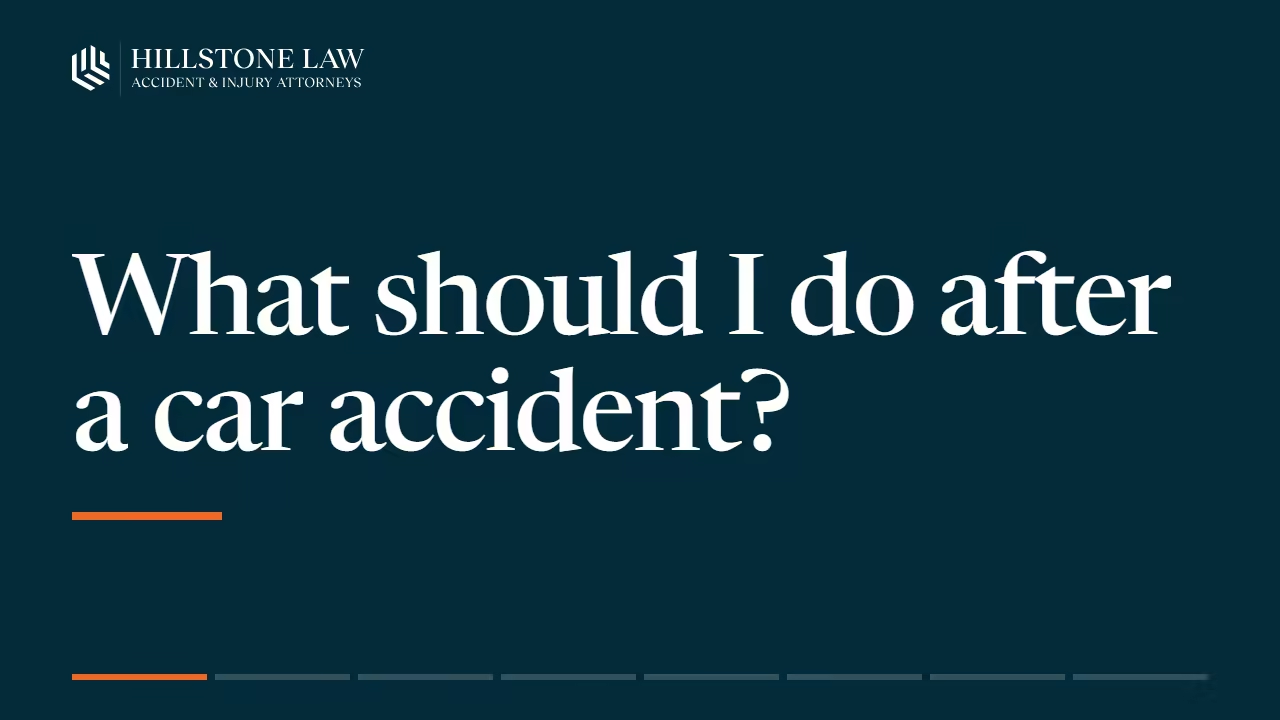
What should I do after a car accident in California?
Read the transcript
What should I do after a car accident in California?
What should I do after a car accident?
Stop. Check on everyone. Call 911 if anyone is hurt, even slightly.
Exchange information. Names, licence numbers, plates, insurers and policy numbers.
Photograph it. Find witnesses. The cars, the road, the signals, your injuries. Get names and phone numbers.
Say little about fault. Be polite, stick to facts, and do not guess about speed or distance.
See a doctor within days. Even if you feel mostly fine. Neck, back and head injuries often show up later.
10 days to report the crash to the DMV. When anyone was hurt, or damage was over $1,000. Form SR-1 · Vehicle Code 16000
Free consultation. Call and tell us what happened. (855) 691-1691 Hablamos español.
General information about California law, not legal advice for your situation.
Employers and employees
A principal is responsible to others for the negligence of its agent in the business of the agency (Civil Code 2338). In practice, an employer answers for an employee who causes harm while doing the job: a delivery driver on a route, a plumber driving between jobs in a company van, a store worker who leaves a spill.
The disputes are about whether the employee was "on the job":
- A personal detour. A driver who leaves the route for a purely personal errand may be outside the job; a small detour on the way usually is not.
- The commute. Ordinary driving to and from work is usually outside the job, but there are exceptions, for example when the employer requires the employee to bring a vehicle for work or the trip serves the employer.
- Employee or contractor? Companies often say the driver was an independent contractor. The label is not the end of the question; the facts of the relationship are. For app-based drivers, state law treats drivers who meet its conditions as independent contractors (Business and Professions Code 7451), but rideshare insurance still covers trips (Public Utilities Code 5433).
Vehicle owners
An owner who lets someone else drive is liable for that driver's negligence (Vehicle Code 17150). When the only link is ownership, that liability is capped at $15,000 for one person's injury, $30,000 for several, and $5,000 for property (Vehicle Code 17151). The cap does not apply when the driver was the owner's employee or agent, which is why showing a work link can matter so much.
Parents and teenage drivers
When a minor causes a crash, two Vehicle Code rules can make adults liable with the minor: the person who signed and verified the minor's licence application (Vehicle Code 17707), and a parent or guardian who allowed the minor to drive (Vehicle Code 17708). Other limits in the Vehicle Code cap this liability, so the family's auto insurance policy is usually the main source of payment.
Separately, parents are liable for a minor's willful misconduct that injures someone, up to a limit that the Judicial Council adjusts every two years for inflation, and for a personal injury only for medical, dental and hospital expenses within that limit (Civil Code 1714.1). For acts on or after July 1, 2025, the limit is $56,400 for each tort (California Rules of Court, Appendix B); the limit that applies is the one in force when the act happened.
Public agencies
A city, county or state agency is liable for an injury caused by its employee acting within the scope of employment, when the employee would be liable (Government Code 815.2). A bus driver, a city truck driver or a police officer on duty are common examples. Claims against public agencies need a written claim within 6 months (Government Code 911.2).
Lending a car to the wrong driver
An owner can also be liable for its own choice to hand the keys to someone it knew, or should have known, was unfit to drive: a person without a licence, a driver with a record of crashes, or someone who was drunk. That is a claim of the owner's own carelessness, not vicarious liability, so the ownership cap in the Vehicle Code does not limit it in the same way. It often comes up when a family member or friend borrows a car, and it can open the owner's own policy and assets to the claim.

How long do I have to sue after a car crash in California?
Read the transcript
How long do I have to sue after a car crash in California?
How long do I have to file after a car crash?
2 years from the injury to file a lawsuit. That is the general deadline in California. Code of Civil Procedure 335.1
6 months if a public entity was involved. A city bus, a county truck, a dangerous public road: a written claim comes first. Government Code 911.2
The clocks that start at the crash: 10 days, dMV report, form SR-1; 6 months, claim against a public entity; 2 years, injury lawsuit; 3 years, vehicle damage only.
Negotiation does not stop the clock. If the claim is still open as the date approaches, the lawsuit must be filed to protect it.
Exceptions can shorten or extend these limits. A child was hurt; The at-fault driver died; A federal vehicle; Your own uninsured motorist claim.
Free consultation. Call and tell us what happened. (855) 691-1691 Hablamos español.
General information about California law, not legal advice for your situation.
Why it matters to your claim
- Bigger insurance. A business's commercial policy is usually much larger than an individual's personal policy.
- A solvent defendant. An individual may have little beyond a minimum policy; a company or agency can pay a full judgment.
- More records. Employers keep dispatch logs, GPS data and personnel files that help prove what happened.
Vicarious liability is not the only route
Vicarious liability makes a company pay for its employee's carelessness. A company can also be liable for its own carelessness: hiring a driver with a bad record, failing to train, or setting unsafe schedules. That is direct liability, and it is often claimed alongside vicarious liability. Punitive damages against an employer for an employee's conduct are different again: they need proof that an officer, director or managing agent knew in advance, authorized or ratified the conduct (Civil Code 3294).
What we do for you
We find out whom the person who hurt you was working for, gather the records that show the link, and bring the employer, owner or agency into the claim along with its insurance. No fees unless you get paid. We answer 24 hours a day, 7 days a week. Our intake team speaks Spanish.
Results
$1 million settlement
Injured in a car accident.











