

What should you do at the scene of a car accident?
Safety first, then evidence. What you do in the first half hour decides what you can prove months later, when the cars are repaired and the witnesses have moved on.
- Stop and check on everyone. Call 911 if anyone is hurt, even slightly. Leaving the scene of an injury crash is a crime, whoever caused it.
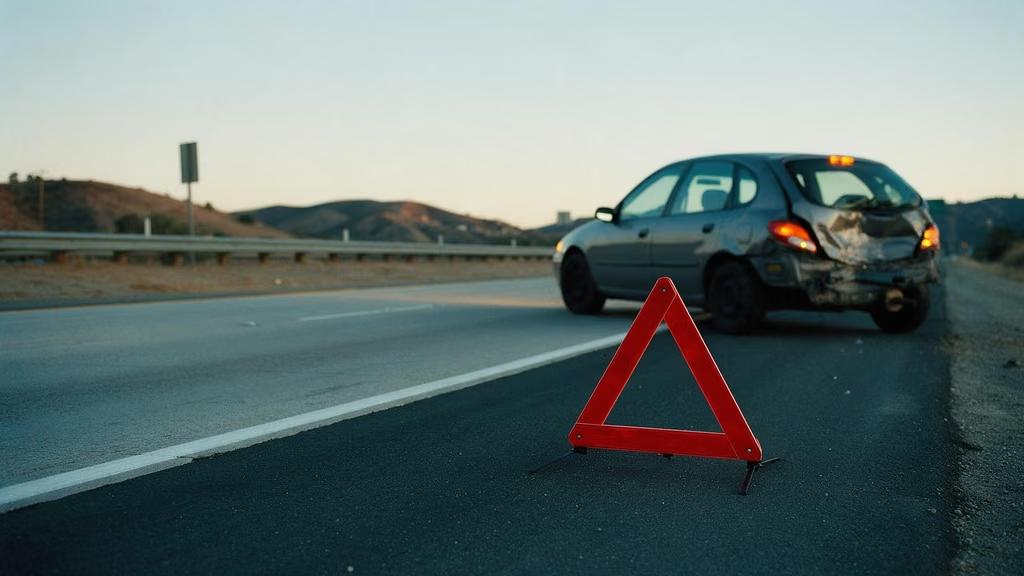
- Move out of traffic if you can do it safely. Turn on your hazard lights and set out a warning triangle or flares if you carry them.
- Exchange information. Names, driver's license numbers, plates, insurers and policy numbers. Every driver must carry evidence of insurance and show it to an officer on request (Vehicle Code 16020, 16028).
- Photograph everything. The cars where they stopped, the damage from several angles, the road, signals, skid marks, debris and any visible injuries.
- Get witnesses' names and phone numbers. People leave quickly, and an independent witness often settles an argument about the light.
- Ask for the officer's name and the report number. If police respond, that number is how you get the report later.
- Say little about fault. Be polite, stick to facts, and do not guess about speed or distance. "I'm sorry" can be read as an admission.
The steps at the scene, in 41 seconds.
Read the transcript
What should I do after a car accident in California?
What should I do after a car accident?
Stop. Check on everyone. Call 911 if anyone is hurt, even slightly.
Exchange information. Names, licence numbers, plates, insurers and policy numbers.
Photograph it. Find witnesses. The cars, the road, the signals, your injuries. Get names and phone numbers.
Say little about fault. Be polite, stick to facts, and do not guess about speed or distance.
See a doctor within days. Even if you feel mostly fine. Neck, back and head injuries often show up later.
10 days to report the crash to the DMV. When anyone was hurt, or damage was over $1,000. Form SR-1 · Vehicle Code 16000
Free consultation. Call and tell us what happened. (855) 691-1691 Hablamos español.
General information about California law, not legal advice for your situation.
What if the other driver drives off, or a bus, truck or Uber was involved?
Six situations change the rules, and some of them carry deadlines far shorter than the usual two years.
- The other driver drives off. Report it to the police within 24 hours. That report, physical contact between the vehicles and a sworn statement to your insurer within 30 days keep your uninsured motorist claim alive (Insurance Code 11580.2). See hit-and-run claims.
- A city bus, county truck or other public vehicle was involved. The same applies when a public road defect caused the crash. A written claim to the agency is due within 6 months (Government Code 911.2), long before the 2-year limit.
- An Uber or Lyft was involved. Screenshot the app and the trip. Which policy pays depends on what the app showed at the moment of the crash: offline, waiting for a ride request, or carrying a passenger.
- A commercial truck was involved. Note the company name and the numbers painted on the cab and trailer. Logbooks, dashcam footage and engine data belong to the carrier and can disappear fast.
- The other driver has no insurance. Your own uninsured motorist coverage usually applies, so check your policy and tell your insurer promptly.
- You were driving without insurance. California law generally bars an uninsured driver from recovering pain and suffering from the other driver, with exceptions (Civil Code 3333.4). Medical bills and lost wages can still be claimed.
What should you do in the first days after the crash?
See a doctor, tell your insurer, file the DMV report if it applies, and start a folder. These steps protect your health first and your claim second.
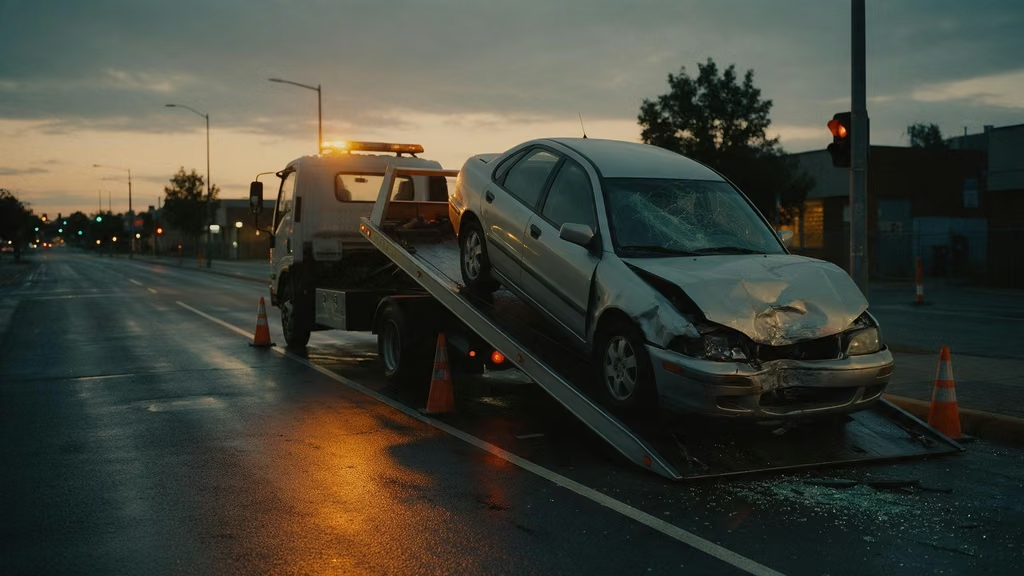
- See a doctor within a few days. Do it even if you feel mostly fine. Neck, back and head injuries often show up a day or two later, and an early record links them to the crash.
- Tell your own insurer promptly. Most policies require prompt notice of any crash, even one that was not your fault.
- File the SR-1 with the DMV within 10 days. It is required when anyone was hurt or killed, or property damage was over $1,000 (Vehicle Code 16000), whoever was at fault.
- Request the police report. The agency must release it to the people involved and their lawyers (Vehicle Code 20012).
- Ask nearby businesses to keep their video. Many camera systems record over within days, so ask in writing and early.
- Keep a folder. Photos, the report number, claim numbers, every bill and receipt, and a note of each day you missed at work.
Which deadlines apply after a California car accident?
Most people know about the 2-year limit. The shorter deadlines are the ones that get missed, and some of them start the day of the crash.
- At the sceneStop, give your information and help anyone hurtVehicle Code 20001
- Within 24 hoursPolice report of a hit-and-run, for an uninsured motorist claimInsurance Code 11580.2
- 10 daysSR-1 report to the DMV, if anyone was hurt or damage was over $1,000Vehicle Code 16000
- 30 daysSworn statement to your insurer after a hit-and-runInsurance Code 11580.2
- 6 monthsWritten claim against a city, county, transit district or state agencyGovernment Code 911.2
- 2 yearsLawsuit for your injuriesCode of Civil Procedure 335.1
- 3 yearsLawsuit for damage to your carCode of Civil Procedure 338
| When | What is due | Law |
|---|---|---|
| At the scene | Stop, give your information and help anyone hurt | Vehicle Code 20001 |
| Within 24 hours | Police report of a hit-and-run, for an uninsured motorist claim | Insurance Code 11580.2 |
| 10 days | SR-1 report to the DMV, if anyone was hurt or damage was over $1,000 | Vehicle Code 16000 |
| 30 days | Sworn statement to your insurer after a hit-and-run | Insurance Code 11580.2 |
| 6 months | Written claim against a city, county, transit district or state agency | Government Code 911.2 |
| 2 years | Lawsuit for your injuries | Code of Civil Procedure 335.1 |
| 3 years | Lawsuit for damage to your car | Code of Civil Procedure 338 |
Method: Each deadline is the one the cited California code section sets, counted from the day of the crash unless the row says otherwise. 2026.
Source: California codes (leginfo).
Cite this: Deadlines after a car accident in California, Hillstone Law analysis of California codes (leginfo) data, 2026. https://hillstonelaw.com/personal-injury/auto-accidents/what-to-do-after-a-car-accident/#data-deadlines-2026
The 2 years do not pause while you negotiate with an insurer. Missed the 6-month government claim? An application to present a late claim may still be possible within 1 year of the crash (Government Code 911.4), and if the agency rejects a claim in writing, the lawsuit is due within 6 months of that notice (Government Code 945.6). For a child, the 2-year period generally starts at age 18, but not for claims against public entities (Code of Civil Procedure 352).
How much insurance must the other driver carry?
Less than most people expect. California's minimum liability limits rose on January 1, 2025 (Vehicle Code 16056), but they still cover only a fraction of a serious injury.
| Coverage | Minimum per crash |
|---|---|
| Injury or death of one person | $30,000 |
| Injury or death of everyone hurt in one crash | $60,000 |
| Damage to property | $15,000 |
Method: Minimum limits for policies issued or renewed on or after January 1, 2025, under Vehicle Code 16056(a)(2); earlier policies carried $15,000, $30,000 and $5,000. 2025.
Source: California codes (leginfo).
Cite this: California's minimum auto liability coverage, Hillstone Law analysis of California codes (leginfo) data, 2025. https://hillstonelaw.com/personal-injury/auto-accidents/what-to-do-after-a-car-accident/#data-insurance-minimums-2025
This is why your own policy matters. Uninsured and underinsured motorist coverage on your policy can pay where the other driver's limits run out, and for you and the relatives you live with it applies in a car or on foot (Insurance Code 11580.2). Read the declarations page of your policy now, before you need it.
What should you say to insurers?
Report the crash to your own insurer. You do not have to give the other driver's insurer a recorded statement, and you should not sign a release before you understand your injuries.
Expect the other driver's insurer to call quickly, often within a day or two, asking for a recorded statement and a medical authorization. Keep that first call short: give your name and contact details, and say you will follow up in writing. Anything you say about how you feel will be compared later with your medical records.
If a check arrives with a release, read it: a release ends the claim, including injuries that have not shown up yet. A general release signed during your first hospital stay, within 15 days of admission, is presumed fraudulent under California law (Business and Professions Code 6152), but the safer course is not to sign one at all before you understand your injuries.
What not to say to an insurer, in under a minute.
Read the transcript
What should I not say after an accident in California?
What should I not say after an accident?
Three things to avoid saying: “I’m sorry, it was my fault”; Guesses about your speed; “I’m fine,” before a doctor checks you.
Stick to facts. With the other driver, the police and insurers.
No recorded statement is required. You do not have to give the other driver's insurer one.
Tell your own insurer promptly. Most policies require it. That is not a recorded statement to theirs.
A check with a release? Read it first. A release ends the claim.
Free consultation. Call and tell us what happened. (855) 691-1691 Hablamos español.
General information about California law, not legal advice for your situation.
How does a car accident claim work in California?
A call, a free review, then the claim in writing, negotiation with the insurer, and a lawsuit only if the insurer will not pay fairly.
- The callCall, chat or send the form, in English or Spanish.
- Free reviewA lawyer looks at the facts and tells you whether you have a claim.
- AgreementYou hire us on a contingency fee and we take over.
- DemandWe gather the records and bills and send the insurer a written demand.
- NegotiationThe insurer answers, and many claims settle at this stage.
- Lawsuit, if neededFiled before the deadline when the insurer will not pay fairly.
- You are paidThe settlement or verdict pays you, less the agreed fee.
California is a fault state: the driver who caused the crash, through that driver's insurer, pays for the harm. Fault can be shared. Under California's pure comparative fault rule, your compensation is reduced by your share of the blame but never barred (Li v. Yellow Cab Co.). Insurers decide fault and value from the evidence you collect now: photos, witnesses, the report, video and early medical records. Insurers often point to gaps in treatment.
What does a lawyer do at this step?
We take the calls with insurers off your hands, so you can recover.
- We deal with the insurers. Every call and letter goes through us, including the recorded statement request.
- We lock down the evidence. We order the police report and send video preservation requests to nearby businesses.
- We file on time. The SR-1 and any government claim, when needed, before the deadline.
- We come to you. At your request, we can meet you at home or in the hospital, by video or by phone.
Our intake team speaks Spanish, and you can call, chat or write to us in either language.
- Hundreds of millions recovered for our clients
- 16 offices across California
- Since 2010 representing injured Californians
This is general information about California law, not legal advice for your situation.











