

The rule that puts most rear-end crashes on the driver behind
A car that hits another from behind almost always broke a rule of the road in the seconds before. These are the sections insurers and courts look at first.
| Rule | What it requires | How it shows up in a claim |
|---|---|---|
| Vehicle Code 21703 | No following more closely than is reasonable and prudent, given speed, traffic and the road | The core rule against the rear driver |
| Vehicle Code 22350 | No speed greater than is reasonable for weather, visibility, traffic and the road | Rain, fog and stop-and-go traffic raise the standard |
| Vehicle Code 23123.5 | No holding and operating a phone while driving | A rear driver looking at a phone is the classic case |
| Vehicle Code 22107 | No turning or moving right or left until it can be done safely, with a signal | Can shift fault to a driver who cut in and braked |
Method: Each rule is summarised from the cited Vehicle Code section as read on leginfo on 2026-11-19; the column on the right is how the rule is usually used in a claim, not a legal presumption. 2026.
Source: California codes (leginfo).
Cite this: California rules that decide fault in a rear-end crash, Hillstone Law analysis of California codes (leginfo) data, 2026. https://hillstonelaw.com/personal-injury/auto-accidents/rear-end-accident-lawyers/#data-rear-end-rules-2026
That is why rear drivers are found at fault so often. It is a tendency, not an automatic rule, and the evidence of the last few seconds decides each case.
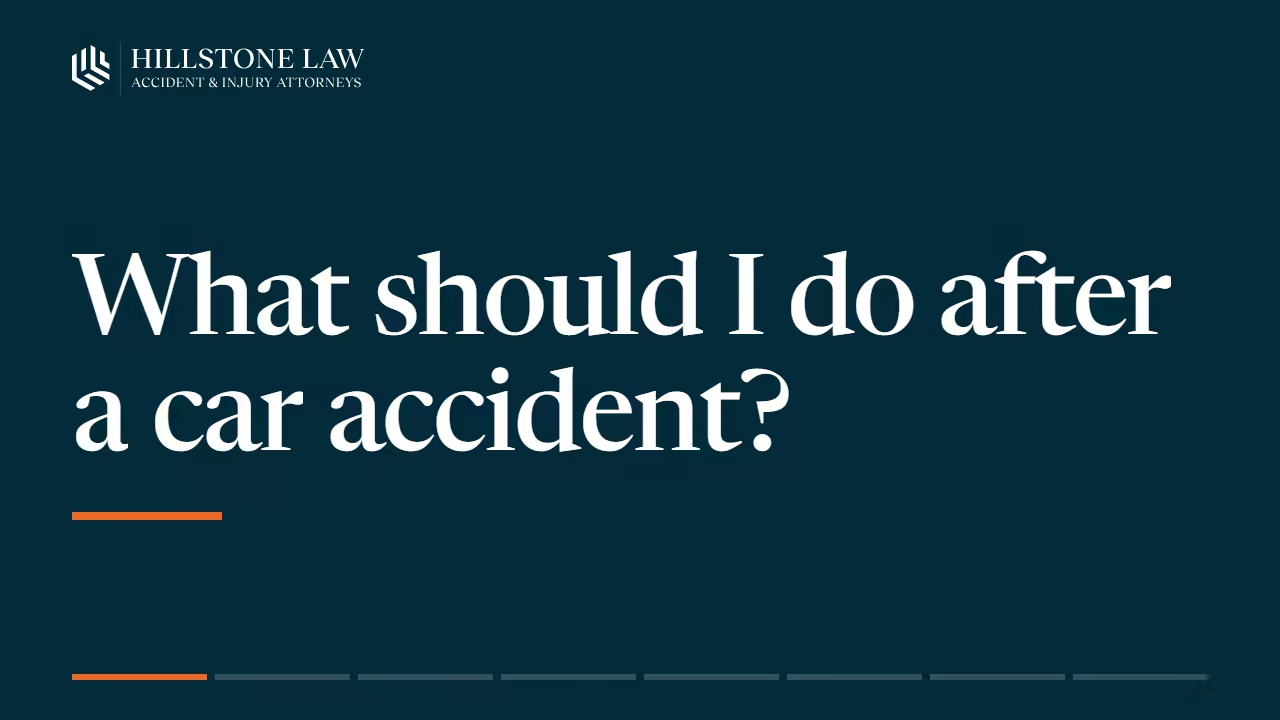
What should I do after a car accident in California?
Read the transcript
What should I do after a car accident in California?
What should I do after a car accident?
Stop. Check on everyone. Call 911 if anyone is hurt, even slightly.
Exchange information. Names, licence numbers, plates, insurers and policy numbers.
Photograph it. Find witnesses. The cars, the road, the signals, your injuries. Get names and phone numbers.
Say little about fault. Be polite, stick to facts, and do not guess about speed or distance.
See a doctor within days. Even if you feel mostly fine. Neck, back and head injuries often show up later.
10 days to report the crash to the DMV. When anyone was hurt, or damage was over $1,000. Form SR-1 · Vehicle Code 16000
Free consultation. Call and tell us what happened. (855) 691-1691 Hablamos español.
General information about California law, not legal advice for your situation.
Chain-reaction crashes on the freeway
In a three- or four-car crash, the question is who hit whom, and in what order. The driver at the back may have pushed one car into the next; or a middle car may have hit first and then been struck from behind. Each driver's share is set separately, and each defendant pays non-economic damages, such as pain and suffering, only in proportion to its own fault (Civil Code 1431.2).
That rule makes the order of impacts worth money. If a jury puts most of the fault on the last car and the rest on the middle one, each pays only its own share of the pain and suffering. Damage photos of every car, witness accounts and any dashcam footage are how the order is proved.
Why insurers call rear-end injuries minor
Rear-end injuries are often neck and back injuries: soft-tissue strains, disc injuries and what people call whiplash. They may not hurt fully until a day or two later, and they do not show on a bumper. Insurers rely on that gap. Expect to hear that the damage was too small for anyone to be hurt.
The answer is medical, not mechanical:
- A record in the first days. A visit within days links the injury to the crash; a gap of weeks becomes the insurer's main argument.
- The treating doctor's opinion on cause and on the care still needed.
- Imaging, when the doctor orders it, for disc and nerve injuries.
- Your own account, in a short diary of pain, sleep and the things you cannot do.
Modern bumpers can absorb a hit with little visible damage while the people inside still take the force. See whiplash injuries and medical treatment after a car accident.
How many people California crashes injure
The state crash database has no separate statewide count of rear-end crashes in our packs, so we do not estimate one. What it does show is the scale of injury crashes, many of them on freeways where stop-and-go traffic makes rear-end collisions common.
| Year | Crashes that hurt or killed someone | People injured | People seriously injured | Freeway crashes |
|---|---|---|---|---|
| 2022 | 163,897 | 226,301 | 18,397 | 125,528 |
| 2023 | 167,358 | 230,850 | 17,322 | 129,354 |
| 2024 | 171,977 | 237,014 | 17,268 | 133,289 |
Method: Statewide sums of the CCRS crash and injured tables, all reporting agencies; injury-or-fatal crash = at least one person injured or killed; seriously injured = persons coded with a suspected serious injury. CCRS undercounts where local police do not fully report, so each figure is a minimum. 2022–2024.
Source: California Highway Patrol (CCRS), read November 19, 2026.
Cite this: Injury crashes reported in California, 2022-2024, Hillstone Law analysis of California Highway Patrol (CCRS) data, 2022–2024. https://hillstonelaw.com/personal-injury/auto-accidents/rear-end-accident-lawyers/#data-injury-crashes-california-2022-2024
Each figure is at least this many reported to the state crash database (CCRS); local police under-report to it. For more statewide figures, see California accident statistics.
Rear-ended on a motorcycle or a bicycle
A rear impact that a car absorbs can throw a rider. The rules on fault are the same, the injuries usually are not.
- On a motorcycle. A rider stopped at a light or slowing in traffic has the same claim against the driver behind. Expect the insurer to look for reasons to blame the rider; keep the bike as it is until it is photographed. See motorcycle accidents.
- On a bicycle. The same following-distance and speed rules apply to a driver behind a cyclist. Photos of the bike, your clothing and your injuries carry the case. See bicycle accidents.
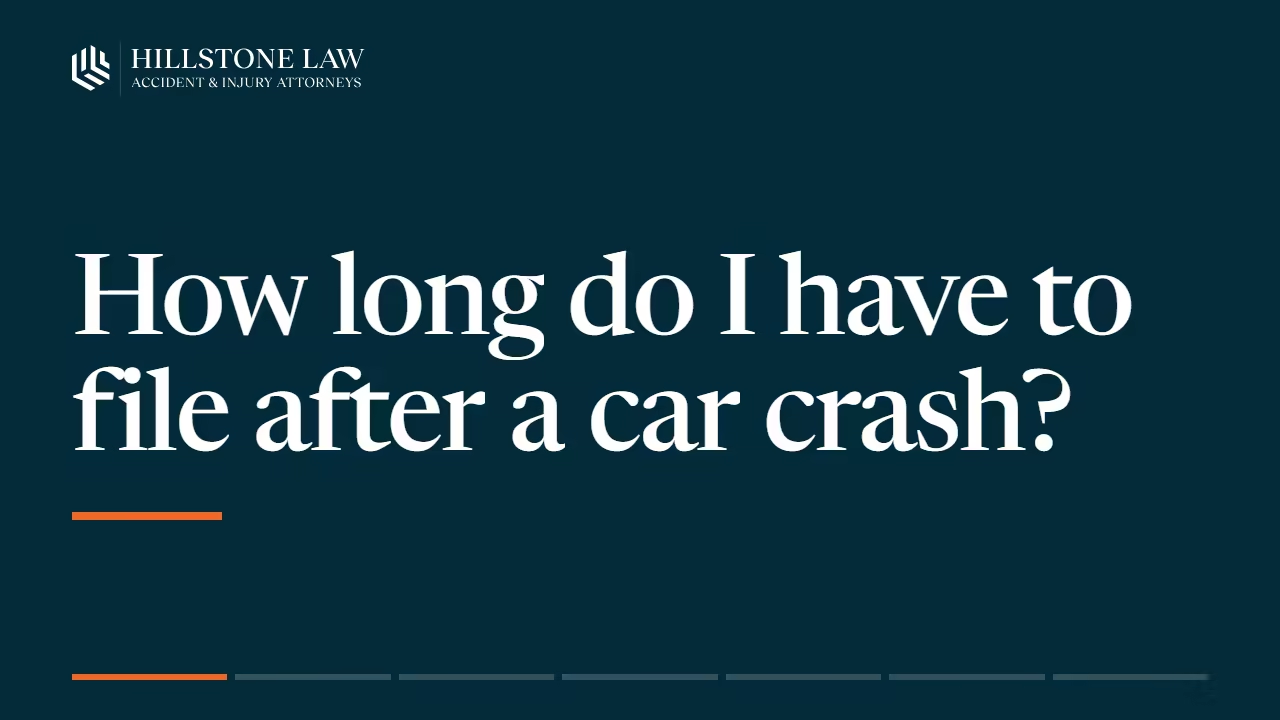
How long do I have to sue after a car crash in California?
Read the transcript
How long do I have to sue after a car crash in California?
How long do I have to file after a car crash?
2 years from the injury to file a lawsuit. That is the general deadline in California. Code of Civil Procedure 335.1
6 months if a public entity was involved. A city bus, a county truck, a dangerous public road: a written claim comes first. Government Code 911.2
The clocks that start at the crash: 10 days, dMV report, form SR-1; 6 months, claim against a public entity; 2 years, injury lawsuit; 3 years, vehicle damage only.
Negotiation does not stop the clock. If the claim is still open as the date approaches, the lawsuit must be filed to protect it.
Exceptions can shorten or extend these limits. A child was hurt; The at-fault driver died; A federal vehicle; Your own uninsured motorist claim.
Free consultation. Call and tell us what happened. (855) 691-1691 Hablamos español.
General information about California law, not legal advice for your situation.
Who pays, and when the policy is too small
The rear driver's liability policy pays first. California's minimum for policies issued or renewed since January 1, 2025 is $30,000 per person and $60,000 per crash for injuries (Vehicle Code 16056), and many drivers carry only that.
If that is not enough, your own underinsured motorist coverage can add to it, up to your own limits (Insurance Code 11580.2). A rear driver in a work vehicle may bring a commercial policy into the case, and in a chain collision several drivers' policies may each pay a share. Your car is usually paid by the rear driver's property damage coverage, or by your own collision coverage first if you want it fixed faster. See insurance policy limits.
Evidence that proves the impact
- The damage pattern. Bumper height, crush and the angle of impact show speed and position. Photograph both cars before repairs; once repaired, that evidence is gone.
- Event data. Many cars record speed and braking in the seconds before a crash. It can be lost when the car is repaired or salvaged, so ask early for it to be kept.
- Dashcams and nearby video, often recorded over within days or weeks.
- Phone records of the rear driver, when distraction is suspected; these are requested formally once a case is filed.
- Early medical records, which link the injury to the crash.
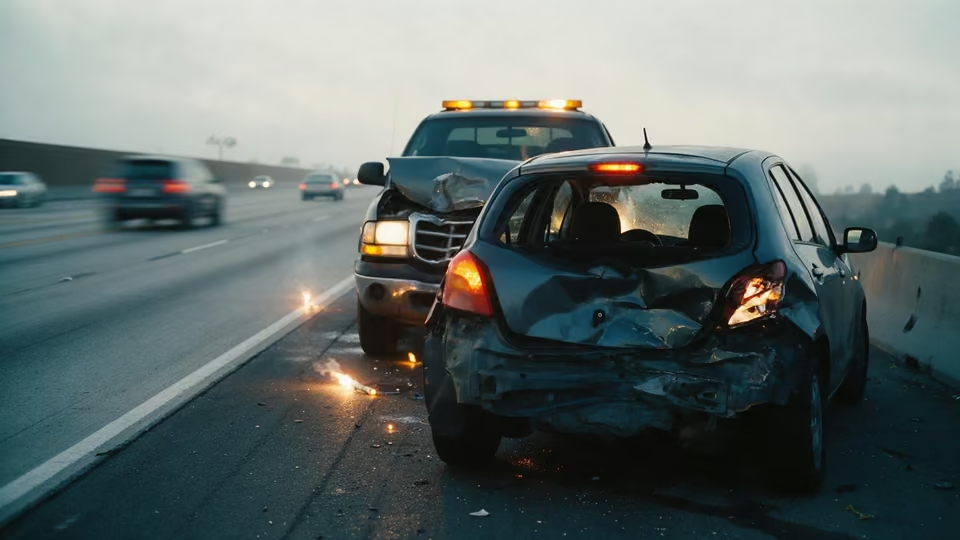
Your first week after being rear-ended
- Get checked by a doctor within days, even if you feel mostly fine, and tell the doctor about every ache and when it began.
- Photograph both cars, especially your rear bumper and the rear driver's front end, before repairs.
- Get the police report number, the rear driver's insurer and the claim number.
- Look for a dashcam in either car and cameras nearby, and ask for the footage to be kept.
- Do not give a recorded statement to the rear driver's insurer before you have advice.
- Keep every bill, and note the days you missed work.
- Note the deadline: 2 years from the injury to sue (Code of Civil Procedure 335.1).
How we answer the minor-impact argument
- We build the medical record. We make sure the timeline of symptoms and treatment is complete and in writing.
- We preserve the car data and video before repairs or salvage erase them.
- We sort out chain collisions, proving the order of impacts and each driver's share.
- We find the extra coverage: a commercial policy, a second driver's policy, your underinsured motorist coverage.
You pay no fees unless you get paid. We answer 24 hours a day, 7 days a week. At your request, we can meet you at home or in the hospital. Our intake team speaks Spanish, and we work from 16 offices across California.
Results
We have no published result labelled rear-end. These are car accident results.
$1.97 million settlement
Car crash, catastrophic injury.
$899,000 settlement
Car crash, extensive treatment.
$500,000 policy-limits settlement
Car crash.
More on the case results page.
This is general information about California law, not legal advice for your situation.











