

How MedPay fits with the other coverage
| Coverage | Whose policy | Pays for | Depends on fault? |
|---|---|---|---|
| MedPay | Yours | Your crash medical bills, up to its limit | No |
| Bodily injury liability | The at-fault driver's | Your full losses: medical bills, lost earnings, pain and suffering, up to its limit | Yes |
| Uninsured and underinsured motorist | Yours | Your losses when the at-fault driver has no insurance or too little (Insurance Code 11580.2) | Yes |
| Health insurance | Yours | Medical care, as usual | No |
California is a fault state: the at-fault driver's liability insurance pays for the harm, but only once, at the settlement. MedPay fills the gap before then.
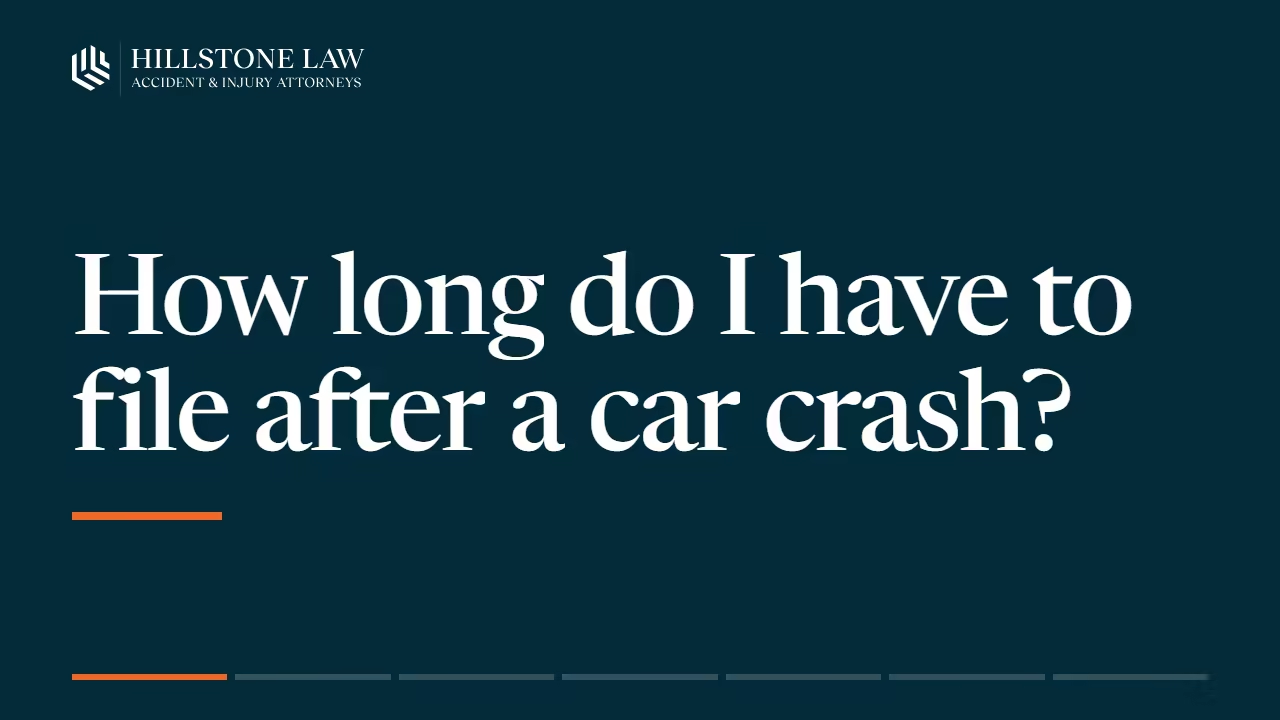
How long do I have to sue after a car crash in California?
Read the transcript
How long do I have to sue after a car crash in California?
How long do I have to file after a car crash?
2 years from the injury to file a lawsuit. That is the general deadline in California. Code of Civil Procedure 335.1
6 months if a public entity was involved. A city bus, a county truck, a dangerous public road: a written claim comes first. Government Code 911.2
The clocks that start at the crash: 10 days, dMV report, form SR-1; 6 months, claim against a public entity; 2 years, injury lawsuit; 3 years, vehicle damage only.
Negotiation does not stop the clock. If the claim is still open as the date approaches, the lawsuit must be filed to protect it.
Exceptions can shorten or extend these limits. A child was hurt; The at-fault driver died; A federal vehicle; Your own uninsured motorist claim.
Free consultation. Call and tell us what happened. (855) 691-1691 Hablamos español.
General information about California law, not legal advice for your situation.
Who and what MedPay usually covers
Policies differ, so read yours. Commonly, MedPay covers:
- you and family members in your household, in your car or in someone else's;
- passengers in your car;
- you as a pedestrian or cyclist hit by a car.
It usually pays reasonable medical expenses from the crash: ambulance, emergency room, doctors, imaging, surgery, therapy and medication, and often funeral costs. Many policies limit it to care received within a set time after the crash.
How to make a MedPay claim
- Tell your insurer about the crash promptly, as your policy requires.
- Ask for the MedPay claim forms and the medical authorization.
- Send each bill and the records that show the care was for crash injuries.
- Keep copies of everything you send and every payment made.
Using MedPay is a claim on your own policy for an accident you did not cause. California does not allow a car insurer's rating plan to raise your premium because of an accident in which you were not at fault (Insurance Code 491).
MedPay and health insurance together
If you have both, you can often use MedPay for deductibles, co-payments and care your health plan does not cover. Coordinating the two well can mean fewer bills left unpaid while the injury claim is pending.
A simple example
Suppose a driver runs a red light and hits your car. You go to the emergency room, see your doctor, and start physical therapy. Your health plan has a high deductible, and the other driver's insurer will not pay anything until the claim settles, months from now. MedPay on your own policy pays the emergency room deductible and the therapy co-payments as the bills arrive, up to its limit. When your claim against the other driver settles, that settlement still includes all your medical bills, and MedPay may ask to be repaid from it, often at a reduced amount after negotiation.
MedPay when no other insurance pays
MedPay can be most valuable when other routes are slow or closed:
- Hit-and-run crashes, where there is no other driver's insurer to claim against at first.
- Crashes where fault is disputed, and the other insurer refuses to pay until it is resolved.
- Single-vehicle crashes where no one else was at fault, for example on ice or after a tyre blowout.
- People without health insurance, for whom MedPay may be the only way to pay for care while the claim is pending.
In each case, the claim on MedPay is made the same way: notice to your insurer, the forms, and the bills with the records.
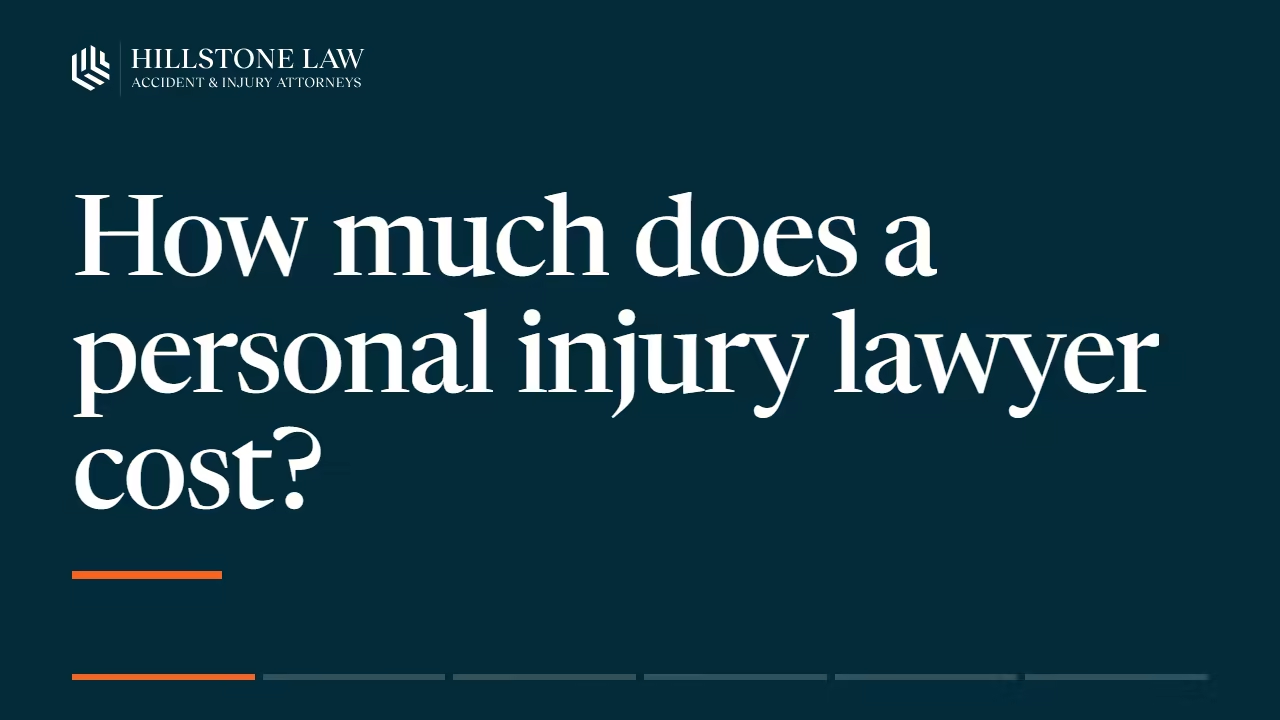
How much does a personal injury lawyer cost in California?
Read the transcript
How much does a personal injury lawyer cost in California?
How much does a personal injury lawyer cost?
No fees unless you get paid. Our fee comes only from what we recover for you.
What you pay along the way: Nothing to hire us; Nothing while the case is open; Nothing by the hour.
A percentage of the recovery, in writing. You sign the agreement before we start. California law does not set the percentage. It is negotiable. Business and Professions Code 6147
Before you sign a settlement, we go through it line by line. The gross amount; Our fee; Each lien; What you receive.
Free consultation. Call and tell us what happened. (855) 691-1691 Hablamos español.
General information about California law, not legal advice for your situation.
Will MedPay have to be repaid?
Often, in part. Many policies give the insurer a right to be repaid from your recovery against the at-fault driver, sometimes called subrogation. Whether and how much depends on the policy's wording, and the amount can often be negotiated down at the end. Health plans and hospitals may also claim repayment; a hospital that treated you in an emergency can claim part of the recovery, within limits set by law (Civil Code 3045.1 and 3045.4). Many health plans' liens are capped at what the plan actually paid and, when you have a lawyer, at one-third of your recovery, and are reduced for your share of fault and for a share of the legal fees and costs (Civil Code 3040).
MedPay does not limit your injury claim
Receiving MedPay does not reduce what the at-fault driver owes you. Your claim against that driver is still for all the harm the crash caused (Civil Code 3333), including the bills MedPay paid. If you were partly at fault, MedPay still pays; your claim against the other driver is reduced by your share (Li v. Yellow Cab Co. (1975) 13 Cal.3d 804).
Should you carry MedPay?
California does not require it. The minimum liability coverage every driver must carry protects other people, not you (Vehicle Code 16056). MedPay is often inexpensive and can matter most for people with high health insurance deductibles, no health insurance, or passengers who ride with them often. Ask your agent what limit is offered.
If you are not sure whether you have it, look at the declarations page of your auto policy, the summary page that lists each coverage and its limit. MedPay is usually listed as medical payments. If it is not there, you can add it at your next renewal, but it will not cover a crash that has already happened.
What we do for you
We find every policy that can pay your medical bills now, including MedPay you may not know you have, coordinate it with your health insurance, and negotiate any repayment at the end so more of the recovery reaches you. No fees unless you get paid. We answer 24 hours a day, 7 days a week. Our intake team speaks Spanish.
Results
$500,000 policy-limits settlement
Car crash.











