

Five ways people get hurt in parking lots
Struck on foot. Shoppers walk between parked cars and behind vehicles that are backing out. A driver must watch for people on foot, and a driver backing up must make sure the way is clear.
Two cars collide. Most lot collisions are slow, but they still cause neck, back and shoulder injuries. The usual patterns: two cars backing out at once, a car pulling out of a space into a car driving down the row, and a driver cutting diagonally across empty spaces.
The driver leaves. Many lot crashes are hit-and-runs: the driver hits a person or a car and drives off. Your own policy can help, but only if you act within days.
The surface itself. Potholes, broken wheel stops, uneven curbs, worn paint that hides a step, oil and water on the pavement, and dark corners where a light has been out for weeks.
A crime the owner could have prevented. When a lot owner knew of past assaults or break-ins and left the lights broken or the gate open, a claim against the owner may be possible. These cases turn on the history of that particular lot.
For context on how exposed people on foot are, statewide road figures (most of them on streets, not in lots): In 2024, California reported at least 13,487 pedestrian crashes, 9,938 bicycle crashes, 14,193 motorcycle crashes, 19,209 big-rig or heavy-truck crashes and 4,626 bus crashes to the state crash database (CCRS). Source: California Highway Patrol crash data on data.ca.gov, crash year 2024.
Who can be responsible in a parking lot?
Everyone is responsible for an injury caused by a lack of ordinary care with their person or their property, and in a lot that reaches several people at once.
| Party | When it may be responsible | Rule |
|---|---|---|
| The driver | Backing without looking, speeding down the rows, ignoring a person on foot, using a phone | Ordinary care (Civil Code 1714) |
| The vehicle's owner or the driver's employer | Someone else was driving with permission, or on the job | Insurance and employment rules for that vehicle |
| The property owner | Broken surfaces, poor lighting, missing signs, blocked sight lines, a known crime problem | Ordinary care with property (Civil Code 1714) |
| The company that manages the lot | It controls repairs, sweeping, lighting or security | Ordinary care in its own work |
| A city, county, school district or airport | The lot is public property | Dangerous condition of public property (Government Code 835); written claim within 6 months (911.2) |
Method: Each row names a party that commonly controls part of a parking lot or a vehicle in it, with the California rule that sets its duty; who is actually liable depends on the facts. 2026.
Source: California codes (leginfo).
Cite this: Who may be responsible for a parking lot injury in California, Hillstone Law analysis of California codes (leginfo) data, 2026. https://hillstonelaw.com/personal-injury/premises-liability/parking-lot-accident-lawyers/#data-parking-lot-parties-2026
If you share some fault, for example by stepping out from between two vans, your recovery is reduced by your share but not barred (Li v. Yellow Cab Co. (1975) 13 Cal.3d 804). When a driver and a property owner are both at fault, each pays your medical bills and lost wages in full but pain and suffering only by its own share (Civil Code 1431.2).
What if the driver drove away?
A driver in a crash that injures someone must stop (Vehicle Code 20001). Hit-and-runs are common across the state: In 2024, at least 103,184 hit-and-run crashes were reported in California to the state crash database (CCRS), 15,073 of them with someone hurt or killed. Source: California Highway Patrol crash data on data.ca.gov, crash year 2024.
When the driver cannot be found, your own uninsured motorist coverage may pay for your injuries, and it can apply even if you were on foot, depending on your policy. California sets strict conditions:
| Condition | Deadline | Law |
|---|---|---|
| Physical contact between the unknown vehicle and you, or the car you were in | At the crash | Insurance Code 11580.2 |
| Report to the city police, or outside a city to the sheriff or the local CHP office | Within 24 hours | Insurance Code 11580.2 |
| Sworn statement to your insurer that you have a claim | Within 30 days of the report | Insurance Code 11580.2 |
| The fleeing driver's duty to stop after an injury crash | At the scene | Vehicle Code 20001 |
Method: Conditions of Insurance Code 11580.2(b) for an unidentified driver, and the duty to stop of Vehicle Code 20001, as read on leginfo.legislature.ca.gov. 2026.
Source: California codes (leginfo).
Cite this: What your own insurance needs after a parking lot hit-and-run in California, Hillstone Law analysis of California codes (leginfo) data, 2026. https://hillstonelaw.com/personal-injury/premises-liability/parking-lot-accident-lawyers/#data-hit-and-run-um-conditions-2026
Ask the store or lot manager about cameras the same day. Lot video is often recorded over quickly, and a plate number from the footage can turn a hit-and-run into an ordinary claim against the driver's insurer. See hit-and-run claims for the full rules.
Who pays my medical bills after an accident in California?
Read the transcript
Who pays my medical bills after an accident in California?
Who pays my medical bills after an accident?
Your own coverage usually pays first. The at-fault driver's insurer does not pay bills as they arrive.
What pays as you are treated: Your health insurance; Medical payments coverage on your auto policy; Medi-Cal or Medicare.
When the at-fault insurer pays: As bills arrive, it does not pay them; At settlement, it pays, as part of your damages.
Those who paid first are often repaid. Those repayment claims can often be reduced by negotiation.
Keep treating. Insurers read a gap in treatment as a sign you recovered.
Free consultation. Call and tell us what happened. (855) 691-1691 Hablamos español.
General information about California law, not legal advice for your situation.
Garages and parking structures
Multi-level garages add their own hazards: steep ramps, tight turns, pillars that hide people on foot, low lighting on lower levels, stairwells and elevators. The same duty applies. Drivers must slow for the conditions, and the owner or operator must keep the structure reasonably safe and lit.
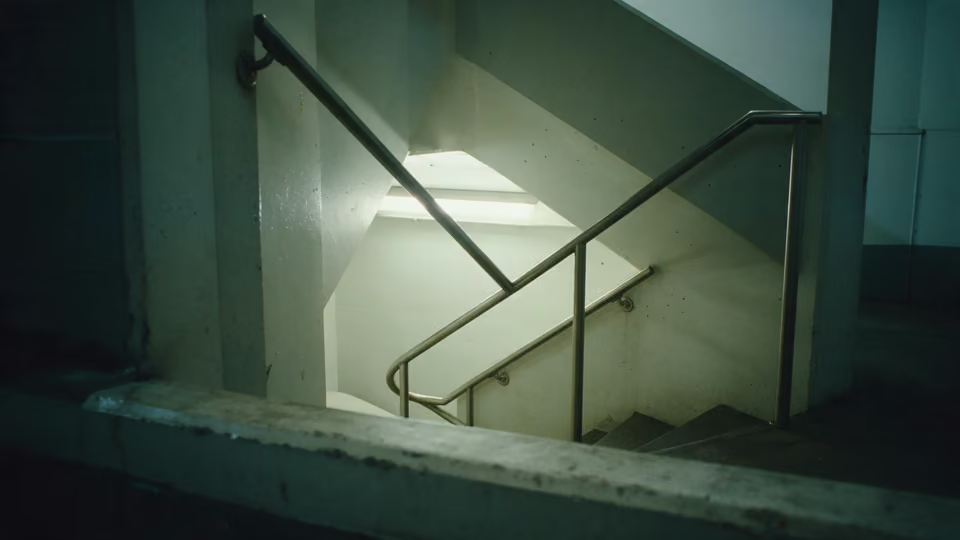
Garages run by a city, an airport or a university are often public property, which brings in the 6-month claim. Garages serving a shopping center or office building may involve the landlord, a tenant and a parking operator at once; the lease and the management contract decide who controlled the stairwell light or the broken ramp.
What to collect after a parking lot injury
- Video from the store, the lot's own cameras, nearby businesses, and other cars' dash cameras.
- Photos of the spot: the lines, signs, lighting, surface, and where each car stopped.
- The incident report made with the store or property manager, or at least its number.
- Witnesses. In a busy lot, people see what happened and then drive away.
- The police report, which a hit-and-run claim needs within 24 hours.
- Your medical records, from the first visit on. Neck and back injuries from slow crashes often show up a day later.
The usual deadline to sue the driver or the owner is 2 years (Code of Civil Procedure 335.1); a public lot needs the written claim within 6 months.
How Hillstone Law handles parking lot cases
We look at every party that could pay: the driver, the vehicle's owner, the property owner, the lot manager and, where needed, your own uninsured motorist coverage. We send the video-preservation request early, and we make sure the 24-hour and 30-day steps are done after a hit-and-run. At your request, we can meet you at home or in the hospital. Our intake team speaks Spanish.
Results
$720,000 settlement
Unsafe property injury.
$899,000 settlement
Car crash.
More on the case results page.











