

What a motorcycle settlement pays for
| Loss | Examples |
|---|---|
| Medical care | Trauma care, surgery, skin grafts, hospital stays |
| Future care | Further surgery, therapy, home help, prosthetics |
| Lost earnings | Time off work, and lost earning power after a lasting injury |
| Pain and its effects | Pain, scarring, emotional distress, loss of enjoyment of life |
| Property | The motorcycle, helmet, riding gear and other belongings |
A rider has no steel frame and no airbag. Leg and foot fractures, road rash needing grafts, wrist and shoulder injuries, and head and spinal injuries are common, and many need more than one surgery. The future-care and lost-earning parts of the claim are often the largest, and they must be proven before settling.
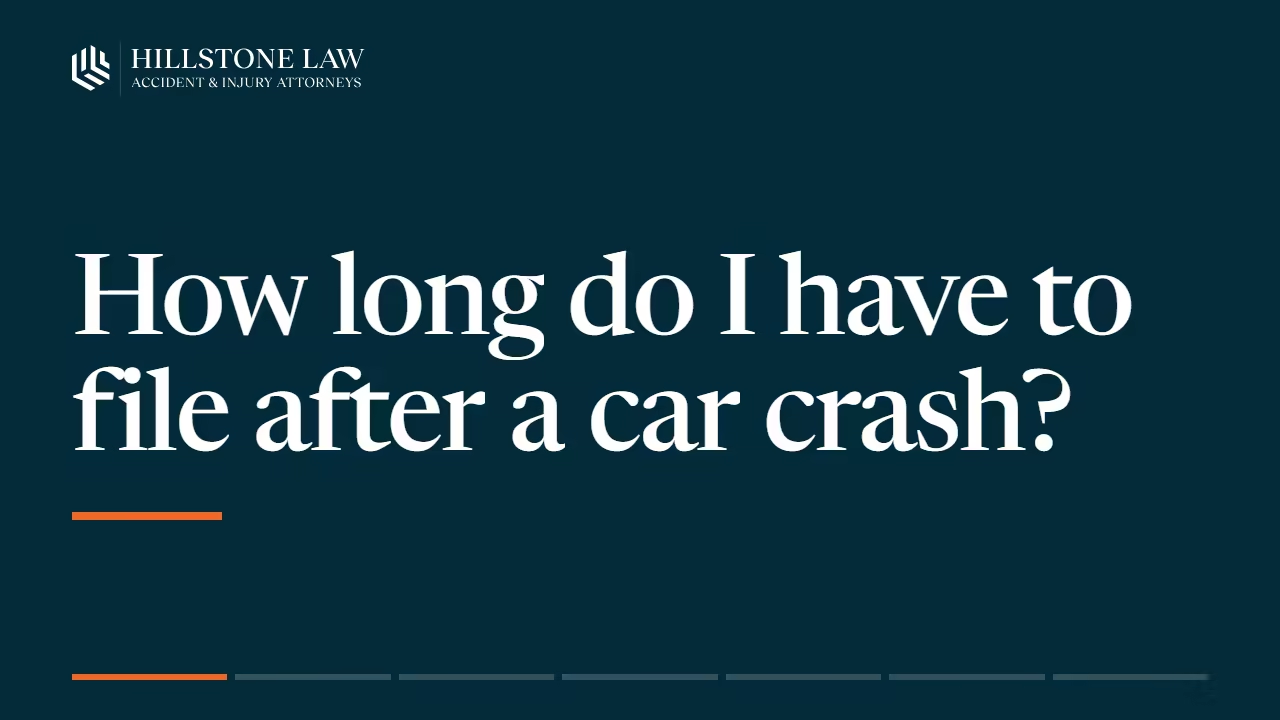
How long do I have to sue after a car crash in California?
Read the transcript
How long do I have to sue after a car crash in California?
How long do I have to file after a car crash?
2 years from the injury to file a lawsuit. That is the general deadline in California. Code of Civil Procedure 335.1
6 months if a public entity was involved. A city bus, a county truck, a dangerous public road: a written claim comes first. Government Code 911.2
The clocks that start at the crash: 10 days, dMV report, form SR-1; 6 months, claim against a public entity; 2 years, injury lawsuit; 3 years, vehicle damage only.
Negotiation does not stop the clock. If the claim is still open as the date approaches, the lawsuit must be filed to protect it.
Exceptions can shorten or extend these limits. A child was hurt; The at-fault driver died; A federal vehicle; Your own uninsured motorist claim.
Free consultation. Call and tell us what happened. (855) 691-1691 Hablamos español.
General information about California law, not legal advice for your situation.
The fault argument against riders
Insurers often start from the idea that riders are reckless. Expect them to say the rider was speeding, splitting lanes unsafely or hard to see. In California, any share of fault proven against the rider only reduces the recovery; it does not bar it (Li v. Yellow Cab Co. (1975) 13 Cal.3d 804). Evidence answers the argument:
- The driver's duty. In the most common motorcycle crash, a driver turning left across the rider's path, the turning driver must yield to oncoming traffic that is close enough to be a hazard (Vehicle Code 21801).
- Lane splitting is defined in state law (Vehicle Code 21658.1), and it does not make a crash the rider's fault by itself.
- Speed is shown by data, not assumptions: camera footage, the damage, the scene and witnesses.
Helmets and value
Every rider and passenger must wear a helmet (Vehicle Code 27803). If a rider was not wearing one, the insurer may argue that a head injury would have been less serious. That can only reduce damages for the injuries a helmet would have prevented. It has nothing to do with a broken leg or road rash.
Insurance: the practical ceiling
Many drivers carry only the minimum: $30,000 for one person's injuries on policies issued or renewed since 1 January 2025 (Vehicle Code 16056). A serious motorcycle injury can be worth many times that. Where the money comes from matters as much as what the injury is worth:
- The at-fault driver's liability policy, and any umbrella policy above it.
- The driver's employer's commercial policy, if the driver was working.
- Your own uninsured and underinsured motorist coverage on your motorcycle policy, which can pay when the driver has too little insurance or none (Insurance Code 11580.2).
- Other responsible parties, such as a public agency for a dangerous road, or a maker of a defective part.
One rule can reduce the value sharply: an owner riding their own uninsured motorcycle cannot recover pain and suffering from the other driver, only medical bills and lost earnings (Civil Code 3333.4). Keep your motorcycle insured.
How the claim is valued in practice
An insurer values a rider's claim from the medical records, the bills, the wage records and the photos. It adds up the past bills and lost pay, estimates the future care from the doctors' notes, and then puts a figure on pain, scarring and the change in the rider's life. It discounts that total by the share of fault it thinks it can prove against the rider, and then looks at how much insurance is available. Each step is a place where good evidence raises the number: a doctor's written opinion on future surgery, an employer's letter on lost work, and photos of road rash as it heals.
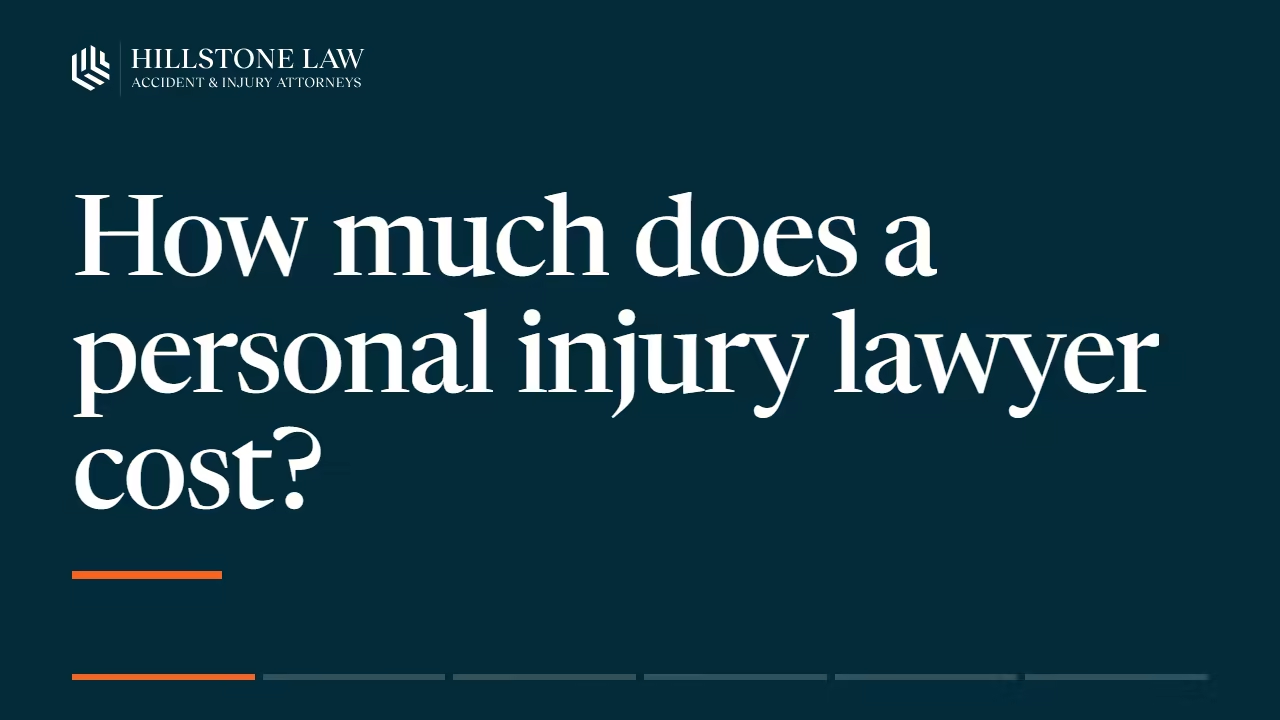
How much does a personal injury lawyer cost in California?
Read the transcript
How much does a personal injury lawyer cost in California?
How much does a personal injury lawyer cost?
No fees unless you get paid. Our fee comes only from what we recover for you.
What you pay along the way: Nothing to hire us; Nothing while the case is open; Nothing by the hour.
A percentage of the recovery, in writing. You sign the agreement before we start. California law does not set the percentage. It is negotiable. Business and Professions Code 6147
Before you sign a settlement, we go through it line by line. The gross amount; Our fee; Each lien; What you receive.
Free consultation. Call and tell us what happened. (855) 691-1691 Hablamos español.
General information about California law, not legal advice for your situation.
What raises the value
- Clear proof the driver broke a rule of the road.
- Helmet camera or dash camera footage.
- Surgery, lasting limits and a doctor's opinion on future care.
- Consistent treatment from the first day.
- A commercial or employer policy behind the driver.
What lowers it
- A proven share of rider fault.
- Gaps in treatment, or care that does not match the injury.
- An uninsured motorcycle (Prop 213).
- Settling before the full injury is known.
Results
$4,725,000 settlement
Motorcycle crash, Los Angeles County, 2025 · Obtained with co-counsel.
What we do for you at this step
We answer the insurer's case against the rider with evidence of what the driver did, find every policy, including your own underinsured motorist coverage and any employer's policy, and value the claim on your full injury and future care. No fees unless you get paid. We answer 24 hours a day, 7 days a week. Our intake team speaks Spanish. At your request, we can meet you at home or in the hospital.











