

The door rule in plain words
Vehicle Code 22517 says two things. First, no one may open a vehicle door on the side next to moving traffic unless it is reasonably safe and can be done without interfering with that traffic. Second, no one may leave that door open longer than it takes to load or unload passengers.
Three points about this rule matter for riders:
- It covers "any person." The driver, a front-seat passenger, a child in the back seat and a rideshare passenger all carry the same duty. Whoever opened the door is the first person responsible.
- It covers parked and stopped cars. A car parked at the curb, a car stopped in a traffic jam and a car waiting at a light are all covered.
- Breaking it is presumed careless. When a person violates a safety statute and causes the kind of injury the statute was written to prevent, the law presumes they were negligent (Evidence Code 669). A rider struck by an opening door is exactly the person this rule protects.
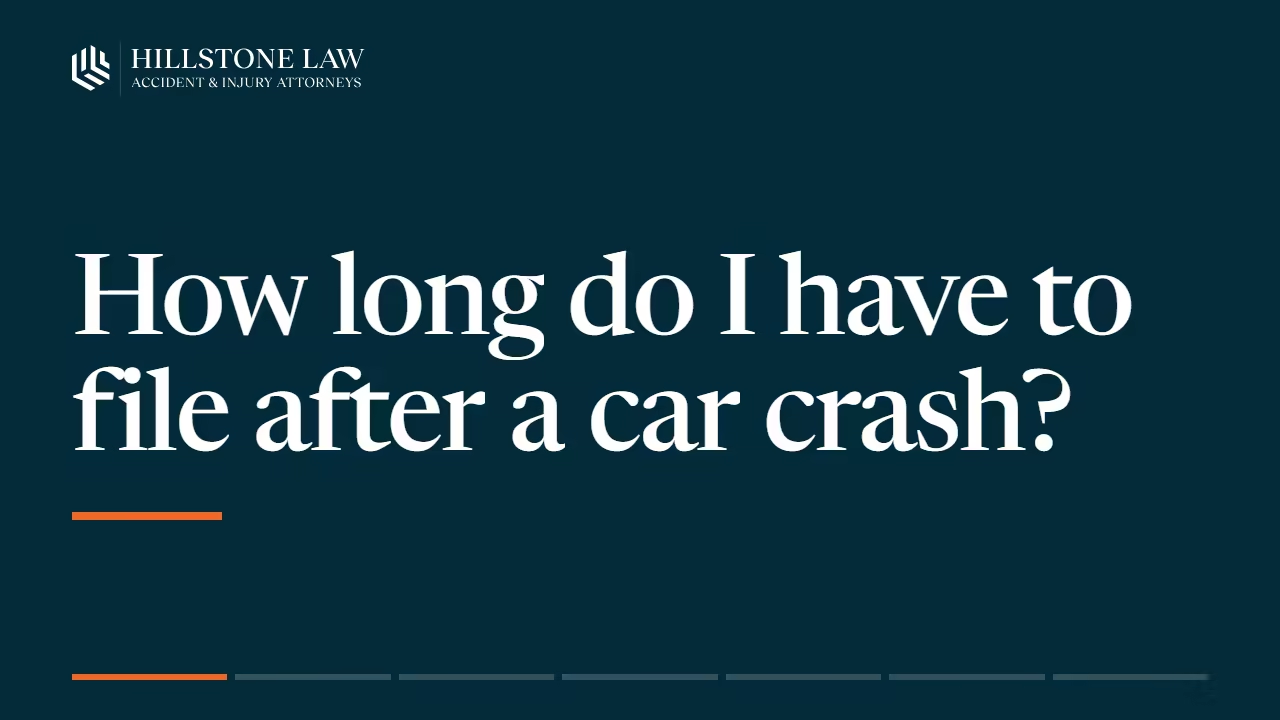
How long do I have to sue after a car crash in California?
Read the transcript
How long do I have to sue after a car crash in California?
How long do I have to file after a car crash?
2 years from the injury to file a lawsuit. That is the general deadline in California. Code of Civil Procedure 335.1
6 months if a public entity was involved. A city bus, a county truck, a dangerous public road: a written claim comes first. Government Code 911.2
The clocks that start at the crash: 10 days, dMV report, form SR-1; 6 months, claim against a public entity; 2 years, injury lawsuit; 3 years, vehicle damage only.
Negotiation does not stop the clock. If the claim is still open as the date approaches, the lawsuit must be filed to protect it.
Exceptions can shorten or extend these limits. A child was hurt; The at-fault driver died; A federal vehicle; Your own uninsured motorist claim.
Free consultation. Call and tell us what happened. (855) 691-1691 Hablamos español.
General information about California law, not legal advice for your situation.
How dooring crashes happen to motorcyclists
- Curbside dooring. A driver parks along a street and flings the door open without checking the mirror. The rider in the lane beside the parked cars has a fraction of a second.
- Stopped-traffic dooring. Traffic is stopped and a passenger decides to get out in the middle of the road, or a driver opens a door to pick something up. The rider passing between the lanes hits the door edge.
- Rideshare drop-offs. A rideshare car stops in a traffic lane instead of the curb and a passenger steps out on the traffic side.
- Delivery and work vehicles. A van or truck driver opens the cab door or a side door into the lane during a quick stop.
- A door left open. Someone loading groceries or a child seat leaves the door standing open into the lane for longer than needed.
When the danger comes from a lane change instead
Lane-split crashes are a related but different problem. A driver in slow traffic decides to change lanes, does not check the mirror, and moves into the space where a rider is passing. California defines lane splitting as riding a two-wheeled motorcycle between rows of stopped or moving vehicles in the same lane (Vehicle Code 21658.1), and nothing in that definition removes a driver's duties. Drivers must stay in their lane until a move can be made with reasonable safety (Vehicle Code 21658) and must not turn or move left or right until it is safe and signalled (Vehicle Code 22107). Handheld phone use while driving is banned (Vehicle Code 23123.5), and a driver looking down at a screen in slow traffic is a common cause of these crashes.
For a full guide to the lane-splitting rules, how fault is argued and the shoulder and filtering questions, see our lane-splitting accident guide. The rest of this page focuses on the door and sudden-lane-change crashes that riders describe to us most.
Who may be responsible
| Party | When |
|---|---|
| The person who opened the door | Always the first party to look at: the duty in Vehicle Code 22517 is theirs |
| The driver of the car | When the driver opened the door, stopped in a traffic lane to let someone out, or changed lanes without a safe gap |
| The vehicle's owner | An owner who let someone else drive is liable up to limits set by law (Vehicle Code 17150 and 17151) |
| The driver's employer | When a delivery, service or company driver was working at the time (Civil Code 2338) |
| Your own insurer | Uninsured motorist coverage when the at-fault person has no insurance or not enough (Insurance Code 11580.2) |
A passenger who opens a door is often covered by the insurance on the car they were riding in, but the answer depends on the exact policy terms. When the car was carrying a rideshare passenger, the company's insurance during the trip may also apply. We read the policies before anyone tells you there is no coverage.
How insurers argue about fault in these crashes
Even when the door rule is plain, the insurer for the car will look for ways to put part of the blame on the rider. Typical arguments:
- "The rider was too close to parked cars." Riders are expected to use reasonable care, but a rider in a traffic lane has a right to be there. The question is whether the rider's position was unreasonable, not whether a door could have reached them.
- "The rider was going too fast between lanes." In a lane-split crash, speed relative to traffic is often the main fight. Helmet camera and dash camera video settle it better than anything else.
- "The door was already open." If a door was open long before the rider arrived, the person who left it open still broke the second half of the rule.
California uses comparative fault: if some share of the blame is put on you, your recovery is reduced by that share but not barred (Li v. Yellow Cab Co. (1975) 13 Cal.3d 804). Each driver who caused the crash is measured the same way, and every party's share counts. The duty of ordinary care is in Civil Code 1714.
Evidence that wins dooring cases
- The door itself. Photographs of the door edge, the hinge and any scuffs, paint or dents where your bike or body struck it. Doors are often repaired quickly, so photograph the car the same day if you can.
- Your bike. Handlebar, lever, mirror and fairing damage shows the height and angle of impact.
- Camera footage. Your helmet camera, dash cameras in nearby cars, and the cameras of shops along the street. Business video is often kept only for a short time: ask in writing that it be kept.
- The police report. Ask for the report number at the scene. Officers often note which door was open and who opened it.
- Witnesses. The people in the car are rarely neutral. Get names and numbers from people on the sidewalk and in other cars.
- Rideshare records. If the car was dropping off a rideshare passenger, the app records the trip, the stop and the time.
Common injuries
Door strikes hit the rider at chest, shoulder and hand height and often throw the rider into the next lane. We see:
- Collarbone, shoulder and wrist fractures from hitting the door edge
- Hand and finger injuries from the lever and the door frame
- Rib fractures and chest injuries
- Head and neck injuries when the rider is thrown, even with a helmet
- Leg injuries from being trapped between the bike and a car in the next lane
- Road rash that needs grafting
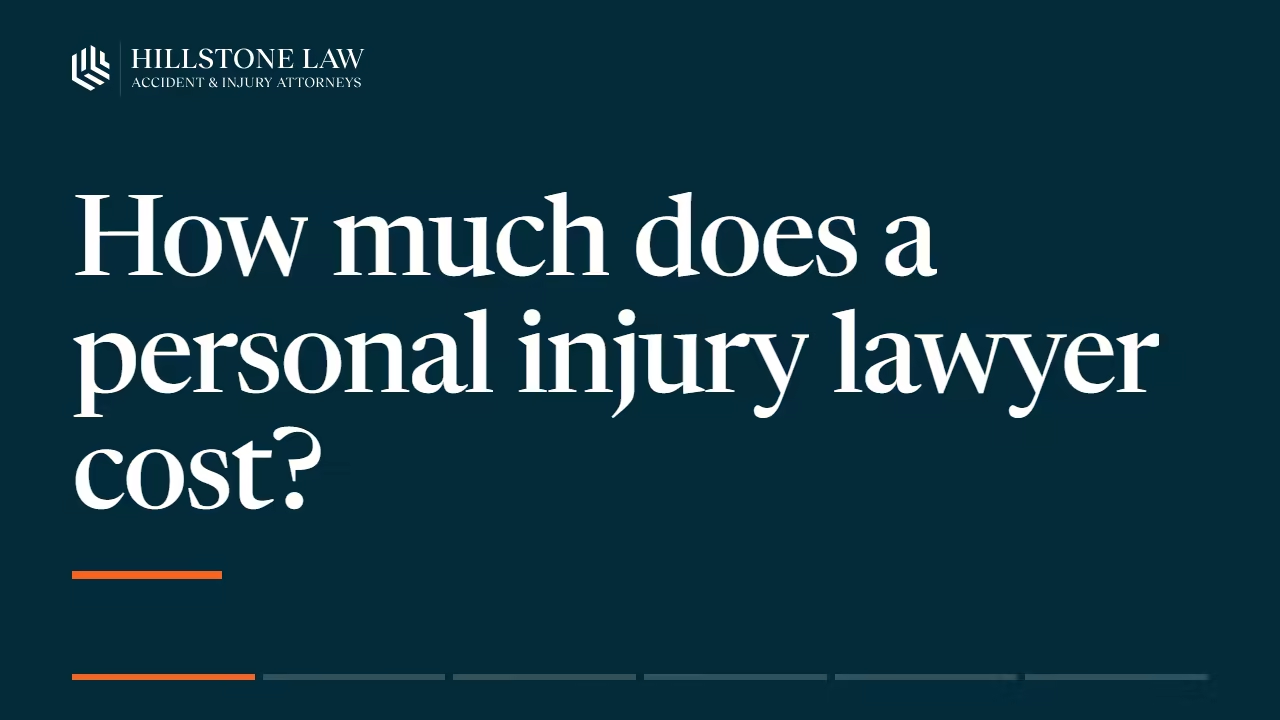
How much does a personal injury lawyer cost in California?
Read the transcript
How much does a personal injury lawyer cost in California?
How much does a personal injury lawyer cost?
No fees unless you get paid. Our fee comes only from what we recover for you.
What you pay along the way: Nothing to hire us; Nothing while the case is open; Nothing by the hour.
A percentage of the recovery, in writing. You sign the agreement before we start. California law does not set the percentage. It is negotiable. Business and Professions Code 6147
Before you sign a settlement, we go through it line by line. The gross amount; Our fee; Each lien; What you receive.
Free consultation. Call and tell us what happened. (855) 691-1691 Hablamos español.
General information about California law, not legal advice for your situation.
Helmets and your claim
California requires every motorcycle rider and passenger to wear a safety helmet (Vehicle Code 27803). Not wearing one does not cancel your claim against the person who opened the door. An insurer may argue it made a head injury worse, which can only reduce part of the recovery for that injury.
Insurance
The at-fault car's liability policy pays first. For policies issued or renewed since 1 January 2025, the minimum is $30,000 for one person's injuries and $60,000 for everyone hurt in one accident (Vehicle Code 16056). A serious motorcycle injury can cost more than that, which is why we look for every policy: the car's, the owner's, an employer's, a rideshare company's, and your own uninsured motorist coverage.
What to do now
- Get medical care, and tell the doctor about every part of your body that hurts, including your hands and chest.
- Photograph the door, the car, its plate and the position of everything before the cars move.
- Get the police report number and the names of the people in the car and of witnesses.
- Save your helmet camera file and ask nearby drivers for their footage.
- Do not give a recorded statement to the car's insurer before you have advice.
- Note your deadline: generally 2 years from the crash to file a lawsuit (Code of Civil Procedure 335.1).
Why riders call Hillstone Law after a dooring or lane-split crash
No fees unless you get paid. We answer 24 hours a day, 7 days a week. At your request, we can meet you at home or in the hospital. Our intake team speaks Spanish. We work from 16 offices across California. We find the person who opened the door, the driver, the owner and every policy that applies, and we ask for the camera footage before it is erased.
Results
$4,725,000 settlement
Motorcycle crash, Los Angeles County, 2025 · Obtained with co-counsel.
More on the case results page.











