
Call now, answered 24/7 (855) 691-1691
Uber and Lyft accident lawyer in California
If an Uber or Lyft crash in California hurt you, the policy that pays depends on what the driver's app showed. From acceptance of a ride until it ends, the law requires $1,000,000 of primary coverage (Public Utilities Code 5433), for riders, other drivers and people on foot. With the app on and no ride yet, lower limits apply. You generally have 2 years to sue.
Riders, drivers and people hit by a rideshare car: the app period decides the coverage.
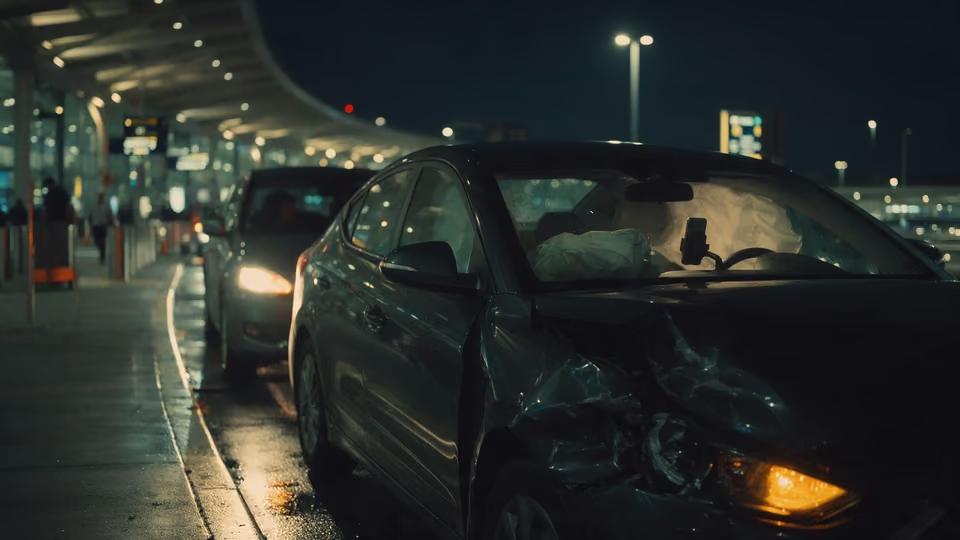
The question that decides who pays: what did the app show?
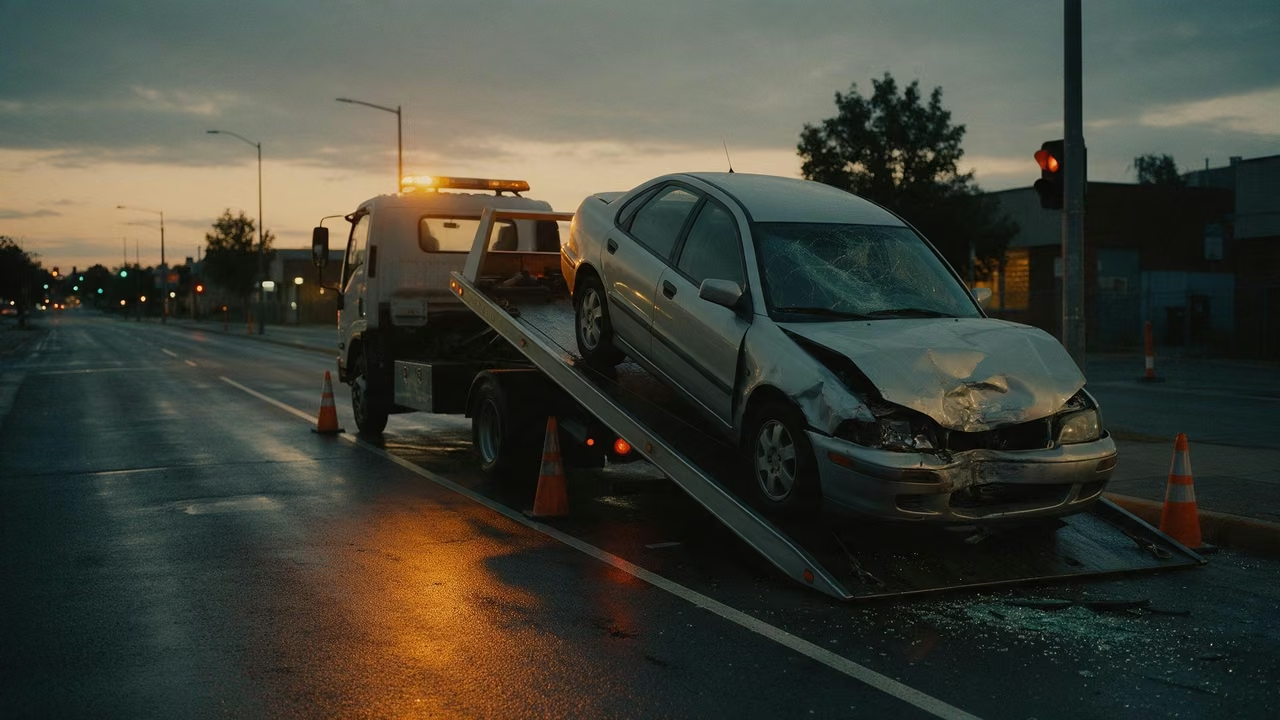
Every Uber or Lyft claim starts with one fact: where the driver was in the app when the crash happened. California splits a rideshare driver's day into three periods, and each one carries its own required insurance.
The gap between the rows is the whole case for many people. A crash two minutes before a ride is accepted can mean $50,000 for one person's injuries; two minutes after, $1,000,000. The middle period also covers the time after a ride ends until the driver accepts the next one or logs off. The app records the period, so the first thing to preserve is the trip history.
What to do in the first hours after an Uber or Lyft crash
- Get medical care and call 911 if anyone is hurt.
- Screenshot the app right away:the trip screen, the driver's name, the car and plate, the route and the time. A rider's receipt shows the trip was active; a driver's screen shows whether a request had been accepted.
- Report the crash in the appas well as to the police, and keep the report number.
- Get the other driver's informationif another car was involved. If that driver caused the crash, their insurer is in line too.
- Write down the pickup spot.Airports, stadiums and nightlife districts set their own pickup zones, and a car stopped outside them is part of the story.
- Do not accept a quick settlement message from the platform's insurerbefore you know how badly you were hurt.
The full list is on our accident checklist.
If you were the passenger
A rider is almost never at fault, so the question is only which insurer pays and how much is available.
- Your driver caused the crash:the rideshare policy of $1,000,000 applies, because a rider on board means a ride was accepted.
- Another driver caused it:that driver's own insurer pays first, and many carry only the state minimum of $30,000 for one person's injuries (Vehicle Code 16056).
- The other driver had no insurance or not enough:the rideshare company must provide uninsured and underinsured motorist coverage of $60,000 per person and $300,000 per incident from the moment you get in until you get out. It comes first, ahead of any other uninsured-motorist policy, including your own, and it is the company's obligation alone (Public Utilities Code 5433).
Two more rules protect riders. The rideshare insurer cannot wait for the driver's personal insurer to deny the claim first. And if the driver's own rideshare policy has lapsed, the company must provide the coverage from the first dollar. More on rider claims in our guide to passenger injury claims.
If an Uber or Lyft hit you: other drivers, cyclists and people on foot
The same coverage that protects riders protects everyone else on the road. If a rideshare driver with an accepted ride hit your car, your bike or you on foot, the $1,000,000 policy is the one that answers for it.
Two things make these claims harder than an ordinary crash. First, the driver's personal auto policy usually drops out: from log-on until log-off, a personal policy covers nothing unless it expressly includes rideshare driving or carries a separately priced endorsement (Public Utilities Code 5434). Second, the driver may say the app was off. Only the trip records settle that, which is why we ask for them in writing at the start.
If the app really was off, the claim runs against the driver's personal insurance like any other car crash; our car accident page explains how those claims work.
If you drive for Uber or Lyft
Drivers get hurt too, often by someone else. Your claims usually come in this order:
- The driver who caused the crash,through their liability insurance.
- Your own uninsured and underinsured motorist coverage,if the at-fault driver had none or not enough (Insurance Code 11580.2).
- The occupational accident coverage Proposition 22 requires:app-based ride companies must provide their drivers coverage for medical expenses and lost income from an injury on the job, and accidental death coverage for a driver's spouse and dependents.
In Castellanos v. State of California (2024) 16 Cal.5th 588, the California Supreme Court upheld the Proposition 22 rule that app-based drivers who meet its conditions are independent contractors, not employees. That shapes which of these claims are open to you. Our page for injured rideshare and delivery drivers goes through each one.
Who is responsible for a rideshare crash
- The rideshare driver,if they caused it: watching the app, missing a turn to a pickup and stopping where stopping is not allowed are common.
- Another driver,who may carry only the state minimum.
- Both,in some crashes. Fault is shared by percentage, and your own share, if any, reduces but does not bar the claim (Li v. Yellow Cab Co. (1975) 13 Cal.3d 804). Each defendant pays non-economic damages, such as pain and suffering, only in proportion to its own share of fault (Civil Code 1431.2), so naming every responsible party matters.
- A city, county or the statefor a dangerous road, with a written claim due within 6 months (Government Code 911.2).
Everyone on the road must use ordinary care (Civil Code 1714). The insurance rules set a floor, not a ceiling: they do not limit what a rideshare company may owe above the required coverage (Public Utilities Code 5433).
When several people are hurt in the same ride
The $1,000,000 limit applies per crash, not per person, so several injured riders and people in other cars share it. The rider uninsured-motorist coverage is capped at $60,000 per person and $300,000 per incident. When the limits may not cover everyone, the order in which claims are presented and settled matters, and one person settling early can shrink what is left for the others. That is a reason for each injured person to know their own claim's value before signing anything. Our page on Uber and Lyft settlement value explains how the limits shape it.
Driverless rides: Waymo and other robotaxis
California now has rides with no one behind the wheel. As of November 5, 2026, the DMV had authorized four companies to deploy autonomous vehicles on California roads: Mercedes-Benz Research & Development North America, Nuro, Waymo and Zoox. The CPUC approved permits for Waymo to charge fares for passenger service in San Francisco on August 10, 2023, and the DMV's approval page for Waymo lists driverless operation at all times of day and night, at all speeds, and in rain and fog.
There is no human driver to question after a robotaxi crash, so the evidence shifts to the company: its cameras, its sensor logs and its own report. Since April 28, 2026, a manufacturer must report a collision involving its autonomous vehicle to the DMV in a 5-day report, followed by update and monthly reports. More in our pages on Waymo accidents and self-driving car accidents.
Late-night crashes in the cities with the busiest pickups
The state crash database has no field for rideshare trips, and the CPUC's public rideshare accident reports for 2021-2024 are suspended (Decision 25-10-062). What the database does show is when crashes happen. The table counts injury crashes between 10 p.m. and 3 a.m., the late hours when rideshare trips are busiest, in nine cities with major airport or venue pickups.
| City | Injury crashes, 10 p.m. to 3 a.m., 2022-2024 | On a Friday, Saturday or Sunday | A party marked impaired |
|---|---|---|---|
| Los Angeles | at least 6,175 | 3,472 | 1,571 |
| San Diego | 2,394 | 1,376 | 748 |
| San Francisco | 1,561 | 917 | 257 |
| Sacramento | 1,377 | 801 | 413 |
| San Jose | 1,299 | 778 | 410 |
| Oakland | 1,007 | 580 | 177 |
| Fresno | at least 627 | 362 | 262 |
| Santa Ana | 543 | 305 | 93 |
| Ontario | 407 | 222 | 163 |
Method: Injury crashes reported by each city's police agencies to California's state crash database (CCRS) with a crash time from 10 p.m. to 3 a.m., 2022-2024 pooled; compiled by Hillstone Law from the CCRS records. CCRS has no rideshare field, so these are all crashes in those hours; where local police under-report to CCRS the count reads at least. 2022–2024.
Source: California Highway Patrol (CCRS), read November 19, 2026.
Cite this: Injury crashes between 10 p.m. and 3 a.m. in nine California cities, 2022-2024, Hillstone Law analysis of California Highway Patrol (CCRS) data, 2022–2024. https://hillstonelaw.com/personal-injury/rideshare-accidents/#data-late-night-injury-crashes-california-2022-2024
In every one of these cities, more than half of the late-night injury crashes fell on a Friday, Saturday or Sunday. A late-night crash on a weekend raises the questions this page is about: was the car on a trip, was the other driver impaired, and whose policy is first in line.
Pickup zones: where each car should have been
Airports and venues set their own rideshare rules, and knowing them helps show where each car should have been when it stopped, turned or pulled over:
- Los Angeles (LAX):Uber, Lyft and taxi pickups for arriving passengers are at the LAX-it lot next to Terminal 1, reached on foot or by a free shuttle from the arrivals level.
- Los Angeles (Dodger Stadium):Uber, the team's rideshare partner, picks up and drops off in Lot 1 through Gate B.
- Los Angeles (Hollywood Bowl):Uber and Lyft use the Rideshare Hub in Lot C (Purple) on Odin St., entered westbound.
- San Diego International Airport:rideshare pickups are at the Ground Transportation Plazas at Terminal 1 and Terminal 2.
- San Diego (Gaslamp Quarter):since July 17, 2026, Uber and Lyft may not pick up riders on 5th Avenue between Market and E streets from 10 p.m. to 3 a.m. on Friday and Saturday nights; riders are sent to 14 marked pickup spots outside that block.
- San Diego (Petco Park):the rideshare loading zone is on Harbor Drive at Park Boulevard, across from the Bayfront Hilton next to the Convention Center.
- San Francisco International Airport(in San Mateo County): domestic pickups are on Level 5 of the Domestic Garage, with a zone for each terminal.
- Oakland San Francisco Bay Airport:Lyft, Uber and Wingz pick up on the 3rd Curb, sections 3C2 to 3C9.
- San José Mineta International Airport:Terminal A's curbside and Ground Transportation Island (Stop 1), and Terminal B's island across from the Rental Car Center (Stops 8 to 10); Waymo uses separate stops.
- Sacramento International Airport:designated rideshare pickup areas at Terminal A and Terminal B.
- Fresno Yosemite International Airport:Lyft and Uber pick up and drop off outside the departure doors in Zone B.
- John Wayne Airport(in Santa Ana): Lyft, Uber and Wingz pick up on the top levels of parking structures A2 and B2 and on the upper level of the Terminal C structure.
- Ontario International Airport:pickups are at the signed Ride-Share Pick Up Location on each terminal's inner curb.
For Los Angeles and San Diego we also have local pages: Uber and Lyft accidents in Los Angeles and in San Diego.
How long you have
The app records, dashcam video and a venue's camera footage do not wait 2 years. Ask for them to be kept in the first days.
What a rideshare claim can include
All the harm the crash caused (Civil Code 3333): medical care now and later, lost income and earning capacity, damage to your car if you were driving, and pain and suffering. Serious cases may be catastrophic injuries; fatal ones are wrongful death claims. The coverage tier does not decide what an injury is worth, but it often decides what can be collected, which is why the app period comes first.

Why people call Hillstone Law about rideshare accidents
No fees unless you get paid. Lawyers available 24/7, and we answer 24 hours a day, 7 days a week. At your request, we can meet you at home or in the hospital. Our intake team speaks Spanish. We have 16 offices across California. The first thing we do is lock down the app period and the trip records, because they decide which policy pays.
One call. Then we handle everything.
- You call, chat or send the formOn a call, a person takes down the details. From the chat or the form, our intake team calls you back.
- A free case reviewA lawyer's team tells you whether we can help, and what happens next. No fee to find out.
- We deal with the insurersWe gather the police report, the medical records and the bills, and every call with the insurance companies goes through us.
- Settlement or trialWe negotiate, and we are ready to go to court if that is what it takes.
The terms, before you call
- How it is set
- Our fee is a share of what we recover for you, set out in a written agreement you sign before we start.
- The case review
- Free.
- If we lose
- You pay no fee.
- Languages
- Our intake team speaks Spanish.
- Your deadline
- For most injury claims in California, two years from the injury. For a claim against a city, county or state agency, a written claim is usually due within six months.Code of Civil Procedure section 335.1; Government Code section 911.2.
Results in rideshare cases
Selected results. Every amount as recorded.
- $1 million Uber or Lyft crash. Policy-limits settlement
- $5 million Injury case, Los Angeles County, 2025. Settlement · Obtained with co-counsel.
- $1.97 million Car crash, catastrophic injury
- $500,000 Collision between two cars
Hundreds of millions recovered for our clients.
Rideshare cases by type
If yours is not here, call and we will say whether we can help.
- Car accidentsIncluding uninsured drivers and hit-and-run.
- Truck accidentsBig rigs, delivery and company vehicles.
- Motorcycle accidentsRiders hit by drivers who did not look.
- Pedestrian accidentsHit in a crosswalk, a parking lot or the street.
- Bicycle accidentsCar doors, turning drivers and hit-and-run.
- Bus accidentsClaims against a public agency are usually due in 6 months.
- Slip and fallStores, apartments and public property.
- Dog bitesIn California the owner is usually responsible. We take your call and refer these cases to another firm.
- Brain and spinal cord injuriesInjuries that change a life.
- Wrongful deathFor families who lost someone.
- Sexual abuseConfidential. You decide what to share, and when.
Not sure what kind of case it is?
Find out today if you have a case, free: describe it in your own words and our team tells you what kind of case it is.
More cases and guides
- Uber accident lawyersclaims when the car was on the Uber app
- Lyft accident lawyersclaims when the car was on the Lyft app
- Injured rideshare and delivery driversyour claims when you were the one driving
- Uber and Lyft accident settlement valuehow the coverage tiers shape what a claim can recover
- Uber and Lyft accident lawsuitswhat happens when a claim goes to court
- California rideshare insurance: which policy paysthe policies side by side
What clients say
4.9 out of 5 from 784 Google reviews of our Los Angeles office, all time. In the last 12 months (November 2025 to October 2026): 427 reviews. We show every rating, not only the five-star ones.
Rating read from the Google Business Profile on November 18, 2026.
After experiencing my first car accident, I was stressed and confused. Hillstone Law took all of that away! They were always on top of my case, updated me frequently, and made the entire process as smooth as possible. I would highly recommend their office to anyone seeking legal services.
Nicole V., Review from Google, November 2026 I had a great experience with Hillstone Law. They were always available to answer any questions I had and consistently kept me updated throughout the entire process of my case. Their communication, professionalism, and dedication made me feel informed and supported every step of the way. I truly appreciate how attentive and helpful they were. I highly recommend Hillstone Law to anyone looking for a professional, reliable, and caring legal team!
Aremy V., Review from Google, October 2026 Completely professional and attentive %100 of the way. They made sure I was taken care of properly from start to finish.
Husayn A., Review from Google, November 2026
Reviews are from real clients, quoted as written. Every case is different; past results and client reviews do not guarantee a similar outcome.
Lawyers who handle rideshare cases
Our team handles these cases from every office, and meets you wherever is easiest for you. Profiles with State Bar numbers are on our legal team page.
-

Edwin Essakhar
Partner Licensed in California since 2012 -

Yvette Essakhar
Partner Licensed in California since 2015 -

William Percy
Partner Licensed in California since 2014 -

Bretil Beitmirza
Senior Trial Attorney Licensed in California since 2014 -

Andrew Bunn
Senior Trial Attorney Licensed in California since 2024 -

Marianna Oustinovskaya
Senior Trial Attorney Licensed in California since 2011 -

Andrew Rietta
Demands Department Supervising Attorney Licensed in California since 2025 -

Lindsay Graves
Attorney Licensed in California since 2024 -
Ruben Contreras
Associate Attorney Licensed in California since 2021 -
Shannon Kerendian
Associate Attorney Licensed in California since 2024
Our lawyers work from all 16 offices; their primary office is our main office in Los Angeles.
Where we handle rideshare cases

We handle Uber and Lyft cases from all 16 offices, including Los Angeles, San Diego, San Francisco, San Jose, Sacramento and Fresno, and every office has Spanish-speaking intake. A crash in a smaller city, on a county road or near a rural airport is handled the same way: the app period, the policies and the deadline do not change with the place.

¿Hablas español? Nosotros también.
Our intake team speaks Spanish, so you can tell us what happened in the language you prefer.
Ver esta página en españolQuestions about Uber and Lyft accidents

Does Lyft or Uber pay for accidents?
Their required insurance does when the driver was on the app: $1,000,000 once a ride is accepted, and lower limits while the driver waits for a request. When the app was off, only the driver's own insurance applies.
I was a passenger. Who pays?
Usually the rideshare policy of $1,000,000 if your driver was at fault, or the other driver's insurer if they were. If the other driver had no insurance, the rideshare company's uninsured-motorist coverage of $60,000 per person applies while you are in the car.
What if the driver says the app was off?
The trip and log-on records show it, and the driver's word is not the last one. We ask the company in writing to keep those records. If the app really was off, the claim runs against the driver's personal policy.
Does Uber cover accidents for drivers?
If another driver hit you, your claim is against that driver's insurance first, then your own uninsured-motorist coverage. Proposition 22 also requires app-based ride companies to provide occupational accident coverage for medical expenses and lost income.
An Uber Eats or DoorDash driver hit me. Is that a rideshare claim?
It is a delivery claim, with its own rule: under Proposition 22, an app-based delivery company must keep at least $1 million in auto liability coverage per occurrence when the delivery vehicle is not otherwise covered by a policy that meets California law.
Can you sue Waymo if it crashes?
A driverless car crash is a claim about the company's vehicle, its data and its insurance. The vehicle's cameras and sensor logs usually show what happened, and the company must report the collision to the DMV, so ask a lawyer to request that the records be kept.
How long do I have to file a claim after an Uber or Lyft accident?
Generally 2 years to file a lawsuit (Code of Civil Procedure 335.1), and 6 months for a written claim against a city, county or the state.
Several of us were hurt in the same Uber or Lyft. How is the coverage shared?
The $1,000,000 limit applies to the crash, so several injured riders and people in other cars share it. The rider uninsured-motorist coverage is $60,000 per person and $300,000 per incident.
Is a case review for an Uber or Lyft accident free?
Yes. The case review is free, by phone, by text or with the form on this page, in English or Spanish, at any hour.
What does it cost to hire you?
See our fees page: what we charge and when.
Related: car accidents · personal injury overview.
Short explainers
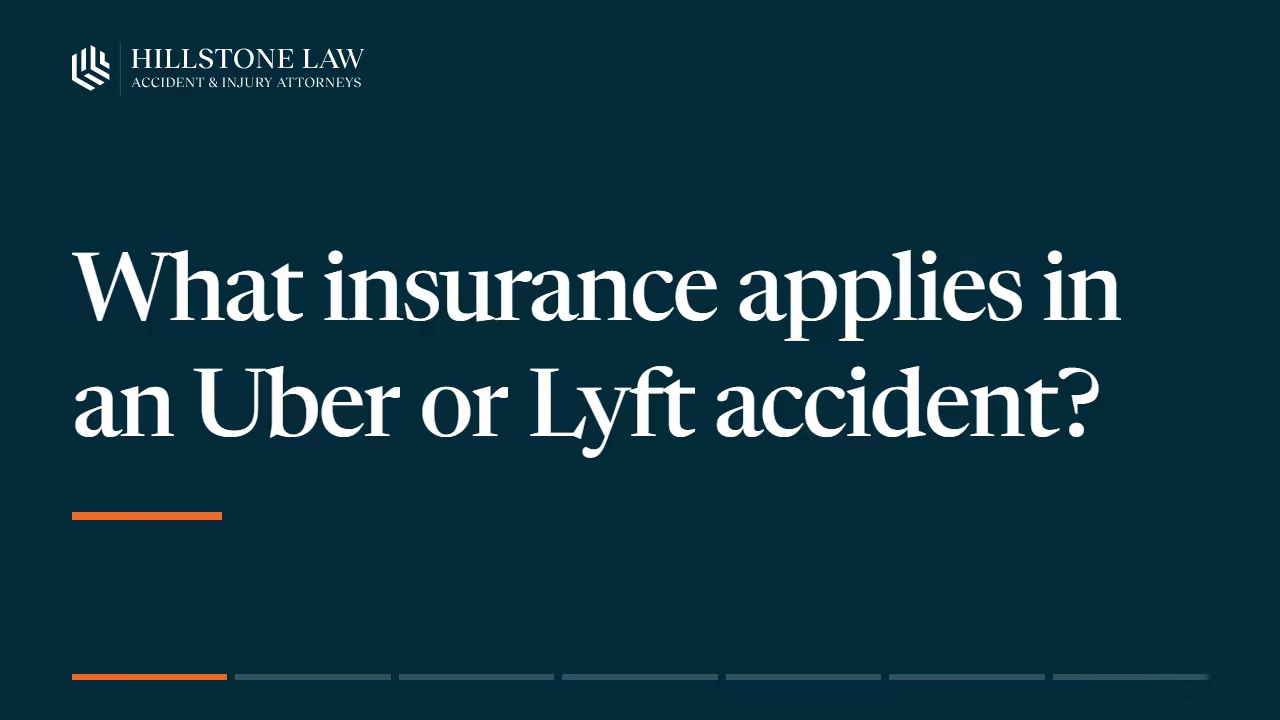
What insurance applies in an Uber or Lyft accident in California?
Read the transcript
What insurance applies in an Uber or Lyft accident in California?
What insurance applies in an Uber or Lyft accident?
It depends on what the driver's app was doing. At the moment of the crash.
Coverage by app status: App off, the driver's own policy only; Waiting, at least $50,000 per person, plus excess; On a trip, $1,000,000, from the accepted ride to its end.
$1 million from the accepted ride to the end of the trip. For death, injury and property damage. Public Utilities Code 5433
Passengers are covered once the ride is accepted. Including uninsured motorist coverage while you are in the car.
How the app status is proven: The company's trip and app records; Your own app's trip receipt; Screenshots, the police report, dashcam video.
Free consultation. Call and tell us what happened. (855) 691-1691 Hablamos español.
General information about California law, not legal advice for your situation.
Do you have a case? Find out today, free.
Two short steps. About a minute. Our team reads every message and calls you back.
- The case review is free.
- Private: only our team reads what you send.
- In English or Spanish, whichever you prefer.

Sending this form does not create an attorney-client relationship. We handle your information under our Privacy Policy.
Thank you
Thank you. Our intake team will call you back as soon as it can, any day of the week.
What happens next: a person on our intake team reads your request and calls you to hear what happened. The call is free and there is no obligation.
If anyone is hurt, call 911 first.
Sources and date
- Public Utilities Code 5433 (rideshare insurance by app period, as amended effective January 1, 2026) and 5434 (personal auto policies during rideshare use), read on leginfo.legislature.ca.gov on 2026-11-19.
- Insurance Code 11580.2; Vehicle Code 16056; Code of Civil Procedure 335.1, 352; Government Code 911.2; Civil Code 1714, 1431.2, 3333, read on leginfo.legislature.ca.gov on 2026-11-19.
- Li v. Yellow Cab Co. (1975) 13 Cal.3d 804, read on scocal.stanford.edu on 2026-11-19.
- Proposition 22: California Department of Insurance notice on its insurance provisions (February 3, 2021), and Castellanos v. State of California (2024) 16 Cal.5th 588 (courts.ca.gov), read on 2026-11-20.
- Autonomous vehicles: California DMV permit lists, Waymo approval page and reporting memo AVIM 2026-001A; CPUC autonomous-vehicle programs, read on 2026-11-20.
- Late-night injury crashes: California Crash Reporting System (CCRS, data.ca.gov), 2022-2024, compiled by Hillstone Law.
- Pickup zones: each airport's and venue's published ground-transportation rules; City of San Diego Gaslamp pickup notice (July 16, 2026); CPUC Decision 25-10-062 on rideshare accident reports; all as compiled by Hillstone Law from public records, 2026-11-19 to 2026-11-21.
- Results: Hillstone Law case records, 2026-11-19.
This is general information about California law, not legal advice for your situation.