

When to get care
Call 911 or go to an emergency room for loss of consciousness, confusion, a severe headache, vomiting, numbness or weakness, trouble breathing, chest or belly pain, or a possible broken bone.
See a doctor or urgent care within a day or two for anything else: neck or back pain, stiffness, bruising, headaches, dizziness, or pain that seems minor. Some injuries show up hours or days later. Adrenaline hides pain at the scene, and soft-tissue injuries often stiffen overnight.
Go back if symptoms get worse or new ones appear. Tell the doctor about any change.

What should I do after a car accident in California?
Read the transcript
What should I do after a car accident in California?
What should I do after a car accident?
Stop. Check on everyone. Call 911 if anyone is hurt, even slightly.
Exchange information. Names, licence numbers, plates, insurers and policy numbers.
Photograph it. Find witnesses. The cars, the road, the signals, your injuries. Get names and phone numbers.
Say little about fault. Be polite, stick to facts, and do not guess about speed or distance.
See a doctor within days. Even if you feel mostly fine. Neck, back and head injuries often show up later.
10 days to report the crash to the DMV. When anyone was hurt, or damage was over $1,000. Form SR-1 · Vehicle Code 16000
Free consultation. Call and tell us what happened. (855) 691-1691 Hablamos español.
General information about California law, not legal advice for your situation.
Why the first visit matters for your claim
An injury claim is proved with medical records. The first visit creates the record that links your injury to the accident. When weeks pass before any care, insurers argue that something else caused the pain, or that you were not really hurt. At that visit:
- say how the accident happened, in plain words ("I was rear-ended at a red light");
- name every place that hurts, even the ones that seem small;
- mention any earlier problem with the same body part, and how this is different;
- ask for the visit notes and the discharge papers, and keep them.
Who pays for treatment before the claim settles
An injury claim takes months, and doctors want to be paid now. The usual sources, in the order people use them:
| Source | What it covers | What to know |
|---|---|---|
| Health insurance | Covered care under your plan, with your usual copays | The plan may ask to be repaid from your recovery |
| Medical payments coverage | Medical bills up to the limit you bought, whoever was at fault | Part of your own car policy; often pays quickly |
| Workers' compensation | Care for injuries at work, if you were working | The usual route against the employer (Labor Code 3600) |
| The at-fault driver's insurer | Your medical bills, as part of the final settlement | Usually pays once, at the end, not bill by bill |
| Treatment on a lien | Care now, paid from the recovery later | Useful when you have no coverage; the bills must be reasonable |
If you were hurt at work by someone other than your employer, such as another driver, you can have both a workers' compensation claim and a claim against that person (Labor Code 3852).
Hospital liens
A California hospital that treats an accident victim can claim a lien on the damages the injured person recovers, for its reasonable and necessary charges (Civil Code 3045.1). The lien does not apply where the injury is covered by workers' compensation. Once the hospital gives proper notice, an insurer that pays the injured person without paying the lien can be liable to the hospital, but only up to what can be paid from 50% of the recovery after any earlier liens (Civil Code 3045.4). That limit protects the injured person's share.
Hospital bills are often reduced at the end of a case. Charges are negotiated, errors are found, and the amount of the lien is checked against what the hospital was actually entitled to.
Other repayment claims
Health plans, employer plans and public programs that paid for your care may ask to be repaid from your recovery. The rules depend on the kind of plan, and some of them allow the repayment to be reduced to reflect what it cost to win the recovery. A doctor who treated you on a lien is paid from the settlement under your written agreement. All of these claims are settled at the end, so that you know what you will actually receive before you agree to a settlement.
Keep a treatment record
Keep one folder, on paper or on your phone, with:
- every provider's name, address and dates of visits;
- bills, receipts and explanation-of-benefits statements;
- prescriptions and pharmacy receipts;
- mileage to and from appointments;
- work notes and restrictions from your doctors;
- a short daily note of pain, sleep and what you could not do.
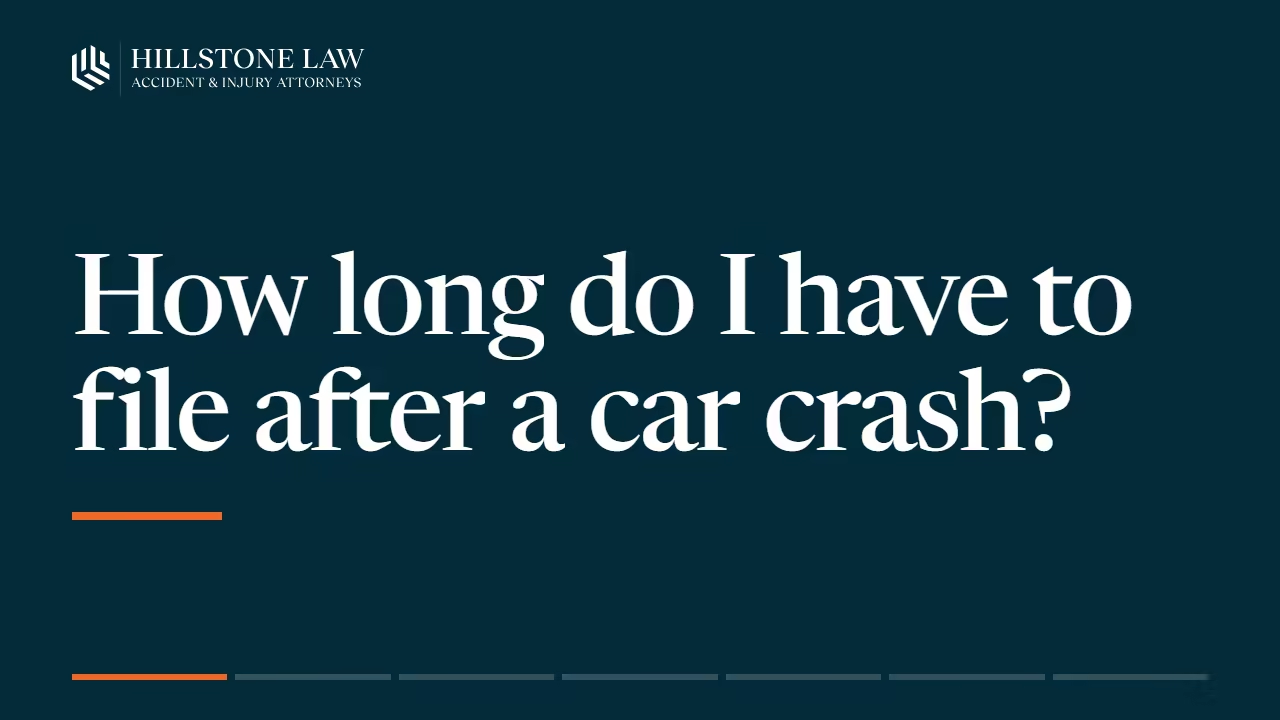
How long do I have to sue after a car crash in California?
Read the transcript
How long do I have to sue after a car crash in California?
How long do I have to file after a car crash?
2 years from the injury to file a lawsuit. That is the general deadline in California. Code of Civil Procedure 335.1
6 months if a public entity was involved. A city bus, a county truck, a dangerous public road: a written claim comes first. Government Code 911.2
The clocks that start at the crash: 10 days, dMV report, form SR-1; 6 months, claim against a public entity; 2 years, injury lawsuit; 3 years, vehicle damage only.
Negotiation does not stop the clock. If the claim is still open as the date approaches, the lawsuit must be filed to protect it.
Exceptions can shorten or extend these limits. A child was hurt; The at-fault driver died; A federal vehicle; Your own uninsured motorist claim.
Free consultation. Call and tell us what happened. (855) 691-1691 Hablamos español.
General information about California law, not legal advice for your situation.
Follow the plan
Keep every appointment, finish therapy, and take medication as prescribed. If a treatment does not help, tell the doctor rather than stopping. Gaps in care and missed appointments are among the most common reasons insurers lower an offer. If you cannot get to appointments, or cannot afford them, say so: there is usually a way to keep care going.
Future care
Some injuries need care long after the claim is settled: surgery, injections, therapy, or medication. Damages include all the harm caused by the accident, including future care (Civil Code 3333), but only if it is proved. Before settling, the doctors should say what care is still likely to be needed and what it will cost. A settlement is final; costs that appear later cannot be added.
Do not sign papers in the hospital
An insurer may contact you soon after the accident, sometimes while you are still in hospital. A general release signed during the first hospital stay is presumed fraudulent under California law (Business and Professions Code 6152), but the safe course is to sign nothing before you have advice.
What we do for you
We help you find care when you have no coverage, keep the records and bills in order, deal with the hospital and the repayment claims, and make sure future care is in the claim before any settlement. No fees unless you get paid. We answer 24 hours a day, 7 days a week. Our intake team speaks Spanish. At your request, we can meet you at home or in the hospital.











