

Which insurance policies can pay after an injury?
More than most people check. The other side's liability insurance is the main source, but your own policy, your health plan and, in some crashes, a company's or an app's policy can all play a part.
| Policy | Whose it is | What it can pay |
|---|---|---|
| Bodily injury liability | The person or business at fault | Your injuries and losses, up to its limits; at least $30,000 per person on policies from 2025 (Vehicle Code 16056) |
| Property damage liability | The person at fault | The repair or value of your car or other property |
| Uninsured and underinsured motorist | Yours, or a relative's you live with | Your injuries when the other driver has no insurance, too little, or drove off (Insurance Code 11580.2) |
| Uninsured motorist property damage | Yours, if you did not decline it | Damage to your car by an identified uninsured driver (Insurance Code 11580.26) |
| Medical payments | Yours, if you bought it | Medical bills whoever was at fault, up to a usually small limit |
| Collision | Yours, if you bought it | Your car, less the deductible, whoever was at fault |
| Health insurance | Yours | Treatment now; it may claim repayment from a settlement |
| Commercial, rideshare or business policies | The employer, carrier, app or property owner | Often far higher limits than a personal policy |
Method: Policy types available in California and the code section that requires or governs each; what your own policy covers depends on what you bought. 2026.
Source: California codes (leginfo).
Cite this: Insurance that can pay after an injury in California, Hillstone Law analysis of California codes (leginfo) data, 2026. https://hillstonelaw.com/guides/personal-injury-insurance-claims/#data-which-policy-pays-2026
The at-fault person's insurer works for its policyholder, not for you. Your own insurer owes you the benefits you paid for, but on an uninsured motorist claim it stands in the shoes of the other driver and can argue about fault and value like any adversary.

How long do I have to sue after a car crash in California?
Read the transcript
How long do I have to sue after a car crash in California?
How long do I have to file after a car crash?
2 years from the injury to file a lawsuit. That is the general deadline in California. Code of Civil Procedure 335.1
6 months if a public entity was involved. A city bus, a county truck, a dangerous public road: a written claim comes first. Government Code 911.2
The clocks that start at the crash: 10 days, dMV report, form SR-1; 6 months, claim against a public entity; 2 years, injury lawsuit; 3 years, vehicle damage only.
Negotiation does not stop the clock. If the claim is still open as the date approaches, the lawsuit must be filed to protect it.
Exceptions can shorten or extend these limits. A child was hurt; The at-fault driver died; A federal vehicle; Your own uninsured motorist claim.
Free consultation. Call and tell us what happened. (855) 691-1691 Hablamos español.
General information about California law, not legal advice for your situation.
What is the difference between a third-party and a first-party claim?
A third-party claim is made against someone else's insurance: you are not its customer, and it pays only if its policyholder is legally responsible. It can pay for everything the law lets you recover, including pain and suffering, but only up to the policy limit.
A first-party claim is made on your own policy. Medical payments and collision coverage pay without any argument about fault. Uninsured and underinsured motorist coverage works differently: it pays what the at-fault driver would have owed you, so fault and value are argued, and disputes usually go to arbitration rather than to court.
The two kinds often run side by side. Your collision coverage can repair the car while the third-party injury claim waits for treatment to finish. If your insurer pays first, it may later seek repayment from the at-fault driver's insurer. And when the at-fault driver's limit is too small, the underinsured claim on your own policy picks up where it ends, which is why California insurers must offer that coverage at the same limits as your uninsured coverage. Our guide to policy limits explains how the layers stack.
Which claim deadlines come first?
The 2-year limit to sue gets the attention. The deadlines that actually get missed are shorter, and some start on the day of the crash.
| Deadline | What is due | Law |
|---|---|---|
| 24 hours | Report a hit-and-run to the police or CHP, needed for an uninsured motorist claim | Insurance Code 11580.2 |
| 10 days | SR-1 report to the DMV when anyone was hurt or killed, or damage was over $1,000 | Vehicle Code 16000 |
| 10 business days | Report damage by an uninsured driver to your insurer, for uninsured motorist property damage | Insurance Code 11580.26 |
| 30 days | Sworn statement to your insurer after a hit-and-run | Insurance Code 11580.2 |
| 6 months | Written claim against a city, county, state agency or transit district | Government Code 911.2 |
| 1 year | Start arbitration on an uninsured motorist property damage claim | Insurance Code 11580.26 |
| 2 years | Settle, sue the uninsured driver, or start arbitration on an uninsured motorist injury claim | Insurance Code 11580.2 |
| 2 years | Lawsuit for your injuries against the person at fault | Code of Civil Procedure 335.1 |
Method: Each deadline is the one the cited California code section sets, counted from the accident unless the row says otherwise; your policy may add notice duties of its own. 2026.
Source: California codes (leginfo).
Cite this: Insurance claim deadlines after an injury in California, Hillstone Law analysis of California codes (leginfo) data, 2026. https://hillstonelaw.com/guides/personal-injury-insurance-claims/#data-claim-deadlines-2026
The 24-hour rule matters more often than people expect: in 2024, at least 103,184 hit-and-run crashes were reported in California to the state crash database (CCRS), 15,073 of them with someone hurt or killed.
Negotiation does not pause any of these clocks. If the insurer is still "reviewing" the file as the 2-year date nears, the lawsuit has to be filed anyway to protect the claim, as our lawsuit guide explains.
What will the adjuster ask for in the first calls?
Expect the other driver's insurer to call within days, sometimes within hours. The adjuster is usually friendly and usually asks for two things: a recorded statement and a signed authorization to collect your medical records.

You do not owe the other driver's insurer a recorded statement. Anything you say about how the crash happened, or how you feel, will be compared later with your medical records and used to value the claim, often before you know how badly you are hurt. A broad medical authorization can open your entire medical history, including treatment that has nothing to do with the crash. It is reasonable to confirm your name, the date and the place, and to say that you will follow up in writing.
Your own insurer is different. Most policies require prompt notice of any crash and your cooperation with the claim, so report it quickly, even when it was not your fault. Ask what your policy includes: uninsured motorist, medical payments, collision and rental cover. Every driver must carry evidence of insurance and show it on request (Vehicle Code 16020, 16028), and the police report usually names each driver's insurer. The agency must release that report to the people involved (Vehicle Code 20012).
Why is the property damage claim settled first?
Because a car can be valued in days and an injury cannot. The vehicle claim is usually resolved within weeks: an estimate, a repair or a total-loss value, and a rental while you wait. Settling it does not settle the injury claim, but read every document before you sign and make sure it is limited to property damage. A release that says "all claims" can end the injury claim too.
If the at-fault driver had no insurance, your collision coverage or, if you kept it, your uninsured motorist property damage coverage can pay. The second kind requires physical contact with a vehicle whose owner or driver is identified, or whose license number is known, and a report to your insurer within 10 business days. Our property damage claims guide covers the car in detail.
How do you build the injury claim?
The injury claim waits for treatment. It is presented once you have finished treating, or once a doctor can describe what lies ahead, so that future care and lost earning capacity can be counted.
The claim package is the evidence: medical records and bills, proof of lost income, photographs, the police report, witness statements, and a written account of how the injury changed your days. The insurer evaluates it, makes an offer, and the two sides negotiate. How that negotiation runs, from the demand letter to the check, is in our settlement process guide. What drives the number is in what is my case worth.
A release closes the claim for good. California law presumes fraudulent a general release obtained while you are confined in a hospital, within 15 days of admission (Business and Professions Code 6152), but the safer course is never to sign one until you understand your injuries.
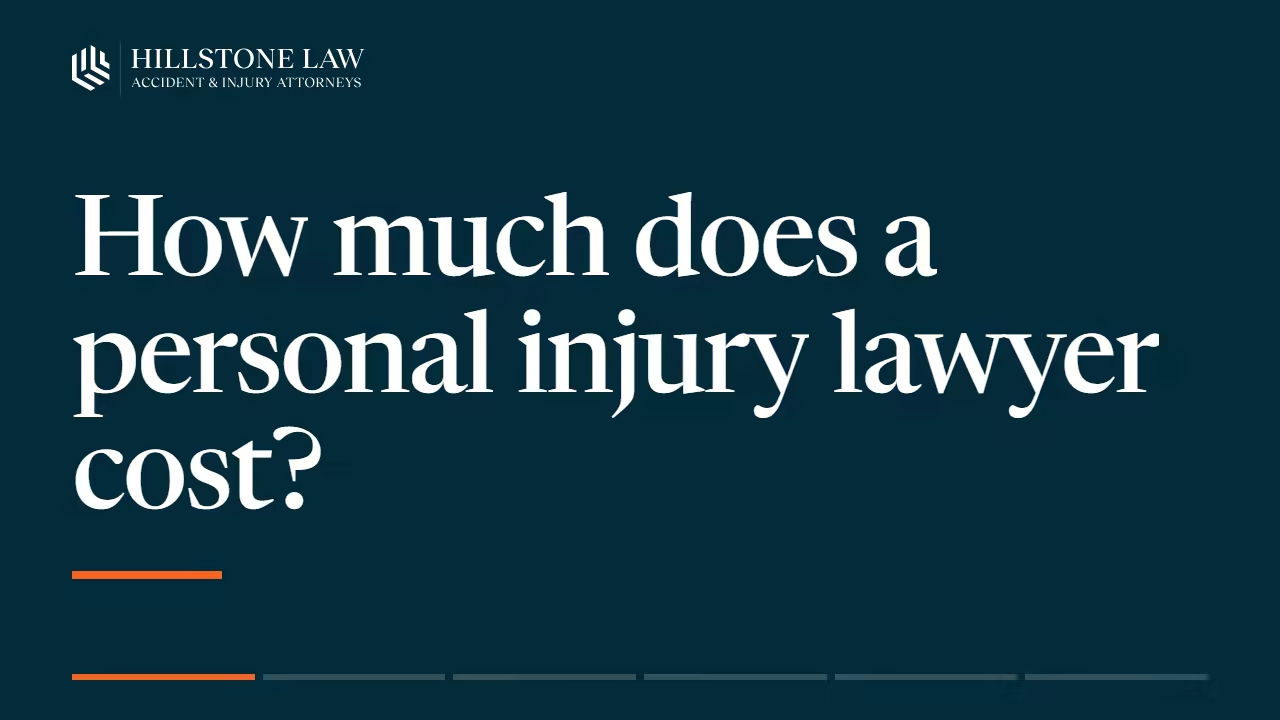
How much does a personal injury lawyer cost in California?
Read the transcript
How much does a personal injury lawyer cost in California?
How much does a personal injury lawyer cost?
No fees unless you get paid. Our fee comes only from what we recover for you.
What you pay along the way: Nothing to hire us; Nothing while the case is open; Nothing by the hour.
A percentage of the recovery, in writing. You sign the agreement before we start. California law does not set the percentage. It is negotiable. Business and Professions Code 6147
Before you sign a settlement, we go through it line by line. The gross amount; Our fee; Each lien; What you receive.
Free consultation. Call and tell us what happened. (855) 691-1691 Hablamos español.
General information about California law, not legal advice for your situation.
What can you do about a denial or a low offer?
A denial is the insurer's position, not a ruling. Ask for the reason in writing, and look at what it rests on: a dispute about fault, a gap in treatment, a claim that an earlier injury explains the pain, or a coverage question. Each has a different answer, and many are answered with evidence the insurer did not yet have.
A low first offer is common, especially one that arrives before treatment is finished. It is an opening position. You can answer it with the records, a doctor's statement about the future, and proof of lost income. If talks stall, the lawsuit is the tool that moves them, because a court, not the insurer, decides fault once a case is filed.
What if you or the other driver had no insurance?
The other driver had none. Your uninsured motorist coverage stands in. California insurers must include it unless you deleted it in writing. To keep that claim alive, within 2 years of the accident you must settle with your insurer, sue the uninsured driver, or formally start arbitration. If the at-fault driver also had too little insurance, do not settle with that driver's insurer without your own insurer's written consent: settling without it can forfeit the underinsured claim. Our guides to uninsured motorist claims and accidents without insurance go further.
You had none. An owner or driver of an uninsured vehicle involved in the crash generally cannot recover pain and suffering from the other driver, only economic losses such as medical bills and lost wages (Civil Code 3333.4). The bar does not apply when the other driver is convicted of driving under the influence.
How many injury crashes happen in California each year?
At least 163,897 in each of the three latest years on the state's own reports, and the real number is higher. Each of those crashes can start one or more insurance claims, which is one reason adjusters handle so many files at once.
| Year | Injury or fatal crashes (at least) | People injured (at least) | People killed (at least) |
|---|---|---|---|
| 2022 | 163,897 | 226,301 | 4,661 |
| 2023 | 167,358 | 230,850 | 4,272 |
| 2024 | 171,977 | 237,014 | 4,059 |
Method: Crashes and people on reports filed with the state crash database (CCRS), summed for every California county; local police do not report every crash to it, so each figure is a minimum. 2022–2024.
Source: California Highway Patrol (CCRS), read November 19, 2026.
Cite this: Injury and fatal crashes reported to California's crash database, 2022-2024, Hillstone Law analysis of California Highway Patrol (CCRS) data, 2022–2024. https://hillstonelaw.com/guides/personal-injury-insurance-claims/#data-ca-injury-crashes-2022-2024
Source: California Highway Patrol, Crash Reporting System (CCRS), statewide totals for 2022 to 2024, summed from the county records.
How does the claim differ by type of case?
| Case type | Which insurance usually matters most |
|---|---|
| Car accidents | The driver's liability policy first, then your own uninsured and underinsured coverage |
| Motorcycle accidents | The other driver's policy, and the rider's own uninsured and medical payments coverage |
| Truck accidents | The carrier's commercial policy, usually far above personal limits |
| Uber and Lyft | The platform policy that applies to what the app showed at the moment of the crash |
| Slip and fall | The business's or owner's general liability policy; a 6-month claim if the property is public |
| Dog bites | The owner's homeowner's or renter's liability policy |
| Pedestrian and bicycle accidents | The driver's policy, and the uninsured motorist coverage of your own household's car policy, as your policy states |
| Bus accidents | A transit agency's claim process, with its 6-month deadline, or a private carrier's policy |
| Catastrophic injuries | Every policy that stacks: liability, umbrella, employer and your own underinsured coverage |
| Wrongful death | The at-fault policy, claimed by the family |
What should you do now?
- Collect the details: names, plates, license and insurance information, and the police report number.
- Tell your own insurer promptly and ask what your policy includes.
- File the SR-1 within 10 days if anyone was hurt or killed, or damage was over $1,000.
- Decline a recorded statement to the other driver's insurer until you have advice.
- Keep a claim file: claim numbers, adjusters' names, every letter, bill and receipt.
- Sign nothing marked "release" or "final" until treatment is finished and you understand it.
We find every policy that can pay, including the coverage on your own policy that people forget, and we take the adjusters' calls so you do not have to. We answer 24 hours a day, 7 days a week, our intake team speaks Spanish, and at your request we can meet you at home or in the hospital.
This is general information about California law, not legal advice for your situation.











