

Two ways to get paid
| Route | How it works | Trade-off |
|---|---|---|
| The other driver's insurer | Claim against the at-fault driver's property damage coverage | No deductible, but you wait for the insurer to accept fault |
| Your own collision coverage | Your insurer pays now, minus your deductible, then seeks repayment from the other driver | Faster; the deductible is often recovered later |
Many people use their own collision coverage when the other insurer delays, and let their insurer pursue repayment.
How long do I have to sue after a car crash in California?
Read the transcript
How long do I have to sue after a car crash in California?
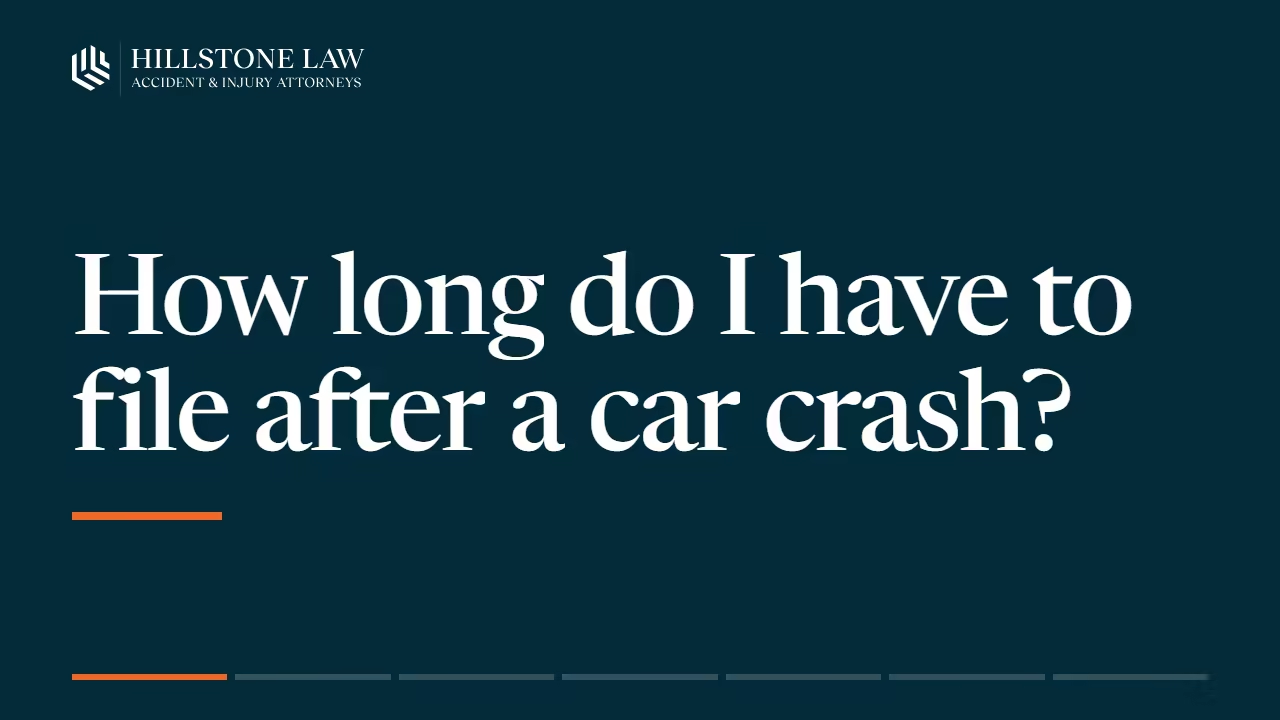
How long do I have to file after a car crash?
2 years from the injury to file a lawsuit. That is the general deadline in California. Code of Civil Procedure 335.1
6 months if a public entity was involved. A city bus, a county truck, a dangerous public road: a written claim comes first. Government Code 911.2
The clocks that start at the crash: 10 days, dMV report, form SR-1; 6 months, claim against a public entity; 2 years, injury lawsuit; 3 years, vehicle damage only.
Negotiation does not stop the clock. If the claim is still open as the date approaches, the lawsuit must be filed to protect it.
Exceptions can shorten or extend these limits. A child was hurt; The at-fault driver died; A federal vehicle; Your own uninsured motorist claim.
Free consultation. Call and tell us what happened. (855) 691-1691 Hablamos español.
General information about California law, not legal advice for your situation.
How much the other driver's policy has to cover
California sets the least a driver's liability policy must carry. The property damage line is the one that pays for your car, and it changed on January 1, 2025 (Vehicle Code 16056).
| Policy issued or renewed | Property damage (your car and other property) | Injury, one person | Injury, two or more people |
|---|---|---|---|
| On or after January 1, 2025 | $15,000 | $30,000 | $60,000 |
| Before 2025, until it renews | $5,000 | $15,000 | $30,000 |
Method: Minimum limits as written in Vehicle Code 16056. 2025.
Source: California codes (leginfo).
Cite this: California minimum auto liability limits, from January 1, 2025, Hillstone Law analysis of California codes (leginfo) data, 2025. https://hillstonelaw.com/guides/property-damage-claims/#data-minimum-liability-limits-california-2025
Takeaway: a driver with a minimum policy written before 2025 may have only $5,000 for every car and fence the crash damaged, so a newer car can outrun the limit before anyone's injuries are counted.
Method: the four limits are copied from the text of Vehicle Code 16056 as read on leginfo.legislature.ca.gov on 2026-11-19. They are floors; many drivers carry more, and the declarations page of the other driver's policy settles the real figure.
The exceptions
- The other driver had no insurance. Your uninsured motorist bodily-injury coverage does not pay for your car (Insurance Code 11580.2). Insurers must offer a separate uninsured motorist property damage coverage (Insurance Code 11580.26): with collision coverage it pays your collision deductible, and without collision coverage it pays up to the car's value or $3,500, whichever is less. It pays only after direct contact with the uninsured car, when that driver or the car's license plate is identified and you report the crash to your insurer within 10 business days. Otherwise collision coverage is the usual route.
- The other driver's limit is too low. A $15,000 limit, or $5,000 on older policies, may not cover a newer car. The driver owes the rest personally.
- You had no insurance. You can still claim your car's damage from the at-fault driver: California's uninsured-driver rule limits pain and suffering, not economic losses (Civil Code 3333.4).
- You were hurt too. Settle the car without signing anything that releases your injury claim. The injury claim has its own 2-year deadline (Code of Civil Procedure 335.1).
What you can claim
- Repairs, or the car's value before the crash if it is a total loss.
- Loss of use: a rental car, or the reasonable cost of being without the car while it is repaired.
- Towing and storage.
- Personal items damaged in the crash, such as a child car seat or a phone.
- Diminished value: a repaired car can be worth less than one never in a crash. Whether an insurer pays it depends on the claim; ask.
The measure is what makes up for the harm the crash caused (Civil Code 3333).
How this applies by case type
- Car accidents: most property damage claims settle within weeks.
- Truck accidents: commercial carriers carry larger limits; the carrier's adjuster handles the car.
- Uber and Lyft crashes: the platform's coverage includes property damage in each period.
- Hit-and-run crashes: collision coverage is usually the route for the car.
How much does a personal injury lawyer cost in California?
Read the transcript
How much does a personal injury lawyer cost in California?
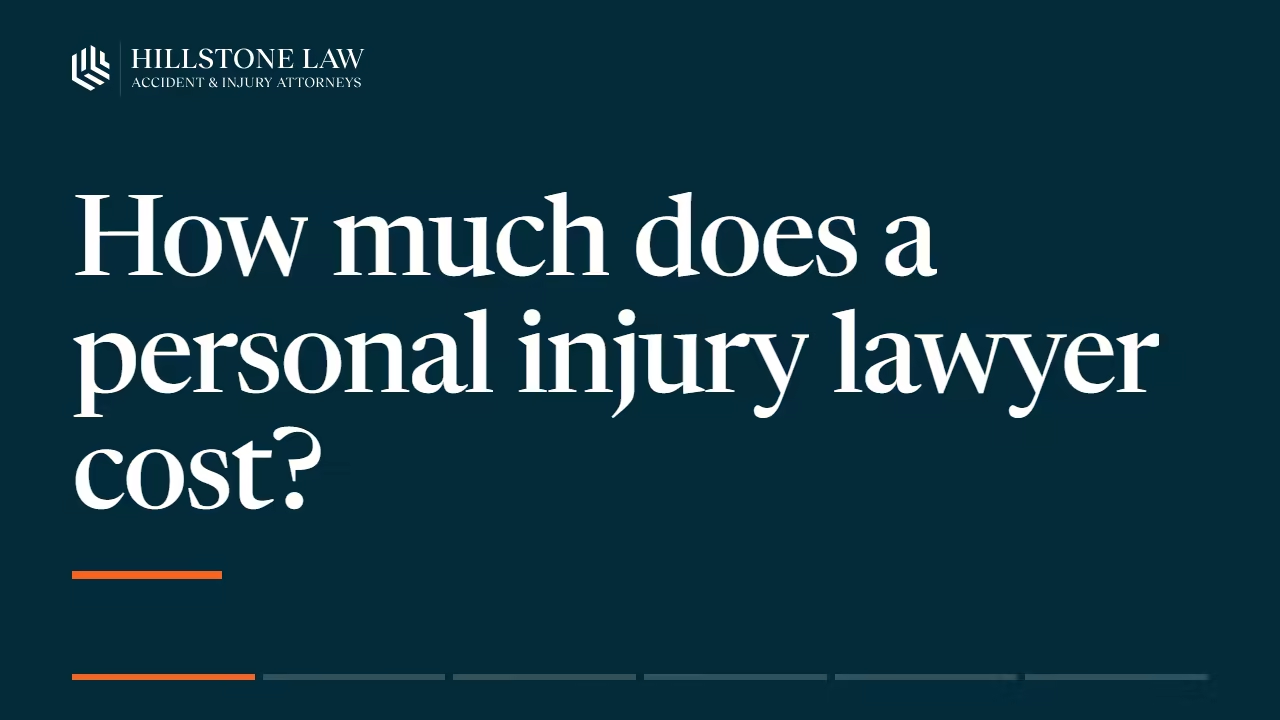
How much does a personal injury lawyer cost?
No fees unless you get paid. Our fee comes only from what we recover for you.
What you pay along the way: Nothing to hire us; Nothing while the case is open; Nothing by the hour.
A percentage of the recovery, in writing. You sign the agreement before we start. California law does not set the percentage. It is negotiable. Business and Professions Code 6147
Before you sign a settlement, we go through it line by line. The gross amount; Our fee; Each lien; What you receive.
Free consultation. Call and tell us what happened. (855) 691-1691 Hablamos español.
General information about California law, not legal advice for your situation.
When a truck, a company van or a city vehicle hit your car
A work vehicle. When the driver was working, the employer's commercial policy usually answers for the car as well as the injuries, and its limits are normally far above the state minimums. Ask the adjuster in writing which policy and which company are handling the property claim, and keep the claim number for each.
A government vehicle or a road defect. If a city bus, a county truck or a dangerous public road damaged your car, the claim starts with a written claim to the agency, not a lawsuit. A claim for damage to personal property, which includes a car, must be presented no later than 6 months after the crash (Government Code 911.2). Missing that step can end the claim even though the 3-year rule for private drivers is still open.
Several cars in one crash. Everyone whose car was damaged claims against the same property damage limit. When the limit is small and the damage is large, an early, documented claim matters.
How this works in practice
Storage fees add up. A car left at a tow yard costs money every day. Move it to a repair shop or your home as soon as the insurer has inspected it.
You choose the repair shop. Insurers may suggest one; you are not required to use it.
Total loss offers can be negotiated. Compare listings for the same model, year, mileage and options. Send them to the adjuster.
Photograph before repairs. The damage pattern is evidence for fault and for injuries. Once the car is fixed or crushed, it is gone.
Report when required. If damage to anyone's property is over $1,000, or anyone was hurt, the DMV SR-1 is due within 10 days (Vehicle Code 16000).
Keep the old parts question open. If the shop replaces structural parts, ask for photos of the damaged parts before they are discarded. They show how hard the car was hit, which matters for the injury claim too.
What to do now
- Photograph the car from every side before it is moved or repaired.
- Open a claim with the other driver's insurer and tell your own.
- Move the car out of storage quickly after inspection.
- Keep rental, towing and repair receipts.
- Settle the car separately and do not sign an injury release.
What we do for you
When we represent you in an injury case, we help move the property damage claim along too, so the car does not hold up your life while the injury claim is built. No fees unless you get paid. We answer 24 hours a day, 7 days a week, and our intake team speaks Spanish. At your request, we can meet you at home or in the hospital.
This is general information about California law, not legal advice for your situation.











