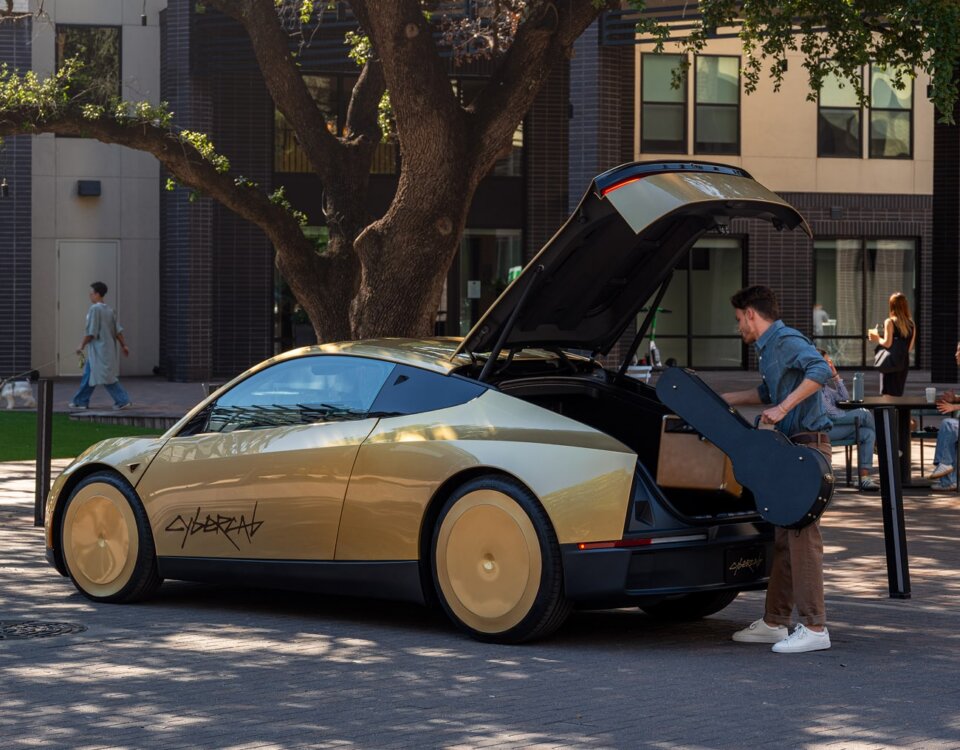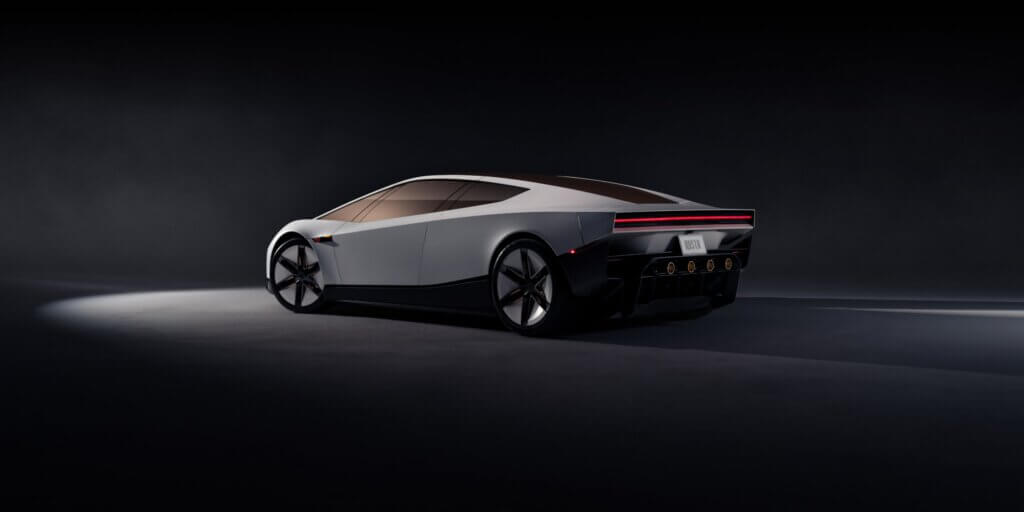
Tesla has officially demonstrated something that until recently sounded like science fiction: a car capable of taking flight.
On October 15, 2026, Tesla unveiled its redesigned next-generation Roadster at a SpaceX test facility in Texas. During the demonstration, the Roadster drove upside down on a curved structure, launched into the air, rotated while airborne, and landed using thrusters developed through Tesla’s collaboration with SpaceX.
Elon Musk described the vehicle as capable of essentially flying like a rocket.
Tesla’s new Roadster raises fascinating engineering questions. It also raises an entirely new category of personal injury questions:
What happens if a flying Tesla causes an accident? Who would be responsible if its thrusters malfunction, it loses control in the air, or it crashes into another vehicle or person?
The answers could involve an unusual combination of California automobile law, product liability law, federal aviation regulation, and potentially multiple responsible companies.
What Did Tesla Reveal on October 15, 2026?
This was not simply another update to the Tesla Roadster originally announced years ago.
Tesla demonstrated a working prototype with technology designed to allow the car to actually leave the ground.
According to reporting from Reuters, the new Roadster uses a combination of a powerful suction system and rocket-style thrusters developed with SpaceX. During Tesla’s demonstration, the vehicle traveled upside down on a ramp, launched into the air, maneuvered while airborne, and landed using its thrusters.
Tesla also demonstrated the Roadster jumping over other vehicles using the propulsion system.
Tesla says the Roadster will eventually be offered in different configurations.
Performance Roadster
The Performance version is designed as a two-seat road vehicle and includes active aerodynamics and Tesla’s multi-mode suction system.
Thrust Roadster
The Thrust version adds acceleration thrusters to the Performance hardware.
Rocket Roadster
The most extreme configuration is the Rocket, an invite-only, single-seat version that Tesla describes as having a full flight system. Tesla’s current reservation information specifically describes the Rocket version as flight-ready.
This is the model that transforms the Roadster discussion from simply another high-performance electric vehicle into something much closer to a flying car.
How Fast Is the New Tesla Roadster?
Tesla demonstrated extraordinary acceleration during the October 15 unveiling.
According to Tesla executives at the event, the Roadster can accelerate from 0 to 60 mph in less than one second. The vehicle is expected to have a top speed exceeding 230 mph and a driving range of more than 300 miles.
Tesla currently expects Roadster production to begin in 2028.
Those specifications matter from an injury-law perspective because speed and acceleration dramatically affect collision forces.
But the Rocket version introduces something even more unusual: the vehicle may be capable of moving not only forward but also vertically and laterally while airborne.
That creates potential accident scenarios traditional automobile law has rarely had to address.
Is the Tesla Flying Roadster Legal on Public Roads?
Not yet in its flying configuration.
The vehicle demonstrated on October 15 is still a prototype, and production is not expected until 2028.
Musk also acknowledged during the unveiling that the vehicle may not be legal in every jurisdiction. Reports following the unveiling indicate that the flying function is not currently approved for use on public roads.
That distinction is important.
A conventional automobile is primarily regulated through state motor-vehicle laws and federal vehicle-safety standards.
Once a vehicle begins operating as an aircraft, however, another regulatory system can enter the picture.
The Federal Aviation Administration regulates aircraft operating within the National Airspace System and maintains certification requirements involving aircraft airworthiness and flight operations. The FAA has already developed a regulatory framework for emerging powered-lift and advanced-air-mobility aircraft.
Exactly how a production Tesla Rocket Roadster would ultimately be classified has not yet been established publicly.
That could become one of the most interesting legal questions surrounding the vehicle before it ever reaches customers.
What Happens if a Tesla Flying Roadster Causes an Accident?
Liability would depend heavily on why the accident occurred.
Consider several possible scenarios.
A driver could activate the vehicle’s enormous acceleration and lose control.
A thruster could malfunction.
The flight system could fail to maintain altitude.
A sensor could provide inaccurate information.
The suction system could fail during a high-performance maneuver.
A software command could cause unexpected vehicle movement.
A component could fail while the Roadster is airborne.
Or the vehicle could operate exactly as designed while its owner uses it irresponsibly.
Each situation could lead to a very different personal injury case.
Could Tesla Be Liable for a Flying Roadster Accident?
Potentially.
If an accident resulted from a defective component or system, California product liability law could become relevant.
Product defect cases generally fall into several categories.
Manufacturing Defect
A manufacturing defect exists when an individual product differs from its intended design because something went wrong during manufacturing.
For a Roadster, that could potentially involve a defective thruster, pressure system, suspension component, steering component, structural part, battery component, or another piece of hardware.
Design Defect
A design defect case focuses not on whether one particular vehicle was improperly assembled but whether the underlying product design itself created an unreasonable safety risk.
With a vehicle as technologically unusual as the Rocket Roadster, potential design questions could involve systems such as:
- Flight-control hardware
- Thruster placement
- High-pressure air storage
- Vehicle stability
- Emergency landing systems
- Steering systems
- Active aerodynamics
- The suction system
- Battery protection
- Structural crash protection
The existence of unusual technology does not itself mean the vehicle is defective. A plaintiff would still have to establish the elements of a California product-liability claim.
Failure to Warn
Manufacturers may also have responsibilities involving warnings and instructions concerning foreseeable dangers associated with their products.
If operating the Roadster’s flight or thruster functions requires specific conditions, training, limitations, or precautions, warnings provided to customers could become important in a future accident investigation.
What About the SpaceX Thrusters?
This Roadster is particularly unusual because its headline technology comes from cooperation between Tesla and SpaceX.
Reuters reported that Tesla developed the Roadster’s rocket-style propulsion technology in collaboration with SpaceX engineers.
That raises an interesting future liability question.
If a propulsion-system failure caused an accident, investigators could need to determine:
- Who designed the system?
- Who manufactured the failed component?
- Which company tested it?
- Who developed the control software?
- Who established maintenance procedures?
- Whether Tesla or another company supplied the defective part
A product-liability investigation does not necessarily stop with the company’s logo displayed on the vehicle.
Component manufacturers, suppliers, engineering contractors, and other companies within the product’s chain of distribution may potentially become relevant depending on what failed.
The High-Pressure Propulsion System Could Become Critical Evidence
The Roadster does not appear to rely on traditional rocket fuel to create its demonstrated thrust.
Tesla’s system reportedly uses ultra-high-pressure air to power its thrusters.
That means an accident investigation involving the Rocket Roadster could require examination of components rarely encountered in an ordinary automobile case, including pressure tanks, valves, lines, regulators, thrusters, control electronics, and associated software.
If one of those components ruptures or operates unexpectedly, preserving the vehicle could be extremely important.
An engineering expert may need to determine whether the system failed because of damage sustained during a collision or whether the failure actually caused the accident.
Those are very different situations legally.
What if the Driver Misuses the Roadster?
Tesla would not automatically be responsible simply because a Tesla Roadster was involved in an accident.
Drivers still have a duty to operate vehicles responsibly.
If a Roadster owner races another vehicle, accelerates recklessly, performs unauthorized flight maneuvers, ignores safety warnings, or operates the vehicle in a prohibited location, the driver could potentially bear substantial responsibility for resulting injuries.
California negligence law would still apply to driving behavior on California roads.
The extraordinary capabilities of a vehicle do not give its owner permission to endanger others.
What if Both the Driver and the Vehicle Contributed to the Accident?
This may become one of the more realistic scenarios in future high-performance vehicle litigation.
Imagine that a Roadster owner uses the vehicle recklessly, but evidence also establishes that a defective flight-control component made the accident substantially worse.
There could potentially be claims involving both negligent operation and product liability.
California follows a comparative-fault system, meaning responsibility can be allocated among multiple parties when more than one person’s or company’s conduct contributed to an injury.
An accident therefore does not always have a single responsible party.
Could a Flying Roadster Accident Become an Aviation Case?
Potentially—and this is what makes the Rocket Roadster especially interesting legally.
If the production Roadster ultimately receives authorization to operate in flight, an accident could potentially implicate rules that ordinary California car accident lawyers rarely encounter.
The FAA regulates aircraft certification, airworthiness, pilots, flight operations, and use of the national airspace.
The agency already regulates emerging powered-lift aircraft and advanced air mobility vehicles and has created rules addressing their certification and operation.
The precise regulatory category for Tesla’s Roadster has not yet been determined publicly.
But a future accident occurring while the vehicle is airborne could potentially involve federal aviation regulations in addition to state personal injury and product liability laws.
What if a Flying Tesla Hits Someone on the Ground?
The injured person would not have to be inside the Roadster to potentially have a claim.
Possible victims could include:
- Pedestrians
- Bicyclists
- Motorcyclists
- Drivers of other vehicles
- Passengers
- People on private property
- People struck by debris
- Property owners
For example, if a flying Roadster loses altitude and lands on another vehicle, investigators would need to determine why the Roadster descended.
Was it pilot error?
Did a propulsion system fail?
Did software malfunction?
Did the vehicle run out of available thrust?
Was the driver operating somewhere the vehicle was prohibited from flying?
Those questions would determine which legal theories and defendants might apply.
What Evidence Could Matter After a Tesla Flying Car Accident?
A Tesla Rocket Roadster accident could produce an extraordinary amount of electronic and physical evidence.
Investigators may seek:
- Vehicle camera recordings
- Speed data
- Steering inputs
- Acceleration data
- Altitude information
- Thruster commands
- Thruster pressure data
- Flight-control information
- Software version information
- Diagnostic logs
- GPS information
- Battery data
- High-pressure system records
- Maintenance history
- Vehicle warnings
- Communications between vehicle systems
- Crash-scene photographs
- Surveillance video
- Witness testimony
If an aircraft regulator becomes involved, additional flight and certification records could also become relevant.
Preserving the damaged vehicle and its electronic data could therefore be one of the most important steps in a future Roadster accident case.
Tesla Says Production Is Planned for 2028
It is important to separate what Tesla demonstrated yesterday from what consumers can actually purchase and operate today.
The October 15, 2026 vehicle was a prototype demonstration.
Tesla says production of the next-generation Roadster is expected to begin in 2028, and the company has not yet demonstrated that the Rocket version’s full flight capability will be legally available for ordinary operation on public roads.
So there are not currently ordinary consumer accident claims involving production versions of Tesla’s newly revealed flying Roadster.
For now, the legal questions are prospective.
But if Tesla succeeds in putting this technology into customers’ hands, personal injury law may soon have to address situations that historically belonged almost entirely to aviation law.
Injured in a Tesla Roadster or Flying-Car Accident?
Tesla’s new Roadster demonstrates how quickly transportation technology is changing.
A vehicle that can operate on the road, accelerate to extraordinary speeds, use SpaceX-derived thrusters, and potentially take flight creates legal and technical questions far beyond those involved in an ordinary car accident.
Future cases could require investigation of driver negligence, Tesla vehicle data, propulsion technology, software, product design, component manufacturing, federal aviation regulations, and California personal injury law.
Hillstone Law represents people injured in serious vehicle accidents throughout California. If you are injured in an accident involving a Tesla Roadster, Tesla autonomous vehicle, emerging flying vehicle, or other advanced transportation technology, our attorneys can investigate the accident and determine which parties may be legally responsible.
This article provides general information about California personal injury law and emerging vehicle technology and is not legal advice. Tesla’s newly revealed Rocket Roadster remains a pre-production vehicle, and its specifications, regulatory approvals, production plans, and permitted uses may change before vehicles are delivered to consumers.
Note: These blog posts are created solely for the use of Hillstone Law. The information is gathered from internet research, publicly available sources, and artificial intelligence (AI) tools such as ChatGPT. While we aim to share helpful and educational content, Hillstone Law does not independently verify every detail. Some information may be incomplete, outdated, or subject to change without notice. If you believe any part of a post is inaccurate, misleading, or infringes upon copyright, please contact Hillstone Law immediately so we can review it and take appropriate action, including correction or removal.
Disclaimer: The material provided in these blogs is for general informational purposes only and should not be considered legal advice. Reading these posts does not create, and is not intended to create, an attorney-client relationship with Hillstone Law. Our intent is to share knowledge, raise awareness, and provide helpful resources to the public; however, Hillstone Law makes no warranties or guarantees about the accuracy, completeness, or reliability of the information provided, and expressly disclaims liability for any actions taken in reliance on it. The photos used in these posts are for illustrative purposes only and do not depict actual clients, individuals, or incidents unless expressly stated. If you or a loved one has been injured in an accident, please contact Hillstone Law at (855) 691-1691. Our attorneys are available to answer your legal questions and help you understand your rights.