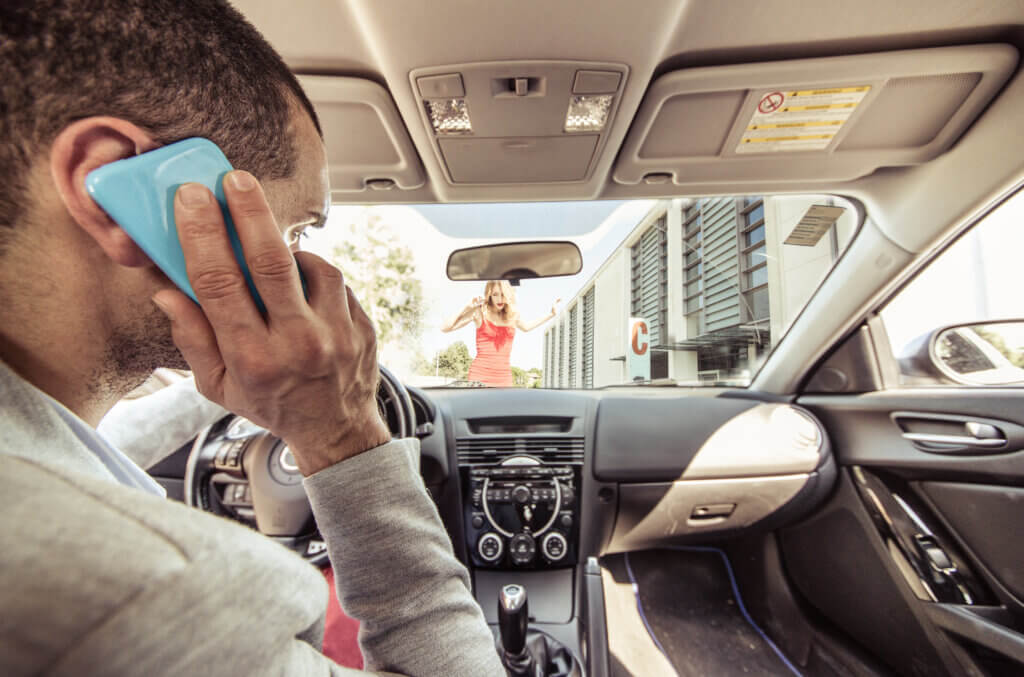
Distracted driving is one of the leading causes of Uber and Lyft accidents. Rideshare drivers rely on their phones for navigation, ride requests, passenger communication, and app notifications, which means they are more vulnerable to distraction than the average driver. When a rideshare driver loses focus, even for a second, passengers and other motorists face serious risk.
This in depth guide explains how distracted driving leads to rideshare crashes, how to prove it happened, and what victims can do to protect their claims.
1. Why Rideshare Drivers Are More Prone to Distraction
Rideshare drivers use their phones constantly, and even when mounted, the screen demands attention. Common distractions include:
- Viewing incoming ride requests
- Following GPS navigation
- Accepting or rejecting rides
- Reading messages
- Adjusting music or settings
- Looking for passengers at pick up points
- Switching between apps
- Watching for surge pricing
Unlike regular drivers, rideshare drivers are expected to multitask while on the road, raising the likelihood of accidents.
2. Types of Distracted Driving in Rideshare Crashes
There are three primary forms of distracted driving, and rideshare drivers often experience all three:
- Visual distraction: Looking away from the road to check the app
- Manual distraction: Tapping the phone or adjusting controls
- Cognitive distraction: Mentally focused on the app instead of driving
These distractions reduce reaction time, awareness, and decision making.
3. Evidence That Proves Distracted Driving
To win a rideshare accident case, you need evidence showing the driver was distracted. Key forms of proof include:
- Rideshare app activity logs
- Phone usage data
- GPS speed and braking records
- Witness statements
- Dashcam footage
- Surveillance videos
- App notifications before impact
App activity logs are especially powerful because they show what the driver was doing seconds before the crash.
Uber explains its safety and tech features here: https://www.uber.com/us/en/safety/
4. How App Data Reveals Distracted Behavior
Rideshare app data includes timestamps for every action the driver takes. It can show:
- If the driver accepted a ride mid trip
- If they were navigating multiple screens
- If they were canceling or modifying rides
- Sudden swerves or late braking
- Route deviations caused by distraction
This makes it much harder for the driver to deny fault.
5. Common Accidents Caused by Distracted Rideshare Drivers
Distraction often leads to:
- Rear end collisions
- Side impact crashes
- Intersection accidents
- Sudden braking injuries
- Lane drift collisions
- Accidents during pick up or drop off
- Pedestrian collisions
When a rideshare driver glances at their phone instead of the road, accidents happen fast.
6. How Distracted Driving Affects Liability
If the Uber or Lyft driver was distracted, liability becomes clearer. Evidence can show the driver:
- Failed to maintain a safe distance
- Reacted too slowly
- Missed traffic signals
- Swerved unexpectedly
- Violated road rules
For passengers, this greatly strengthens their claim. For other drivers, it proves negligence.
Learn more about Lyft safety policies here: https://www.lyft.com/rider/safety
7. Injuries Common in Distracted Driving Rideshare Accidents
Victims often experience:
- Whiplash
- Concussions
- Back and spine injuries
- Shoulder injuries
- Knee trauma
- Facial injuries
- Nerve damage
- Soft tissue injuries
Even at low speeds, distracted driving often causes sudden, unexpected impacts.
8. What Victims Should Do After a Distracted Driving Crash
If you believe distraction played a role, you should:
- Get medical attention immediately
- Take photos of the scene
- Screenshot your ride details
- Save all communication on the app
- Get witness information
- Report the crash to Uber or Lyft
- Speak with a rideshare accident lawyer
Getting legal help is essential because rideshare companies often deny or minimize distracted driving claims unless the evidence is strong.
Final Thoughts
Distracted driving is one of the biggest risks in rideshare transportation, and it causes preventable injuries every day. When you understand how to uncover evidence of distraction and how to build a strong claim, you can hold the driver and their insurers fully accountable for your damages.
Note: These blog posts are created solely for the use of Hillstone Law. The information is gathered from internet research, publicly available sources, and artificial intelligence (AI) tools such as ChatGPT. While we aim to share helpful and educational content, Hillstone Law does not independently verify every detail. Some information may be incomplete, outdated, or subject to change without notice. If you believe any part of a post is inaccurate, misleading, or infringes upon copyright, please contact Hillstone Law immediately so we can review it and take appropriate action, including correction or removal.
Disclaimer: The material provided in these blogs is for general informational purposes only and should not be considered legal advice. Reading these posts does not create, and is not intended to create, an attorney-client relationship with Hillstone Law. Our intent is to share knowledge, raise awareness, and provide helpful resources to the public; however, Hillstone Law makes no warranties or guarantees about the accuracy, completeness, or reliability of the information provided, and expressly disclaims liability for any actions taken in reliance on it. The photos used in these posts are for illustrative purposes only and do not depict actual clients, individuals, or incidents unless expressly stated. If you or a loved one has been injured in an accident, please contact Hillstone Law at (855) 691-1691. Our attorneys are available to answer your legal questions and help you understand your rights.