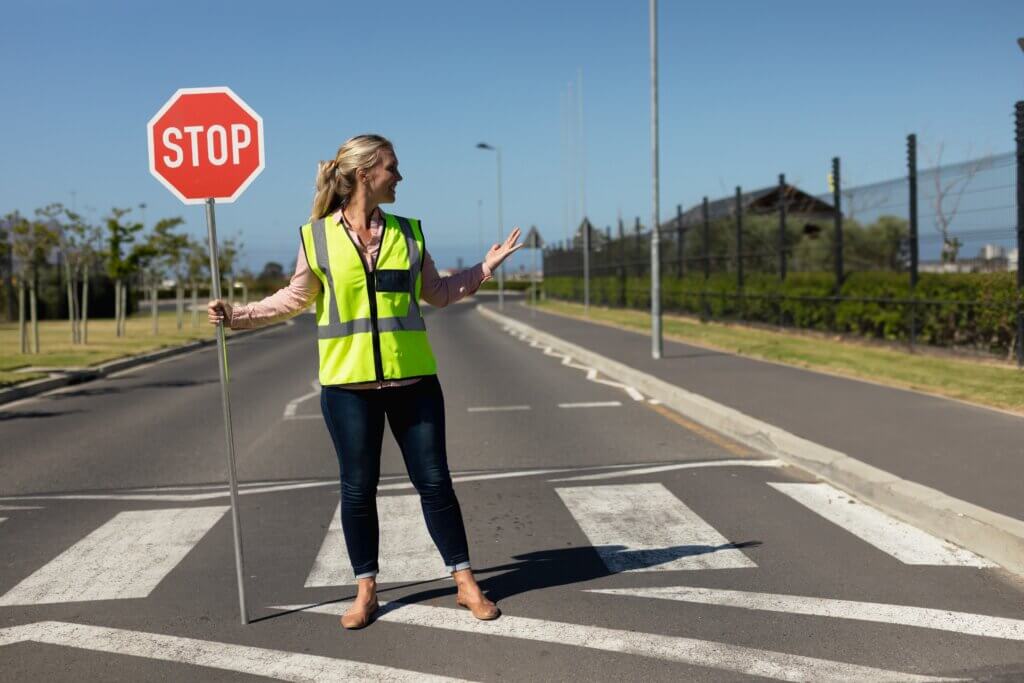
Volunteer crossing guards may not wear badges or drive patrol cars, but they play a critical role in keeping California’s streets safe. These community members stand at busy intersections, rain or shine, to help children, parents, and pedestrians cross safely.
Why Volunteer Crossing Guards Are Essential
- Protecting Schoolchildren: They ensure kids cross streets safely during hectic drop-off and pick-up times.
- Reducing Traffic Confusion: Their presence directs both drivers and pedestrians, reducing risky behavior.
- Supporting Community Policing: Guards serve as the eyes and ears of the neighborhood, spotting hazards or unsafe driving.
Qualities That Make a Great Crossing Guard
- Alertness: Staying aware of traffic and pedestrian movement.
- Patience and Courtesy: Dealing with hurried drivers and distracted walkers calmly.
- Reliability: Showing up consistently so families can count on safe crossings.
- Knowledge of Traffic Laws: Understanding right-of-way rules and school zone regulations.
How Communities Can Support Crossing Guards
- Provide Training: Offer safety instruction and proper equipment like reflective vests and stop paddles.
- Recognize Their Work: Host appreciation events or feature them in local newsletters.
- Recruit Volunteers: Partner with PTAs, senior centers, or community organizations to fill gaps.
Tips for Drivers and Pedestrians
- Drivers: Always stop when a crossing guard signals, even if you don’t see pedestrians immediately.
- Pedestrians: Follow the guard’s instructions and avoid crossing outside designated areas.
Unsung Heroes of Road Safety
Volunteer crossing guards contribute to safer streets and stronger communities. By respecting their efforts and providing resources, neighborhoods across California can ensure everyone especially children—gets where they’re going safely.
Note: These blog posts are created solely for the use of Hillstone Law. The information is gathered from internet research, publicly available sources, and artificial intelligence (AI) tools such as ChatGPT. While we aim to share helpful and educational content, Hillstone Law does not independently verify every detail. Some information may be incomplete, outdated, or subject to change without notice. If you believe any part of a post is inaccurate, misleading, or infringes upon copyright, please contact Hillstone Law immediately so we can review it and take appropriate action, including correction or removal.
Disclaimer: The material provided in these blogs is for general informational purposes only and should not be considered legal advice. Reading these posts does not create, and is not intended to create, an attorney-client relationship with Hillstone Law. Our intent is to share knowledge, raise awareness, and provide helpful resources to the public; however, Hillstone Law makes no warranties or guarantees about the accuracy, completeness, or reliability of the information provided, and expressly disclaims liability for any actions taken in reliance on it. The photos used in these posts are for illustrative purposes only and do not depict actual clients, individuals, or incidents unless expressly stated. If you or a loved one has been injured in an accident, please contact Hillstone Law at (855) 691-1691. Our attorneys are available to answer your legal questions and help you understand your rights.