

Dashers are not DoorDash employees
DoorDash's annual report for 2025 describes Dashers as "the independent contractors that use our Marketplaces". California law backs that up for drivers who meet its conditions. Proposition 22, approved by voters in 2020, says an app-based driver who meets its conditions is an independent contractor, not an employee or agent of the company (Business and Professions Code 7451).
That matters because the usual rule that makes an employer answer for its employee's carelessness does not simply carry over. In place of that rule, Proposition 22 makes delivery companies carry insurance for the public. In most DoorDash cases, the claim is a claim against the Dasher and against the insurance that stands behind the Dasher.
Who pays: what the app showed at the time
DoorDash describes its auto insurance in periods. Which period the Dasher was in decides which policy is first in line.
| What the Dasher was doing | Whose auto liability insurance applies first | What it means for you |
|---|---|---|
| App off, personal driving | The Dasher's own policy | An ordinary car crash claim |
| Online, no delivery accepted | The Dasher's own policy is primary | DoorDash says its coverage is not first in line |
| Delivery accepted, on the way or carrying an order | DoorDash's third-party auto liability insurance, which DoorDash says applies during the "Delivery Service" period | The Proposition 22 minimum of $1 million per occurrence applies when the car is not otherwise covered |
The $1 million floor. For the benefit of the public, a delivery network company must keep auto liability insurance of at least $1 million per occurrence for injuries caused by an app-based driver during a delivery, when the vehicle is not otherwise covered by a policy that meets California law (Business and Professions Code 7455). DoorDash does not publish a separate California dollar figure on its help page, so the statute is the number we start from.
The Dasher's own policy. DoorDash says Dashers must carry their own primary auto insurance. A personal policy may exclude delivery work, which is one more reason the app status matters.
Your own coverage. If the Dasher had no coverage that pays, your own uninsured or underinsured motorist coverage may. See our guide to uninsured motorist claims.
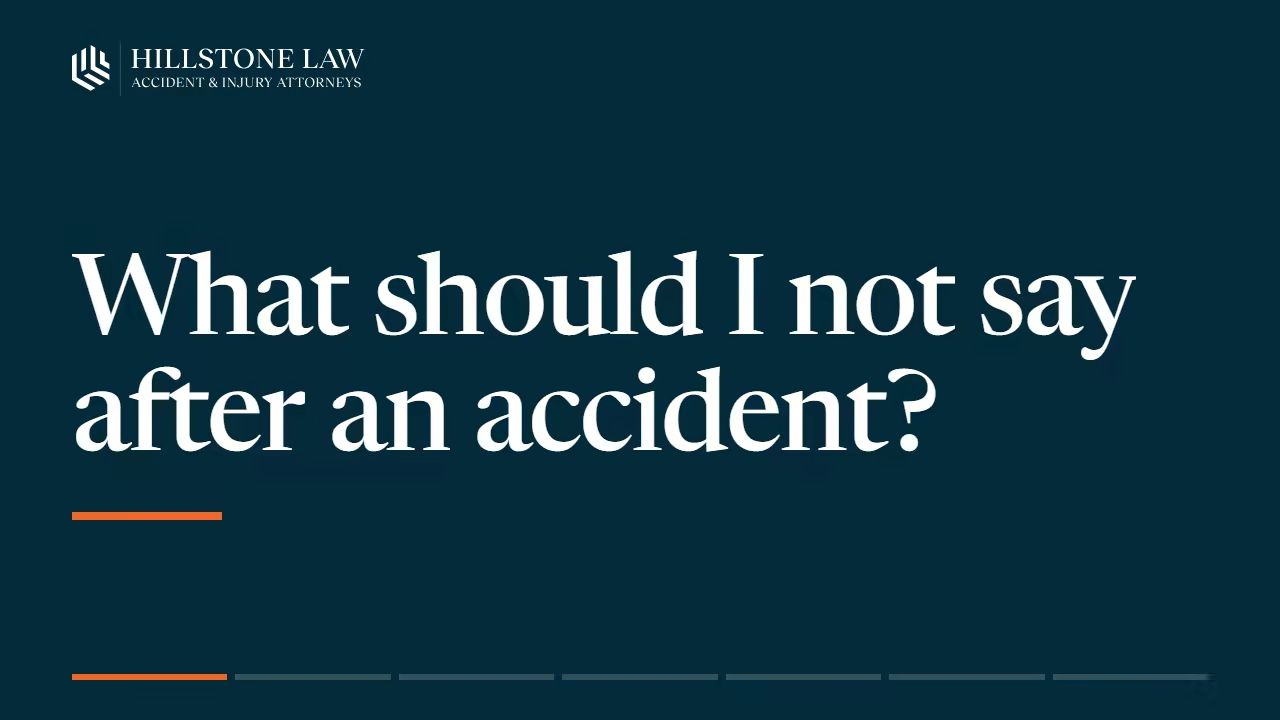
What not to say to the insurers, in under a minute.
Read the transcript
What should I not say after an accident in California?
What should I not say after an accident?
Three things to avoid saying: “I’m sorry, it was my fault”; Guesses about your speed; “I’m fine,” before a doctor checks you.
Stick to facts. With the other driver, the police and insurers.
No recorded statement is required. You do not have to give the other driver's insurer one.
Tell your own insurer promptly. Most policies require it. That is not a recorded statement to theirs.
A check with a release? Read it first. A release ends the claim.
Free consultation. Call and tell us what happened. (855) 691-1691 Hablamos español.
General information about California law, not legal advice for your situation.
Who is liable in a DoorDash crash
The Dasher is responsible for careless driving, like any driver (Civil Code 1714). If you were partly at fault, your recovery is reduced by your share, not barred (Li v. Yellow Cab Co. (1975) 13 Cal.3d 804).
Delivery driving creates its own risks: drivers checking the app for the next order, searching for an address, stopping suddenly in traffic, double-parking, and riding scooters and bikes in mixed traffic. Each is judged by ordinary care.
Other parties can share responsibility: another driver, the owner of the car if someone else's vehicle was used (Vehicle Code 17150, with an owner's liability capped at $15,000 for one person when the driver was not the owner's employee or agent, Vehicle Code 17151), or a public agency for a dangerous road, with a written claim due within 6 months (Government Code 911.2).
Proving the app status, and how long the evidence lasts
The single most important fact in a DoorDash claim is whether a delivery had been accepted. The Dasher's phone and DoorDash's own records show it: when the Dasher went online, when the order was accepted, the pickup and the drop-off times, and the route.
- Ask the Dasher at the scene whether they were delivering, and photograph any order bag or receipt in the car.
- Get the police report, which may note that the driver was working.
- Send a preservation demand to DoorDash early, asking it to keep the app and location records for the time of the crash.
- Keep your own records: photos, witness names, medical records and bills.
If you were the Dasher
If you were hurt while delivering, Proposition 22 requires DoorDash to provide you occupational accident coverage for medical expenses and lost income, and accidental death coverage for a driver's spouse and dependents (Business and Professions Code 7455). DoorDash reports that it buys insurance for occupational accident liability for Dashers. DoorDash's help page also says damage to a Dasher's own vehicle is not covered. If another driver caused the crash, you can also bring an injury claim against that driver. See our guide for injured app-based drivers.
What to do now
- Get medical care and describe every symptom.
- Photograph both vehicles, the scene and anything showing a delivery: bags, receipts, the app on the driver's phone.
- Get the Dasher's name, phone number, insurance and license plate, and the police report number.
- Tell your own insurer about the crash, but do not give a recorded statement to anyone else's insurer before you get advice.
- You generally have 2 years from the injury to sue (Code of Civil Procedure 335.1).
Why people call Hillstone Law after a DoorDash crash
No fees unless you get paid. We answer 24 hours a day, 7 days a week. We can meet you at home or in the hospital. Our intake team speaks Spanish. We work from 16 offices across California. We pin down the app status from DoorDash's records and put every policy that may pay on notice.
Results
$2.5 million
Crash between two cars.
$1 million settlement
Rideshare: car and car, policy limits.
More on the case results page.











