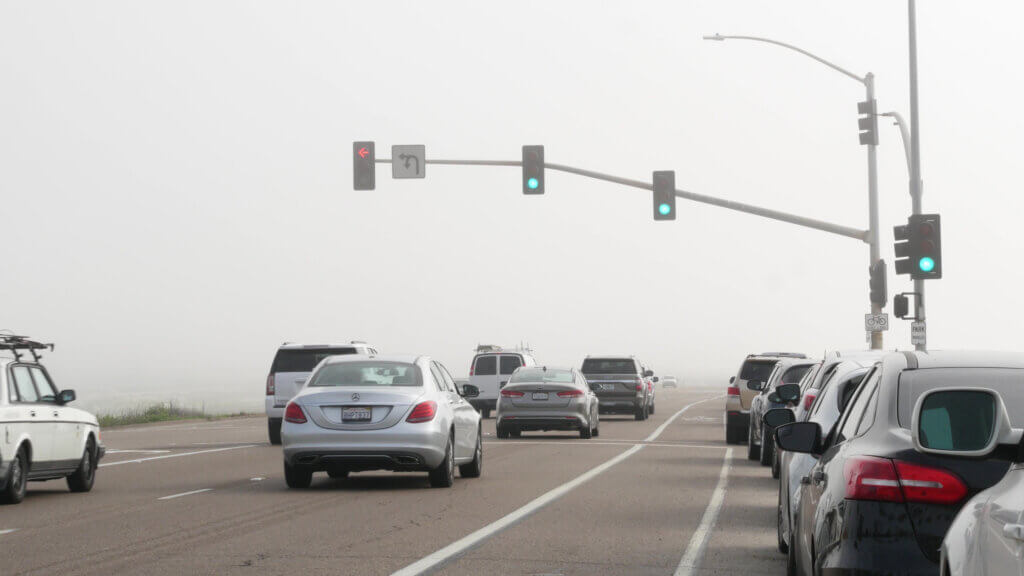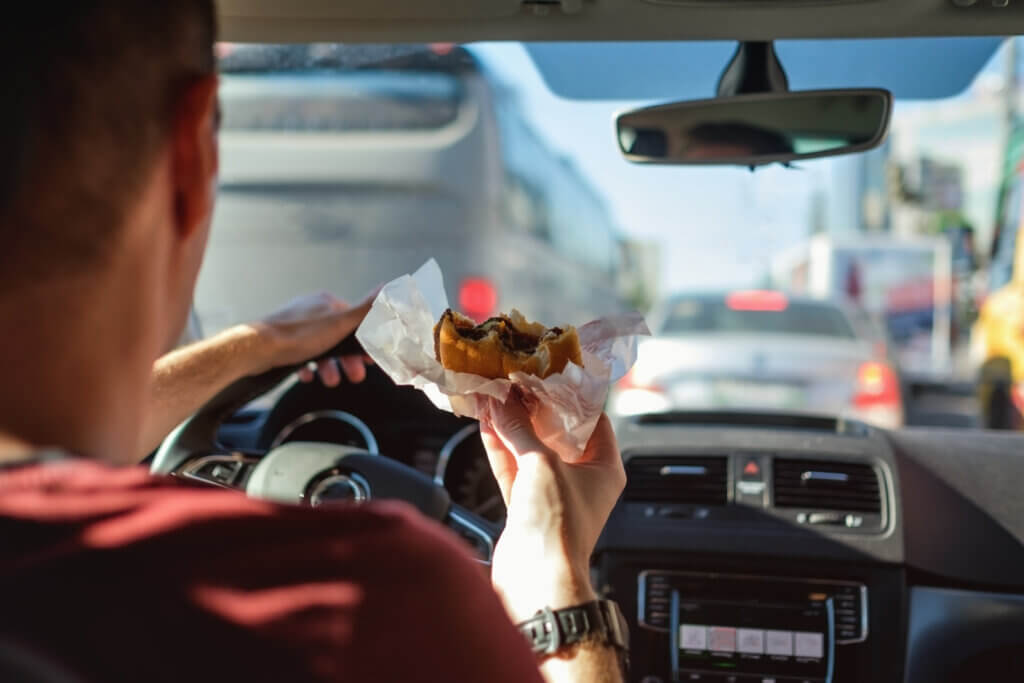
Grabbing food on the go is part of everyday life, but when you’re behind the wheel it can quickly turn into a safety issue. In California, eating while driving isn’t automatically against the law, but it can still lead to serious trouble if it affects how safely you operate your vehicle.
What California Law Really Says
California does not have a specific law that bans eating while driving. You won’t get a ticket simply for having food in your hand. However, distracted driving and reckless driving laws apply the moment eating interferes with your ability to drive safely.
When Eating Becomes a Violation
Eating can cross the line into illegal behavior if it causes you to:
- Take your eyes off the road
- Remove one or both hands from the wheel
- React suddenly due to spills or dropped food
- Drift into another lane or slow down unexpectedly
Any action that reduces your control of the car can result in a citation under distracted driving or reckless driving statutes.
Potential Penalties
If eating contributes to unsafe driving, you may face:
- A ticket for reckless or distracted driving
- Points added to your driving record
- Increased insurance premiums
- Civil liability if an accident occurs as a result of the distraction
In more serious cases, reckless driving charges can involve higher fines or even possible jail time.
Eating and Car Accident Claims
Food-related distractions can play a major role in personal injury cases. If the other driver was eating and caused the collision, that behavior may help establish negligence.
If you were the one eating, insurance adjusters may argue that distraction contributed to the crash.
After any accident, it helps to document whether food, drinks, wrappers or spills were present inside the vehicles.
Final Takeaway
California does not forbid eating while driving, but the law expects you to stay fully alert and in control. If eating behind the wheel causes dangerous driving in any way, you can be fined, held liable in an accident or face additional penalties.
Hillstone Law can guide you through claims involving distracted drivers and help protect your rights after any type of collision.
Note: These blog posts are created solely for the use of Hillstone Law. The information is gathered from internet research, publicly available sources, and artificial intelligence (AI) tools such as ChatGPT. While we aim to share helpful and educational content, Hillstone Law does not independently verify every detail. Some information may be incomplete, outdated, or subject to change without notice. If you believe any part of a post is inaccurate, misleading, or infringes upon copyright, please contact Hillstone Law immediately so we can review it and take appropriate action, including correction or removal.
Disclaimer: The material provided in these blogs is for general informational purposes only and should not be considered legal advice. Reading these posts does not create, and is not intended to create, an attorney-client relationship with Hillstone Law. Our intent is to share knowledge, raise awareness, and provide helpful resources to the public; however, Hillstone Law makes no warranties or guarantees about the accuracy, completeness, or reliability of the information provided, and expressly disclaims liability for any actions taken in reliance on it. The photos used in these posts are for illustrative purposes only and do not depict actual clients, individuals, or incidents unless expressly stated. If you or a loved one has been injured in an accident, please contact Hillstone Law at (855) 691-1691. Our attorneys are available to answer your legal questions and help you understand your rights.