

Three kinds of product defect
| Defect | What it means | Examples |
|---|---|---|
| Manufacturing defect | This item came out of the factory different from the design, and that made it dangerous | A tyre with a flaw in its layers, a cracked weld, a contaminated part |
| Design defect | Every item made to this design is unsafe, and a safer design was practical | A vehicle roof too weak to hold in a rollover, a guard missing from a machine |
| Failure to warn | The product needed a warning or instructions it did not have | A lift with no load limit marked, a heater with no warning about ventilation |
In California, a manufacturer is strictly liable when a product it puts on the market, knowing it will be used without inspection for defects, proves to have a defect that causes injury (Barker v. Lull Engineering Co. (1978) 20 Cal.3d 413). That means the injured person must show the defect and that it caused the injury, not that the company was careless. The California Supreme Court recognises three kinds of defect: manufacturing defects, design defects and warning defects (Anderson v. Owens-Corning Fiberglas Corp. (1991) 53 Cal.3d 987).
A design can be proved defective in either of two ways. The product failed to perform as safely as an ordinary consumer would expect when used in an intended or reasonably foreseeable way; or the design caused the injury and the company cannot show that the benefits of its design outweigh the risk of danger built into it (Barker). A warning claim concerns risks that were known or reasonably knowable when the product was made and sold (Anderson). A claim can also be brought for negligence, where the company failed to use reasonable care in making, testing or selling the product (Civil Code 1714).
How long do I have to sue after a car crash in California?
Read the transcript
How long do I have to sue after a car crash in California?
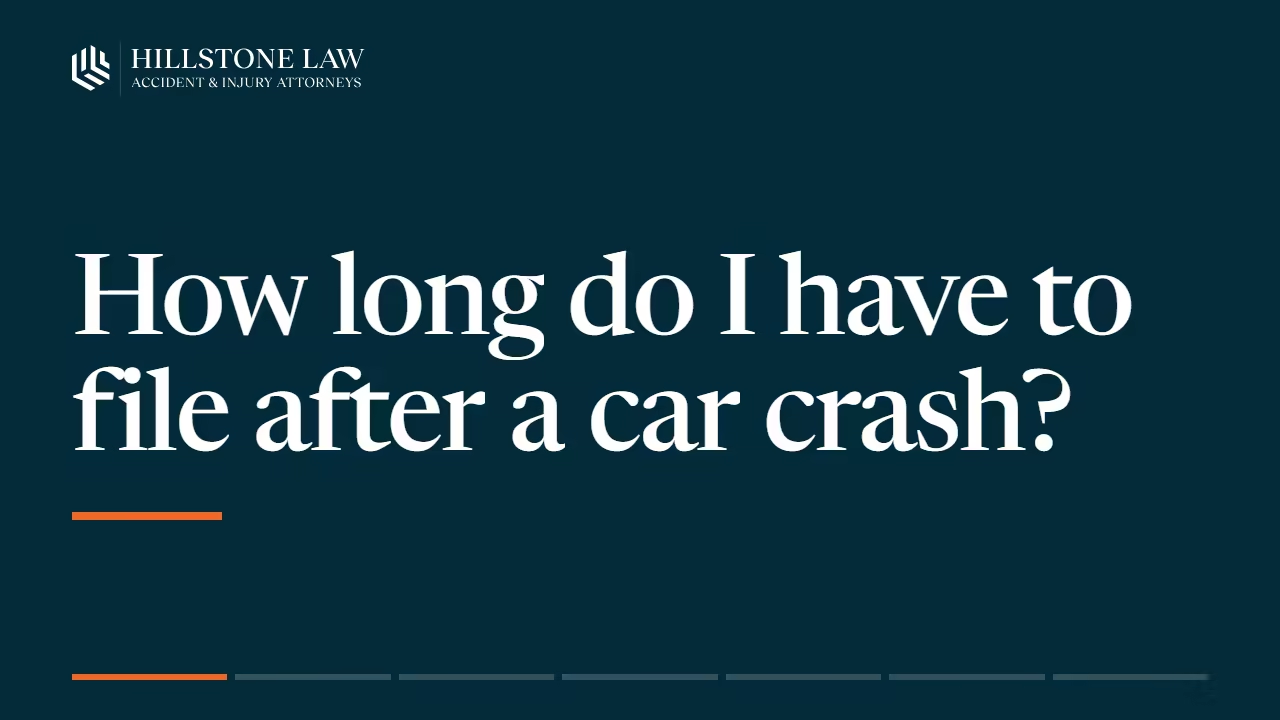
How long do I have to file after a car crash?
2 years from the injury to file a lawsuit. That is the general deadline in California. Code of Civil Procedure 335.1
6 months if a public entity was involved. A city bus, a county truck, a dangerous public road: a written claim comes first. Government Code 911.2
The clocks that start at the crash: 10 days, dMV report, form SR-1; 6 months, claim against a public entity; 2 years, injury lawsuit; 3 years, vehicle damage only.
Negotiation does not stop the clock. If the claim is still open as the date approaches, the lawsuit must be filed to protect it.
Exceptions can shorten or extend these limits. A child was hurt; The at-fault driver died; A federal vehicle; Your own uninsured motorist claim.
Free consultation. Call and tell us what happened. (855) 691-1691 Hablamos español.
General information about California law, not legal advice for your situation.
Products we see in injury cases
Our work centres on accidents, and defective products often make an accident worse or cause it:
- Vehicles and parts: airbags that fail or deploy wrongly, seat belts that unlatch, roofs that crush, doors that open in a crash, stability or braking systems that fail.
- Tyres: tread separations and blowouts at speed.
- Motorcycles, e-bikes and scooters: brake, frame, throttle and battery failures.
- Equipment at work and at home: ladders, lifts, power tools and machines without proper guards.
Who can be responsible
California's rule reaches the whole chain that put the product in your hands:
- the manufacturer of the product;
- the maker of a defective component within it;
- the distributor and the retailer that sold it;
- in some cases, a company that installed or repaired it.
When one defective product caused the injury, the companies in its chain of distribution each remain responsible for all the harm that product caused, including pain and suffering, so every company in the chain should be identified (Arena v. Owens-Corning Fiberglas Corp. (1998) 63 Cal.App.4th 1178, following Wimberly v. Derby Cycle Corp. (1997) 56 Cal.App.4th 618). The rule that splits pain and suffering damages by share of fault (Civil Code 1431.2) applies to defendants outside that chain, such as a property owner whose separate carelessness added to the harm. When a company knew of a danger and hid it, punitive damages may be available on clear and convincing proof of malice, oppression or fraud (Civil Code 3294).
Keep the product
The product is the most important evidence in the case. Without it, a defect can be very hard to prove.
- Do not repair, throw away, return or sell it. Keep every piece, including packaging, manuals and receipts.
- For a vehicle, ask the insurer and the tow yard in writing to hold it. Insurers often send totalled vehicles to auction within days.
- Do not let anyone take it apart before both sides can inspect it.
- Photograph it as it is, and where it failed.
How a defect is proven
Product cases are won on engineering evidence. The product, or what is left of it, is examined by engineers who compare it with the design, with other units of the same product, and with safer designs that were available. They look at the failure itself: where a part cracked, how a tyre's layers came apart, why a latch opened. Documents matter too: the company's own testing, complaints from other customers, earlier lawsuits, recalls and warranty claims about the same problem. Much of that evidence is in the company's hands and is obtained through the court process once a lawsuit is filed.
Products and accidents together
Many product claims start as ordinary accidents. A car crash that should have been survivable becomes catastrophic because a roof collapsed or a seat belt failed; a fall from a ladder happens because a rung gave way. In these cases, there may be two claims: one against the driver or property owner who caused the accident, and one against the maker whose product made the injuries worse. Looking for the product claim early matters, because the vehicle or equipment is often repaired or scrapped within days.
What companies argue
- "It was misused." Using a product in a way the maker should have expected is not misuse. Real misuse can reduce the recovery by the injured person's share of fault (Li v. Yellow Cab Co. (1975) 13 Cal.3d 804).
- "It was altered." Repairs or changes by someone else can be a defence, which is why the product's history matters.
- "There was a warning." The question is whether the warning was adequate and where it was placed.
- "Federal rules allowed it." For some regulated products, federal law can limit state claims; this is assessed case by case.
How much does a personal injury lawyer cost in California?
Read the transcript
How much does a personal injury lawyer cost in California?
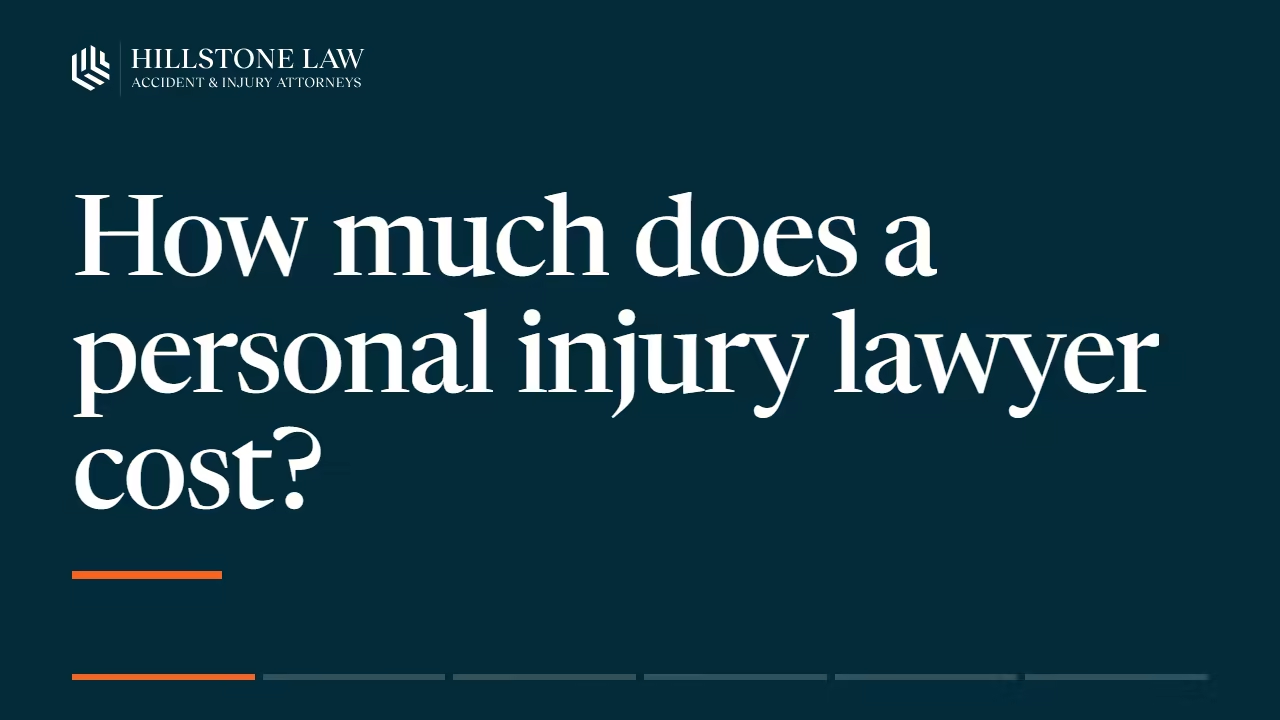
How much does a personal injury lawyer cost?
No fees unless you get paid. Our fee comes only from what we recover for you.
What you pay along the way: Nothing to hire us; Nothing while the case is open; Nothing by the hour.
A percentage of the recovery, in writing. You sign the agreement before we start. California law does not set the percentage. It is negotiable. Business and Professions Code 6147
Before you sign a settlement, we go through it line by line. The gross amount; Our fee; Each lien; What you receive.
Free consultation. Call and tell us what happened. (855) 691-1691 Hablamos español.
General information about California law, not legal advice for your situation.
Injuries at work
A worker hurt by a defective machine, tool or vehicle on the job usually has a workers' compensation claim against the employer, and that is generally the only claim against the employer. A claim against the maker of the defective equipment is separate, and it can pay for pain and suffering and the full loss of earnings, which workers' compensation does not. Keep the details of the machine: its maker, model and serial number, and photos of any guard, label or warning on it.
Recalls
A recall does not prove that a particular product caused an injury, but it can be strong evidence of a known defect. If your vehicle or product was recalled, keep the notice and any repair records. Many recalls are listed by federal safety agencies.
What to do now
- Get medical care, and follow the treatment plan.
- Keep the product and everything that came with it.
- Write down where and how you bought it, and how you were using it.
- Photograph the product and your injuries.
- Do not give a statement to the maker or its insurer before you have advice.
- Note your deadline: generally 2 years to file a lawsuit (Code of Civil Procedure 335.1). If you did not know a product caused your injury, the time may run from when you discovered it, but do not rely on that without advice.
Why people call Hillstone Law after a product injury
No fees unless you get paid. We answer 24 hours a day, 7 days a week. At your request, we can meet you at home or in the hospital. Our intake team speaks Spanish. We work from 16 offices across California. We secure the product first, have it inspected by the right engineers, and look past the obvious cause of an accident to the vehicle, the tyre or the equipment that made it worse.
Results
$1.97 million settlement
Car crash, catastrophic injury.
More on the case results page.











